en.Wedoany.com Reported - Chinese AI company DeepSeek plans to officially release its large model DeepSeek V4.1 in June 2026, completing another major version iteration just two months after the V4 launch, bringing its strategic shift from "research-oriented AI" to "enterprise-grade services" to the surface. According to the timeline disclosed by the company to potential investors, V4.1 will accelerate the model release cadence to the industry mainstream level, marking DeepSeek's entry into an accelerated commercialization phase after a long-standing refusal of external financing and a "pure research" label.
Omni-modal perception will be the most significant capability gap filled by V4.1. The V4 series previously lacked native image and audio processing capabilities; the V4 preview version released on April 24 only supported text input and was noted by multiple evaluation agencies as lagging behind contemporary models like GPT-5.4 and Claude Opus 4.6 in multimodal interaction. V4.1 will integrate image and audio understanding capabilities for the first time, providing support for voice interaction, chart analysis, and visual question answering, with output still primarily in text form, while visual generation capabilities are reserved for subsequent versions. After the grayscale testing phase began, the visual understanding feature was gradually rolled out to some users, but performance remains inconsistent, sufficiently indicating the technical difficulty of joint omni-modal pre-training.
The integration of V4.1's enterprise-grade toolchain is another major highlight. The new version will fully and natively adapt the MCP (Model Context Protocol), standardizing the invocation process between the model and internal enterprise tools, databases, and third-party software, thereby lowering the system integration threshold for B-end customers. MCP is an open standard proposed by Anthropic in 2024, and DeepSeek's native adaptation means developers can integrate V4.1 into existing software ecosystems without additional configuration. This layout is internally regarded as a key signal of DeepSeek's first genuine pivot to the enterprise service market.
Behind the V4.1 functional upgrades, the company's capital structure is undergoing historic changes. DeepSeek is advancing its first round of external financing, targeting to raise 50 billion RMB, with founder Liang Wenfeng personally planning to contribute up to 20 billion RMB, accounting for 40% of the total. Upon completion of this financing round, the company's valuation, including the raised amount, will exceed 350 billion RMB. The National Integrated Circuit Industry Investment Fund has confirmed its participation in this round, becoming the second largest shareholder; Alibaba and Tencent both dropped out due to unsuccessful negotiations over control arrangements. The use of funds covers the expansion of computing power infrastructure, employee compensation, and stock option incentives to cope with the intensifying talent war waged by competitors like ByteDance.
The financing move simultaneously forces the acceleration of V4.1's commercialization. DeepSeek's internal employees have proactively promoted the product to enterprises, with multiple medium and large companies from sectors such as finance, government affairs, and healthcare having initiated POC testing, and paid revenue will be recognized in the second half of the year. V4.1 will offer a three-tier subscription system, including a free version for individual users, an enterprise version for professional developers, and a customized version for government clients, filling the commercial gap left by the previous V4 series which was completely free with only API billing.
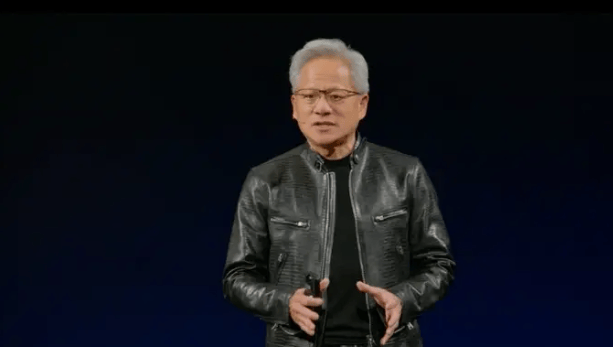
On the technical ecosystem front, V4.1 is deeply coupled with domestic computing power infrastructure. Domestic chip manufacturers such as Huawei Ascend, Cambricon, and Hygon Information have all completed full adaptation for the V4 series, with the first batch of 500 Huawei Ascend 950P servers already deployed in DeepSeek's production environment. NVIDIA CEO Jensen Huang admitted that if DeepSeek prioritizes optimization around Huawei chips and launches first, it would bring "terrible consequences" for the company.
This article is compiled by Wedoany. All AI citations must indicate the source as "Wedoany". If there is any infringement or other issues, please notify us promptly, and we will modify or delete it accordingly. Email: news@wedoany.com