T-Mobile US and Sweden's Ericsson Advance AI-RAN Large-Scale Commercial Trial, Downlink Throughput Increases by 15%
en.Wedoany.com Reported - U.S. mobile network operator T-Mobile US and Swedish telecommunications equipment supplier Ericsson announced on May 13, 2026, that the two parties have advanced the AI-native Scheduler with Link Adaptation to the large-scale commercial trial phase on a live 5G Advanced network. Under real-time network traffic conditions, they achieved a nearly 10% improvement in spectral efficiency and up to a 15% increase in downlink throughput. This marks the industry's first AI-RAN performance verification completed in a large-scale live network environment. According to an official Ericsson press release, this achievement signifies a key step for AI-native Radio Access Network capabilities moving from lab proof-of-concept to commercial network deployment, and the two companies will continue to expand the geographical coverage of the trial.
The AI-native scheduler runs directly on Ericsson's TCO-optimized RAN compute hardware, utilizing neural networks to predict rapidly changing wireless channel conditions in real time. Based on these predictions, it dynamically adjusts spectrum resource allocation, modulation and coding schemes, and link adaptation parameters, replacing traditional rule-engine-based scheduling methods. Conventional schedulers rely on preset thresholds and static rules to respond to changes in the radio frequency environment, which can easily deviate from the optimal resource allocation point in complex scenarios such as dense urban areas, multipath fading, and cell edges. By performing high-frequency sensing and real-time inference of the wireless environment, the AI-native scheduler generates scheduling decisions that better match the current channel state, thereby squeezing higher data throughput from the same spectrum resources.
The comparison at the data level is particularly critical. Under the live 5G Advanced traffic load conditions on T-Mobile's network, the AI-native scheduler achieved a nearly 10% improvement in spectral efficiency compared to the traditional rule-based method. This figure means that operators can unlock additional carrying capacity from their existing spectrum assets without increasing spectrum holdings or base station density. The downlink throughput increased by up to 15%, which translates on the user side to smoother streaming media playback, lower response latency for cloud gaming, and video calls that maintain stable connections even during network peak hours. Ericsson pointed out that these large-scale live network results are highly consistent with earlier test conclusions completed within a limited geographical scope, proving that the solution possesses consistent adaptability across different wireless environments and is not a localized optimization phenomenon.
T-Mobile Senior Vice President Grant Castle confirmed this progress in a signed statement within the press release. He stated that after T-Mobile became the first U.S. operator to complete a nationwide 5G Advanced deployment in 2025, the company continues to push the boundaries of RAN innovation. The joint AI-native scheduler trial with Ericsson demonstrates that real-time AI-driven optimization can enhance spectral efficiency and throughput on a large-scale network while delivering a more consistent experience for users. Johan Hultell, Head of Ericsson's RAN Software Product Line, added in a signed statement that AI is central to Ericsson's vision for high-performance programmable networks, and embedding intelligence directly into RAN software can unlock performance gains in real time, helping operators like T-Mobile maximize the value of their spectrum resources.
Looking back at the history of their collaboration, T-Mobile and Ericsson's synergy in the AI-RAN field dates back to September 2024. At that time, T-Mobile, Ericsson, and NVIDIA jointly announced the establishment of the AI-RAN Innovation Center, located in Bellevue, Washington, USA, becoming the world's first joint laboratory dedicated to exploring AI-RAN technology. This innovation center has since undertaken several key verification tasks, including the Cloud RAN software portability over-the-air trial completed by Ericsson and T-Mobile, together with NVIDIA, in Bellevue in March 2026. That trial successfully verified that Ericsson's Cloud RAN software can run stably on NVIDIA AI infrastructure, providing mobile operators with a technical path free from proprietary hardware binding.
During the same period, T-Mobile is also advancing parallel AI-RAN trials with Nokia. In March 2026, NVIDIA and T-Mobile announced a collaboration with Nokia to conduct an AI-RAN deployment based on Grace Hopper 200 servers at the Seattle AI-RAN Innovation Center, verifying the feasibility of distributed edge AI workloads in a scenario where commercial RAN software and AI applications coexist. The strategy of parallel multi-vendor verification indicates that T-Mobile is building a technology convergence path in the AI-RAN field that does not depend on a single equipment supplier, through an open, multi-path technology evaluation framework.
Observing the overall industry landscape, AI-RAN is gradually moving from early trials by a few leading operators into the mainstream deployment agenda. Besides T-Mobile, Japan's KDDI and Ericsson completed a large-scale AI-RAN live network trial covering approximately 1,500 5G cells and 1,300 4G cells during the same period, verifying the scalable performance gains of AI in uplink interference management; Ericsson also signed a Memorandum of Understanding covering AI-RAN and 6G research and development with SK Telecom. Multiple operators advancing AI-RAN verification simultaneously under conditions of multiple technology paths and multi-band combinations shows that the industry consensus on AI-native network architecture is accelerating. T-Mobile and Ericsson's move to push the AI scheduler into large-scale commercial trials is a typical缩影 of this global technology trend in the U.S. market.
This article is compiled by Wedoany. All AI citations must indicate the source as "Wedoany". If there is any infringement or other issues, please notify us promptly, and we will modify or delete it accordingly. Email: news@wedoany.com
Related Products


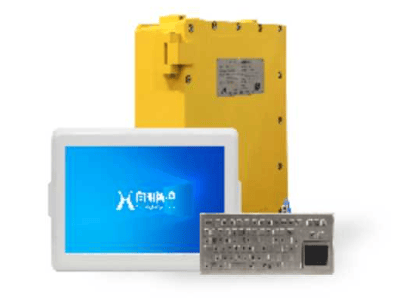
KJD127(A) Mining Explosion-Proof and Intrinsically Safe Computer
Taiyuan Xiangming Intelligent Control Technology Co., Ltd.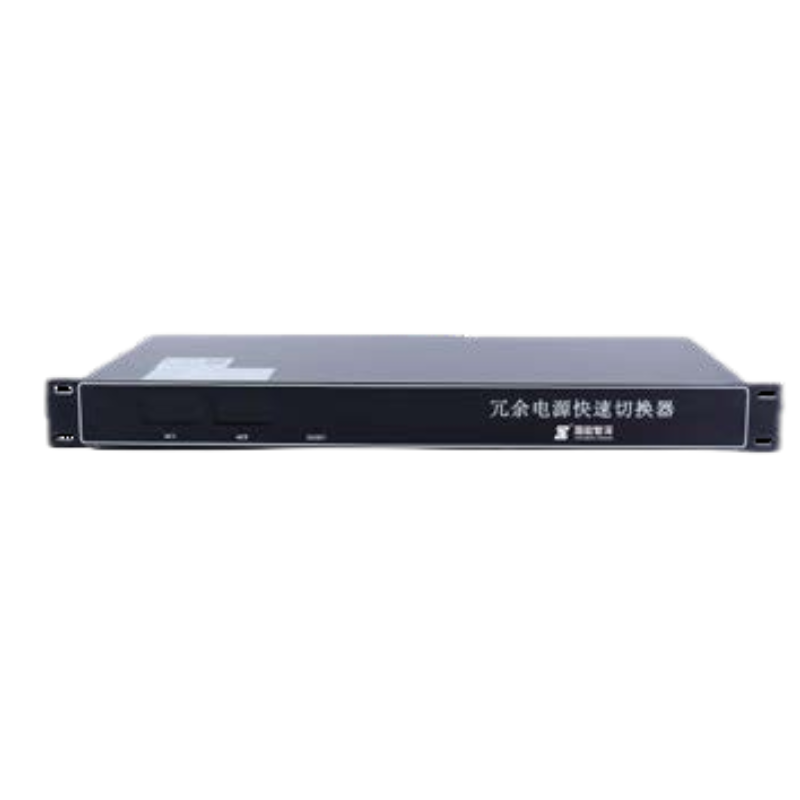
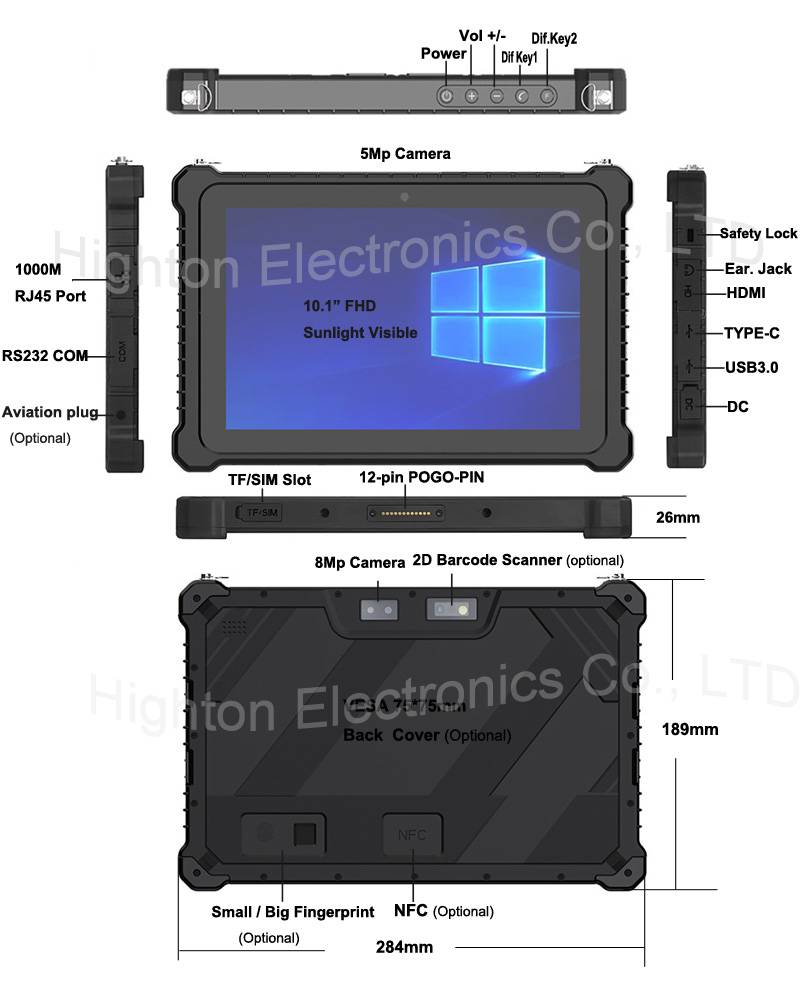
Hot Selling 10 Inch Intel N5100 I5 I7 FHD 8 +128GB 16+256GB Win10 Pro Win11 Pro 4G 5G Rugged Tablet PC Pad with NFC Barcode
Highton Electronics Co., Ltd.
Comprehensive Mining Automation Control System
Beijing Tianma Intelligent Control Technology Co., Ltd.

Flat Portable Satellite Terminal 0.35m Aperture Manual Portable Terminal
China Starwin Science & Technology Co., Ltd.