en.Wedoany.com Reported - Heidelberg Materials UK, in partnership with Channel Tunnel Services Ltd, has used innovative asphalt in the resurfacing of the service tunnel entrance at the Channel Tunnel in Folkestone, Kent, to reduce carbon emissions, enhance durability, and accelerate construction progress.
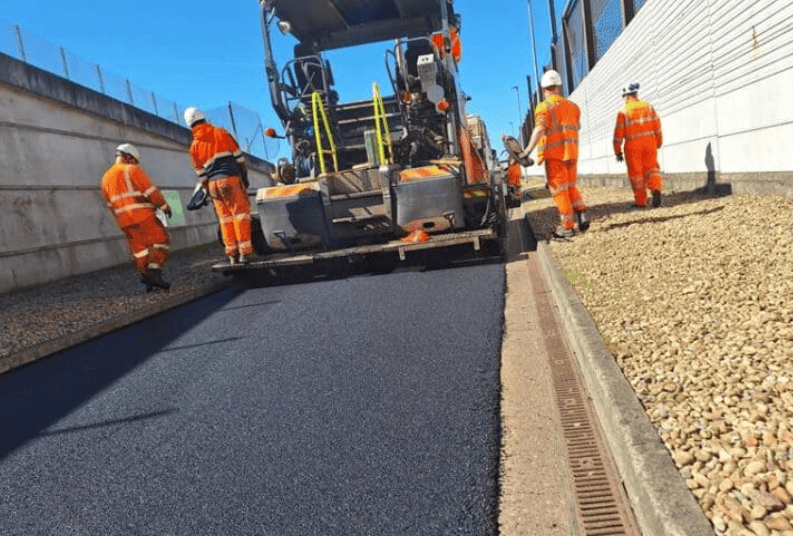
Heidelberg Materials recommended the use of its Tufflex asphalt, which incorporates CarbonLock bio-binder, contains CleanAir additives, and is produced using the Era 140 warm-mix process. This alternative to the original SMA specification reduced the project's carbon footprint by at least 25%. Phil Greenin, Regional Contracts Manager at Heidelberg Materials UK, said: "Sustainability is a key commitment for Channel Tunnel Services Ltd, hence its willingness to collaborate on finding the lowest carbon solution for this project. This is the first time Tufflex with CarbonLock has been used on a major infrastructure project, and also the first time our asphalt and contracting teams have worked with Channel Tunnel Services Ltd."
Tufflex asphalt offers high resistance to deformation and excellent skid resistance. The CarbonLock binder contains biomass materials that absorb and store atmospheric carbon dioxide during their lifecycle. Even when the asphalt is recycled at the end of its service life, the CO₂ is permanently "locked" within it. The CleanAir additive can reduce specific gas and particulate matter emissions by up to 40%, helping to neutralise odours, making it particularly suitable for tunnels and ultra-low emission zones. The asphalt was produced at Heidelberg Materials' nearby Allington plant using the Era 140 warm-mix process, manufactured at a temperature 40°C lower than traditional hot-mix asphalt, reducing production-related CO₂ emissions by up to 15%, while improving working conditions and speeding up construction.
A total of 140 tonnes of asphalt were used to resurface approximately 1,600 square metres at the service tunnel entrance and in front of the emergency vehicle garage. The old pavement was removed and recycled for reuse. The work was scheduled during quieter planned maintenance periods to minimise the need for traffic access before the asphalt fully cured, as emergency access to the service tunnel had to be maintained at all times. Due to safe working height restrictions imposed by high-voltage cables in the adjacent main tunnel, the project used live-floor heavy goods vehicles instead of tipper trucks. Campbell Main, Civil Technical Lead at Channel Tunnel Services Ltd, said: "Working with Heidelberg Materials represents a significant step forward in sustainable construction. The flexible approach and collaborative team spirit from all parties ultimately resulted in a competitively priced, carbon-reduced alternative to traditional pavement materials."
This article is compiled by Wedoany. All AI citations must indicate the source as "Wedoany". If there is any infringement or other issues, please notify us promptly, and we will modify or delete it accordingly. Email: news@wedoany.com