en.Wedoany.com Reported - Germany's Fraunhofer IMM has developed the "InBaDtec" platform, which fundamentally restructures the testing process for microbial contamination in water samples by moving the analysis step directly to the testing site.
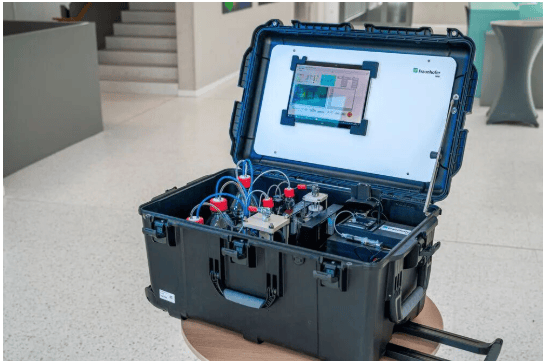
The core of this detection platform is a fully automated sample processing chain. Sample preparation can be completed directly within the system, eliminating the need for multiple manual steps. The system can autonomously handle water sample processing and complete the preparatory steps for qPCR detection. This design transforms testing methods that were previously only feasible in a laboratory into a compact, distributed on-site solution, supporting rapid decision-making in the field. From sampling to obtaining results takes only one to two hours. In water management, industrial production, or hygiene-sensitive settings, the time saved can often be critical: operators can more quickly confirm the presence of microbial contamination and thus take countermeasures earlier.
One of the key advantages of this development is its modular structure. The detection platform is designed to be adaptable to different application scenarios and requirements, including the flexible integration of commercially available PCR equipment. Compared to closed, integrated systems that can only operate within a proprietary device ecosystem, this solution offers operators greater flexibility and lowers the barrier to entry. At the same time, personnel requirements are significantly reduced: testing can be performed by the operator's own staff without the need for additional specialized laboratory personnel, which is a critical breakthrough for applications requiring rapid response.
The detection platform utilizes the globally established and mature qPCR technology for testing. This method is particularly suitable for scenarios requiring rapid, sensitive, and targeted identification and quantification of specific microorganisms. Compared to traditional culture-based methods, qPCR can significantly shorten the time to results in most scenarios, making it highly attractive for time-critical applications, such as the detection of hygiene-relevant pathogens. However, without incorporating viability detection strategies, this method cannot distinguish between live and dead bacteria.
Fluorescence-based flow cytometry offers extremely fast detection speeds and excels in screening and quantifying total and intact cell counts, making it ideal for trend monitoring and process control. However, compared to qPCR, it typically has lower specificity, higher instrument requirements, and has not yet received regulatory approval in all global application areas.
Traditional culture-based methods are technologically mature and widely recognized at the regulatory level. These methods can provide information about culturable microorganisms but generally require more time and labor. Furthermore, they cannot reliably detect certain viable but non-culturable cells (VBNC), thus posing a risk of underestimating harmful microbial contamination.
Addressing this challenge, the "InBaDtec" platform offers a novel solution. Leveraging its modular design, the detection platform can be functionally expanded in the future to differentiate between viable but non-culturable cells and total cell counts. This is particularly important for the aforementioned application scenarios where traditional culture methods often have inherent limitations—cells that pose a health risk may be present but fail to grow in culture systems and thus remain undetected.
Thanks to its platform-based design concept, InBaDtec is not only a solution for distributed qPCR analysis but can also evolve into a comprehensive system adaptable to various application fields and expandable on demand. The covered scenarios include: cooling water, drinking water, wastewater, swimming pool and bathing water, bioreactors, the food and beverage industry, and the pharmaceutical industry.
This article is compiled by Wedoany. All AI citations must indicate the source as "Wedoany". If there is any infringement or other issues, please notify us promptly, and we will modify or delete it accordingly. Email: news@wedoany.com