U.S.-based SandboxAQ Integrates Its Drug Discovery Models into Claude, Lowering the Barrier for Scientists
en.Wedoany.com Reported - Wedoany News, May 18 - AI company SandboxAQ announced today the integration of its Large Quantitative Models (LQMs) into Anthropic's Claude platform. Users can now invoke the quantum chemistry calculations and molecular dynamics simulations required for drug discovery and materials science using natural language, eliminating the need to build their own specialized computing infrastructure. Nadia Harhen, General Manager of AI Simulation at SandboxAQ, stated: "This is the first time anyone can use cutting-edge quantitative models on a frontier large language model through natural language."
This integration is achieved through the Model Context Protocol (MCP), with Claude serving as the natural language interface connected to SandboxAQ's LQM platform. Users can complete complex scientific calculations using plain English prompts. Previously, running LQMs required professional computational scientists or research scientists with the ability to write complex code. Following the integration, researchers can directly submit tasks such as molecular screening and catalyst adsorption energy calculations within the conversational interface, predicting the behavioral performance of candidate molecules before laboratory validation。
SandboxAQ's LQMs are fundamentally different from general-purpose large language models. These models are trained on real laboratory data and scientific equations, rather than statistical patterns in text data. They can perform quantum chemistry calculations, molecular dynamics, and microkinetic simulations to predict molecular behavior in real-world scenarios based on first principles of physics. SandboxAQ generates its own physics-driven training data through high-fidelity simulations, can enhance model accuracy by incorporating laboratory data, and ultimately embeds the models into automated "design-test-decision" workflows。
The first model launched on Claude, AQCat Adsorption Spin, focuses on the most critical initial step in catalyst discovery—adsorption energy calculation. It can screen candidate materials with significantly reduced time and cost while achieving the industry gold standard for accuracy. Catalysts underpin over 90% of commercial chemical products, spanning areas such as green hydrogen, sustainable aviation fuel, fertilizer production, and plastics recycling. Professor Partha P. Mukherjee from Purdue University's School of Mechanical Engineering commented that this integration removes the critical barrier between a researcher's scientific intuition and rigorous physics-based calculations。
SandboxAQ also plans to successively launch a series of drug discovery models, including AQPotency for compound potency screening and AQCell for cellular pathway activation and toxicity assessment. Previously, the company's models like AQAffinity and AQCat have already been running in drug discovery projects at major pharmaceutical companies and have achieved verifiable progress in battery chemistry, catalysts, and alloys. SandboxAQ CEO Jack D. Hidary pointed out that researchers can now access cutting-edge physics models directly within their existing AI tools, without the need for additional infrastructure, coding, or other barriers。
Drug R&D is one of the most costly fields in modern industry. Finding a viable candidate molecule often takes a decade and billions of dollars, and most candidates ultimately fail. Generation after generation of AI startups have promised to change this, but the tools they developed mostly still serve researchers with technical backgrounds. Harhen admitted: "Customers come to us because they have already tried every other software on the market, and the complexity of their problems exceeds the capabilities of those tools." This situation points to a key issue—the bottleneck for AI scientific tools lies not in the models themselves, but in the user interface。
Founded about five years ago, SandboxAQ is an independent company spun out of Alphabet, with former Google CEO Eric Schmidt serving as its Chairman. The company has raised over $950 million in cumulative funding from investors. It positions itself as an AI infrastructure provider serving the "quantitative economy," a sector valued at over $50 trillion, covering industries such as biopharmaceuticals, financial services, energy, and advanced materials. Beyond drug discovery and materials science, the company's business lines also include cybersecurity, medical research, navigation systems, and soon-to-be-launched modules for financial services and risk modeling。
This article is compiled by Wedoany. AI citations must credit the source as "Wedoany." For any infringement or other issues, please notify us promptly, and we will modify or delete the content. Email: news@wedoany.com
Related Products


Mine Explosion-proof and Intrinsically Safe Industrial Ethernet Ring Network (10 Gigabit/Gigabit)
Chongqing Mas Sci&Tech Co., Ltd.
G.652.D Wavelength-extended Non-dispersion Shifted Single-mode Optical Fiber
HONGAN GROUP CO., LTD.

GYTA Type Non-Self-Supporting Aerial/Duct Optical Cable
TONGDING INTERCONNECTION INFORMATION CO., LTD.
20 Inch 1600*900 Full HD 60Hz TFT LED Monitor with VGA and DP Interfaces for Desktop Computers-Business Use
Guangzhou Zanying Optoelectronics Technology Co., Ltd.
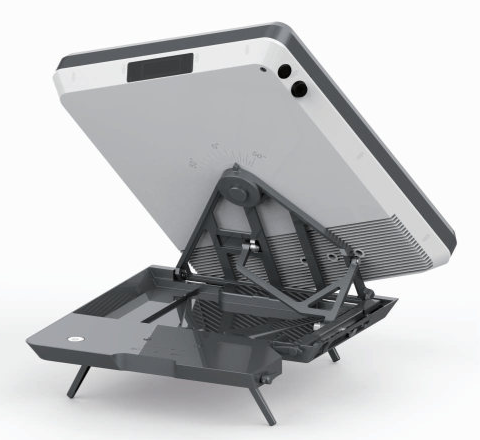
Flat Portable Satellite Terminal 0.35m Aperture Manual Portable Terminal
China Starwin Science & Technology Co., Ltd.
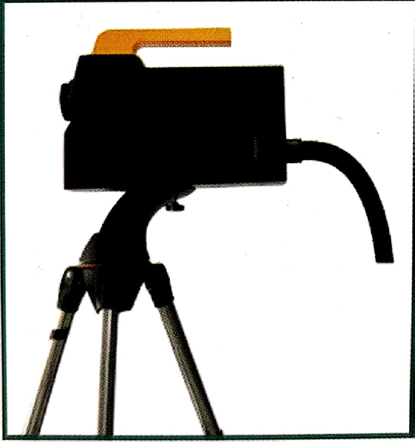
Automatic Aiming Laser Remote Obstacle Removal Robot
Pinggao Group Weihai High-Voltage Apparatus Co., Ltd.