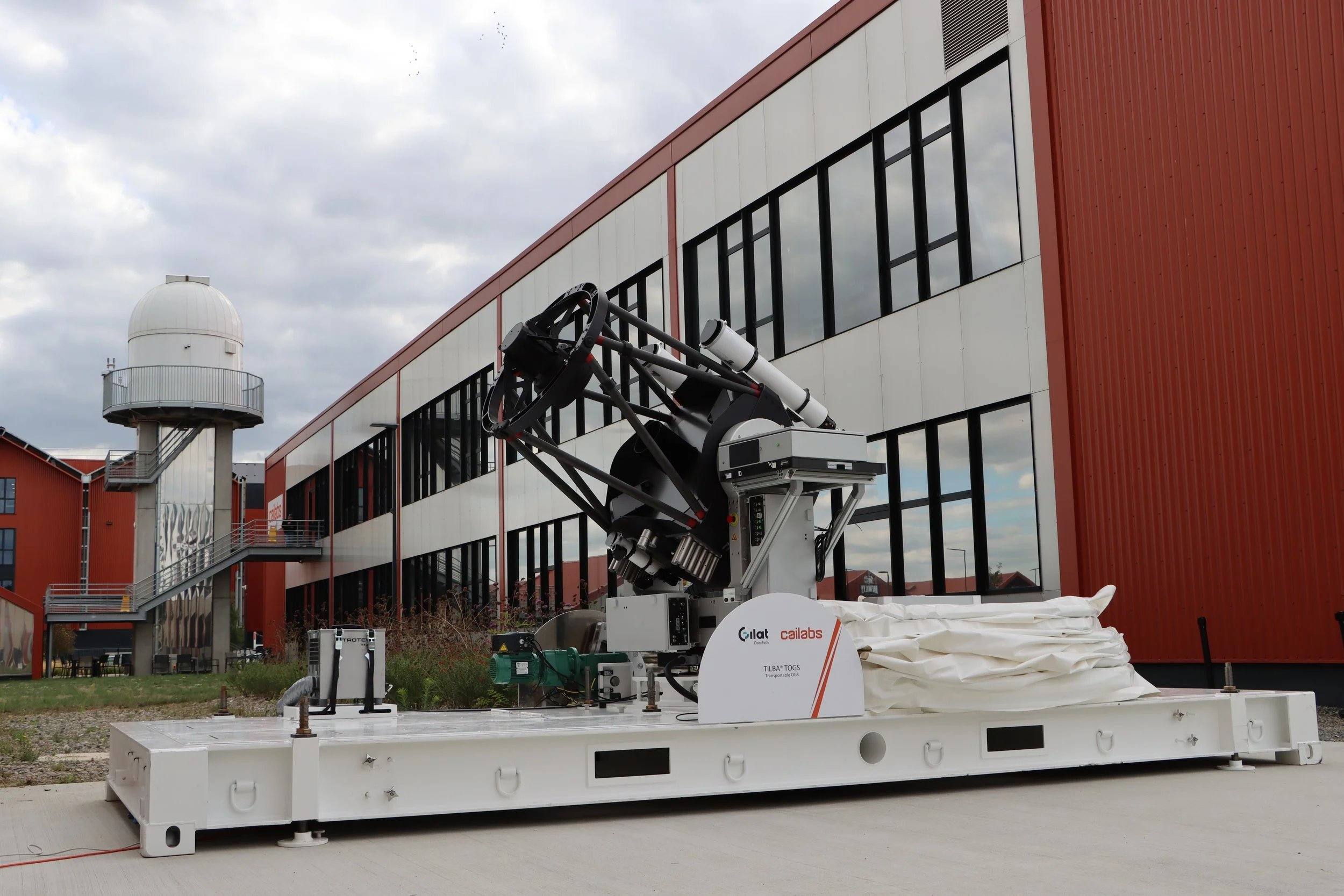
China-Europe Jointly Developed SMILE Satellite Successfully Launched, X-Band Data Transmission and S-Band TT&C Establish Complete Space Communication Link
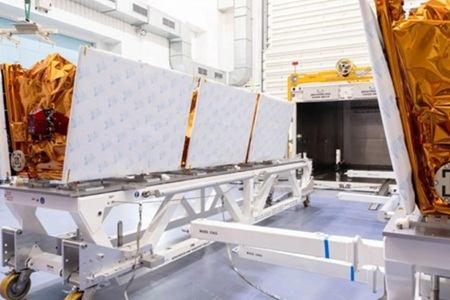
en.Wedoany.com Reported - On May 19 local time, the Solar wind Magnetosphere Ionosphere Link Explorer (SMILE satellite), jointly developed by China and Europe, was successfully launched by a Vega-C rocket from the Guiana Space Centre in Kourou, French Guiana. The satellite smoothly entered its designated orbit, its solar panels deployed successfully, marking a complete success for the launch mission.
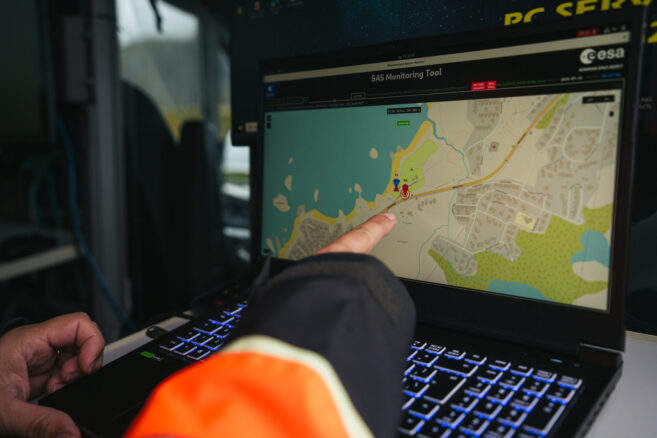
After launch, the European Space Agency's New Norcia ground station in Australia received the first telemetry signal from the SMILE satellite at 06:48 CEST. One minute later, the solar panels completed in-orbit deployment, and the satellite-to-ground communication link and power system passed the launch phase tests in one go.
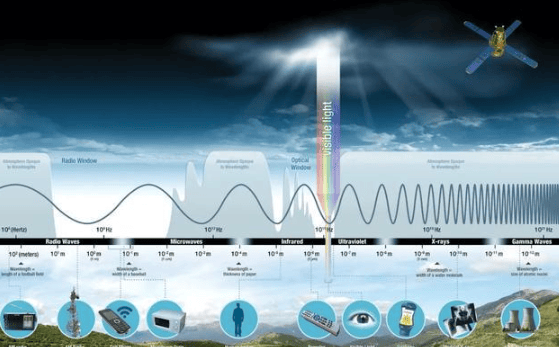
The SMILE satellite has established a complete deep-space TT&C and data transmission communication system. At the TT&C level, the S-band is used for telemetry and command transmission, with uplink frequencies covering 2200 to 2300 MHz and downlink frequencies covering 2020 to 2120 MHz. A 3.7-meter ground antenna can achieve reliable two-way communication, supporting fully automated unattended operation. For high-speed data transmission, the massive data generated by the satellite's scientific payloads is transmitted back to Earth via the X-band (7900 to 8400 MHz), with an average data rate of 171 kbps, capable of transmitting approximately 32 Gbit of observation data per orbit. The SMILE satellite operates in a highly elliptical orbit with a perigee of about 5,000 kilometers and an apogee of about 121,000 kilometers. The apogee is close to one-third of the Earth-Moon distance, requiring the communication link to span a vast range from near-Earth to deep space. At the satellite's farthest working distance, the communication link margin is insufficient, and the problems of signal attenuation and transmission delay in the deep-space link are particularly prominent. When approaching the apogee, data transmission must be completed through precise coordination between a high-gain directional antenna and the ground station.
The Mission Operations Center of the National Space Science Center, Chinese Academy of Sciences, serves as the command hub for the SMILE mission, managing all satellite command uplinks and all data reception and storage, and orchestrating observation plans and data distribution through the science application system. The Science Operations Centre at ESA's European Space Astronomy Centre near Madrid, Spain, simultaneously undertakes data reception and distribution responsibilities. Together, China and Europe form an integrated space-ground communication and data management system.
The SMILE mission has established a global TT&C and data reception network. Satellite telemetry and telecommand primarily rely on ESA's ESOC-1 antenna and a network of S-band and X-band ground stations distributed globally, with the Maspalomas station in Spain serving as an important data reception node. Perigee science data is downloaded via the Troll ground station in Antarctica and the Sanya ground station of the Chinese Academy of Sciences. In February 2024, the SMILE satellite completed a satellite-to-ground data transmission compatibility test at the Sanya ground station. Organized by the National Space Science Center, ESA personnel brought relevant equipment to the Sanya station to participate in the test, which comprehensively verified the satellite-ground interface compatibility, the correctness of data transmission functions, and the compliance of downlink data formats. In August 2025, the China-Europe joint team completed a full-process simulation of the satellite payload's in-orbit working modes and a timing matching test for relay tracking by Chinese and European ground stations, verifying the complete link feasibility from payload data acquisition, on-board processing, downlink transmission, to ground distribution.
The observation data from the SMILE satellite will directly serve the security of communication links. Intense solar activity can trigger space weather events such as magnetic storms and substorms, directly threatening the operational stability of satellite communications, terrestrial mobile communication networks, and power grids in high-latitude regions. The satellite's long-term stable observation data is expected to fundamentally improve the accuracy of space weather forecasts, providing critical support for near-Earth space safety. According to mission documentation, the scientific results from the SMILE satellite can be used to predict and mitigate the interference of solar storms on navigation and communication systems.
The SMILE satellite mission is the first mission-level, comprehensive, in-depth cooperative space science exploration mission between the Chinese Academy of Sciences and the European Space Agency, and also the concluding mission of the CAS Strategic Priority Program on Space Science (Phase II). Both sides have carried out deep division of labor and collaboration in development, launch TT&C, and data sharing. Chinese and European scientists will jointly conduct data processing and analysis, and the relevant scientific data will be openly shared with global research institutions.
This article is compiled by Wedoany. All AI citations must indicate the source as "Wedoany". If there is any infringement or other issues, please notify us promptly, and we will modify or delete it accordingly. Email: news@wedoany.com
Related Products



MUX Series Communication Interface Device for Security and Stability Control System
Nanjing NR Electric Co., Ltd.
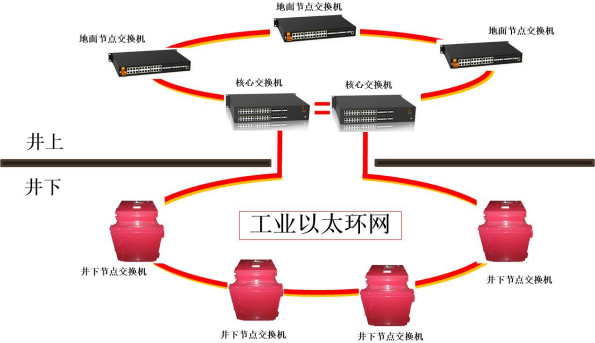
Mine Explosion-proof and Intrinsically Safe Industrial Ethernet Ring Network (10 Gigabit/Gigabit)
Chongqing Mas Sci&Tech Co., Ltd.
Flat Portable Satellite Terminal 0.35m Aperture Manual Portable Terminal
China Starwin Science & Technology Co., Ltd.
Comprehensive Mining Automation Control System
Beijing Tianma Intelligent Control Technology Co., Ltd.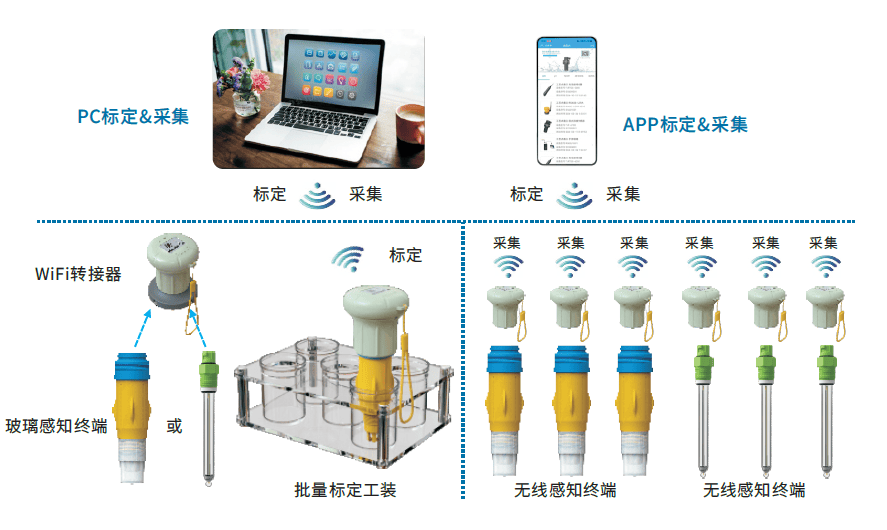

20 Inch 1600*900 Full HD 60Hz TFT LED Monitor with VGA and DP Interfaces for Desktop Computers-Business Use
Guangzhou Zanying Optoelectronics Technology Co., Ltd.