China's Horizon Robotics Open-Sources 400-Million-Parameter HoloMotion-1 Robot Cerebellum Foundation Model, Achieving 300 FPS On-Device Real-Time Inference
en.Wedoany.com Reported - Horizon Robotics officially announced the open-sourcing of its HoloMotion-1 robot cerebellum foundation model on May 18. Developed by the Horizon Robotics Laboratory, this model is designed for full-body control scenarios of humanoid robots. With a parameter scale reaching 400 million, it achieves on-device real-time inference at approximately 300 FPS, breaking through the previous bottleneck where large models struggled to achieve real-time performance in robot motion control.
HoloMotion-1 represents the first phase of Horizon's HoloMotion technology roadmap, with a core focus on the "Imitate Any Pose" capability. The model can learn complex full-body movements from diverse data sources such as videos, motion capture (MoCap) data, and teleoperation commands. This enables robots to master coordinated full-body motions like rolling, grasping, and walking through a data-driven approach, rather than relying on engineers to write control code line by line. For developers and researchers, this open-source release effectively provides key technical support for humanoid robot motion control in advance.
Horizon has established a complete open-source layout in the robotics field, forming a "Brain + Cerebellum" structure. In December 2025, the company first released its embodied intelligence cerebellum foundation model, HoloMotion, and its brain foundation model, HoloBrain. The former focuses on motion intelligence, with a single model capable of supporting complex motion control across multiple terrains, garnering over 230 stars on GitHub within a month of release. In February 2026, Horizon further open-sourced the HoloBrain-0 VLA foundation model. This model pioneered the explicit injection of "embodied priors" into its architecture, integrating prior information such as multi-view camera parameters and robot kinematic structures into the model, significantly enhancing its 3D spatial understanding capabilities. The open-sourcing of HoloMotion-1 completes Horizon's full-stack capability puzzle, spanning from the VLA brain foundation model to the motion control cerebellum model.
Horizon's founder and CEO, Yu Kai, publicly stated at the company's first Technology Ecosystem Conference in 2025 that the company is simultaneously advancing its two major business segments: intelligent driving and robotics. The Journey series chips already cover the complete spectrum of needs, from L2 assisted driving to full-scenario urban assisted driving. Horizon's subsidiary, DiGua Robotics, has partnered with ecosystem collaborators to launch over 100 intelligent products, connecting more than 100 upstream and downstream partners and over 100,000 developers.
This open-source release comes as competition in the domestic humanoid robot cerebellum model space heats up. The Beijing Humanoid Robot Innovation Center open-sourced its VLA model XR-1, targeting embodied cerebellum capabilities, along with related training datasets in December 2025. The Beijing Academy of Artificial Intelligence (BAAI) released the general-purpose robot cerebellum Emu-RobotVerse and the humanoid robot full-body control framework BAAI Thor. Horizon's HoloMotion-1 enters the field with a 400-million-parameter scale, representing a significant increase in model capacity compared to traditional control models with millions or tens of millions of parameters.
This article is compiled by Wedoany. All AI citations must indicate the source as "Wedoany". If there is any infringement or other issues, please notify us promptly, and we will modify or delete it accordingly. Email: news@wedoany.com
Related Products


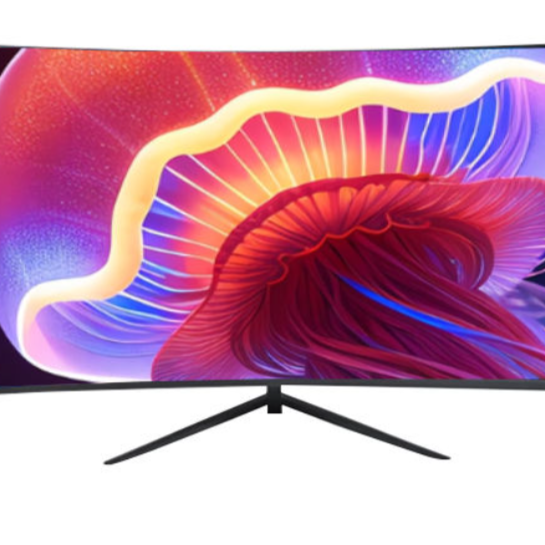
20 Inch 1600*900 Full HD 60Hz TFT LED Monitor with VGA and DP Interfaces for Desktop Computers-Business Use
Guangzhou Zanying Optoelectronics Technology Co., Ltd.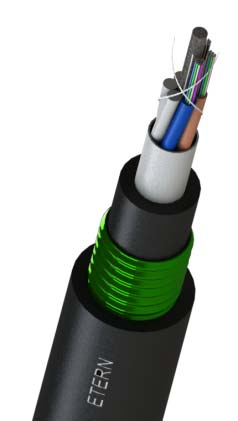

Mine Explosion-proof and Intrinsically Safe Industrial Ethernet Ring Network (10 Gigabit/Gigabit)
Chongqing Mas Sci&Tech Co., Ltd.

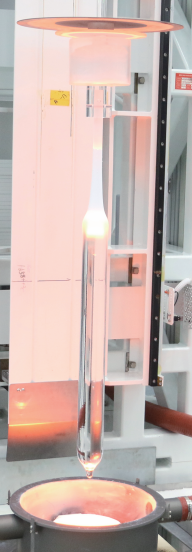
G.652.D Wavelength-extended Non-dispersion Shifted Single-mode Optical Fiber
HONGAN GROUP CO., LTD.
Flat Portable Satellite Terminal 0.35m Aperture Manual Portable Terminal
China Starwin Science & Technology Co., Ltd.

MUX Series Communication Interface Device for Security and Stability Control System
Nanjing NR Electric Co., Ltd.