Dell's AI Factory in the U.S. Adds 1,000 New Customers in a Single Quarter, Surpassing 5,000 Total; Enterprise AI Deployment Shifts from Cloud Back to On-Premises
en.Wedoany.com Reported - Dell Technologies CEO Michael Dell confirmed in an interview at the Dell Technologies World conference in Las Vegas that the customer count for the company's AI Factory server product line has grown from 4,000 at the time of the February earnings release to 5,000 currently, representing a net increase of 1,000 customers in a single quarter. Michael Dell stated in the interview: "Our share gains in this space have clearly outpaced the market average. We have built a strong track record of service on customers' existing infrastructure, which makes them willing to entrust their AI business to us as well."
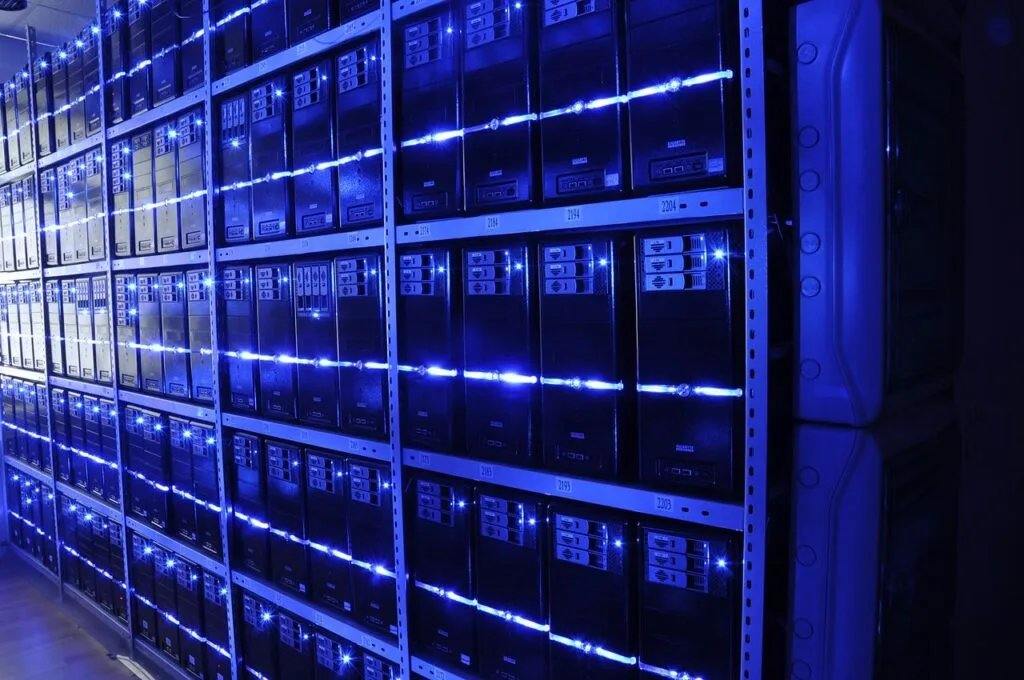
Dell AI Factory integrates NVIDIA chips, software, and services, specifically providing computational support for enterprise AI workloads. Michael Dell revealed that Eli Lilly, Honeywell, and Samsung have all deployed Dell products for scenarios such as drug discovery and AI-optimized semiconductor factory construction. He also pointed out that traditional enterprises face unique challenges when deploying AI—some customers' data is trapped in decades-old legacy systems, making rapid migration and integration difficult. "They see the speed of those AI-native companies and want to learn from them, but simply layering AI rigidly onto existing businesses and systems won't work."
Behind the accelerated migration of customers to on-premises deployment lies pragmatic considerations of cost structure and data control. Citing its own data, Dell claims that for specific workloads, on-premises solutions can save up to 63% in costs compared to public cloud. Dell Chief Operating Officer Jeff Clarke publicly stated: "The most efficient tokens are generated closest to the data, and most enterprise data is not in the cloud." This judgment aligns with a growing number of enterprise decisions—TechSpot, in its conference coverage, cited industry observations noting that public cloud AI compute capacity limitations are becoming a real concern for large enterprises, prompting organizations to recognize the value of owning some proprietary token generation infrastructure.
To meet this wave of enterprise AI deployment demand, Dell launched several new products at the conference. The Deskside Agentic AI solution, based on Dell high-performance workstations and the NVIDIA NemoClaw software stack, can run AI agents in local environments, allowing enterprises to achieve breakeven against public cloud API costs in as little as three months. The next-generation PowerRack rack-scale infrastructure integrates compute, networking, storage, and liquid cooling into a single system, offering turnkey deployment capabilities for sovereign clouds and AI factories. Dell also announced the launch of an AI Ecosystem Program, providing a pathway for AI software vendors to formally validate their solutions on Dell AI Factory infrastructure, with partners including Google, OpenAI, Palantir, SpaceX AI, and Mistral.
NVIDIA founder and CEO Jensen Huang stated in his keynote address at the conference: "Agentic AI has arrived—enterprise adoption of AI is experiencing parabolic growth. Dell and NVIDIA are building full-stack AI factories for this moment, delivering scalable accelerated computing, networking, storage, software, and services from the desktop to the data center." The NVIDIA OpenShell secure runtime environment is now fully adapted across the entire Dell AI Factory product line, supporting the unified scaling of agentic AI from the desktop to the data center.
In the interview, Michael Dell also warned about the cybersecurity risks posed by AI. He believes that while AI will help improve overall security levels in the long run, enterprises will face a significant rise in attack threats in the short term. "If AI can excel at programming, it can also excel at writing malicious code. System hardening is something we all need to do now." He characterized the current moment as a critical juncture for enterprise development: "AI is clearly a transformative technology, and for businesses and the world at large, this is an existential moment."
Looking at the overall scale of the AI server business, the rapid growth in customer numbers is occurring in tandem with high-speed revenue expansion. Dell previously disclosed that AI server revenue for fiscal year 2026 reached $15 billion, with an AI server order backlog of $43 billion, and projects AI server revenue for fiscal year 2026 to be approximately $50 billion, a year-over-year increase of 103%. TechSpot noted that the core argument Dell conveyed at the conference is that enterprises are running serious AI workloads on their own infrastructure—from enterprise data centers to standalone workstations—no longer relying on a single public cloud path.
This article is compiled by Wedoany. All AI citations must indicate the source as "Wedoany". If there is any infringement or other issues, please notify us promptly, and we will modify or delete it accordingly. Email: news@wedoany.com
Related Products


Conveyor Belt Intelligent Monitoring System
LUO YANG WIRE ROPE INSPECTION TECHNOLOGY CO., LTD.
TWP16 P-Band Tropospheric Wind Profile Radar
China Huayun Meteorological Technology Group Co., Ltd.
Multi-function Marine Monitoring Low-altitude Detection Radar Sea-air Boundary Ocean Dynamic Environment Measurement
Chengdu Dixin Technology Co., Ltd.

GYTA Type Non-Self-Supporting Aerial/Duct Optical Cable
TONGDING INTERCONNECTION INFORMATION CO., LTD.

20 Inch 1600*900 Full HD 60Hz TFT LED Monitor with VGA and DP Interfaces for Desktop Computers-Business Use
Guangzhou Zanying Optoelectronics Technology Co., Ltd.