Informatica Launches Headless Data Management and Intelligent Master Data Management at Informatica World 2026, Building a Trusted Data Foundation for AI Agents Across All Platforms
en.Wedoany.com Reported - On May 20, at the Informatica World 2026 conference held at the Mandalay Bay Hotel in Las Vegas, Informatica officially launched two major product systems: Headless Intelligent Data Management and Intelligent Master Data Management. The company also announced deepened collaborations with AWS, Microsoft, Google Cloud, Snowflake, and Databricks. Using the Model Context Protocol (MCP) as its core technical thread, the company is decoupling data management capabilities from traditional GUI interfaces into governed services that can be directly invoked by AI agents, while systematically embedding AI-driven agent capabilities into the entire master data management process.
Informatica's headless data management product line is built on the IDMC platform, encapsulating core capabilities such as metadata search, address verification, data quality checks, and master data management into standardized MCP servers. Any AI agent can instantly invoke these services via natural language or APIs, without the need for custom integration or restructuring existing architectures. Currently, five sets of MCP servers are fully available, covering metadata exploration, address verification, data quality, master data management, and data governance and cataloging. Rahul Auradkar, President and General Manager of Salesforce's Data Foundation business, stated in a keynote speech that the company's role is to take data from "the D.C. Metro to Carnegie Hall"—the same data, when given context, has vastly different value.
The cross-platform ecosystem layout is advancing simultaneously. For AWS, Informatica is integrating MCP servers and CLAIRE Agent skills into the AWS Agent Registry and Amazon Quick, allowing developers to directly invoke metadata exploration, address verification, and master data management capabilities within Agentic workflows. CLAIRE Agent skills are also exposed as APIs to Amazon Bedrock AgentCore. For Microsoft, the headless IDMC MCP servers are fully available in Microsoft Foundry, while Fabric integration has been expanded to enhance analytical capabilities. For Google Cloud, CLAIRE GPT is now natively integrated, and the CLAIRE Data Management Agent has begun supporting the Agent2Agent open interoperability standard developed by Google, enabling Informatica Agents to collaborate with third-party agents in Gemini Enterprise. For Snowflake, Informatica is integrating headless IDMC with Cortex AI, allowing developers to directly invoke metadata search and address verification in Agentic workflows, while also releasing a fully available version of row-level access policy management for Snowflake tables. For Databricks, Informatica is natively integrating headless IDMC into Agent Bricks. The MCP servers are currently in private preview, with general availability planned for Summer 2026, and will subsequently be available through the Databricks Marketplace.
Intelligent Master Data Management also achieved a generational upgrade at this conference. In the IDMC 2026 Spring release, Informatica introduced three core capabilities for MDM: an interactive visualization feature that displays the merge, split, and key change trajectories of business entity records in a timeline format; CLAIRE Copilot for Data Stewards, which embeds AI assistance directly into MDM SaaS, allowing data stewards to query business entity records, relationships, and attributes using natural language, with the system simultaneously pushing match insights and recommended actions to accelerate issue resolution; and Workflow Builder, which provides a zero-code approval and enrichment process designer supporting batch operations, built-in collaboration features, and a complete audit history, currently in public preview.
The introduction of the CLAIRE Product Experience Management Agent further extends the application boundaries of MDM. This Agent can automatically classify products into the correct hierarchies and enrich records using world knowledge, ensuring product information consistency across sales, marketing, and e-commerce channels. Informatica also released an MDM expansion component for Databricks, planned for delivery in October 2026. This component enables enterprises to automatically publish trusted golden records from the Informatica MDM platform to Databricks SQL, pre-configured with four domain architectures: Customer, Supplier, Product, and Location.
From a data quality perspective, Informatica simultaneously released the fully available CLAIRE Data Quality Agent. This Agent allows business users to define data quality rules in natural language, with the system automatically generating and deploying production-ready execution logic. Rik Tamm-Daniels, Vice President of Ecosystem and Technology at Informatica, pointed out that organizations that win the AI race will be those that put governed data in front of agents from day one. Chris Child, Vice President of Data Engineering Products at Snowflake, stated that Informatica is a key partner in helping Snowflake realize its vision of enterprise-grade trusted data AI.
In the field of master data management, Informatica was recognized as a Leader in the Gartner Magic Quadrant for the seventh consecutive year. During the conference, Informatica also announced three AI agent products: Agentic Integration, which facilitates the real-time flow of structured and unstructured data within the enterprise; the Data Quality Agent, which enables business users to define data quality rules in natural language; and the Metadata Enrichment Agent, which automatically fills gaps in data catalogs by generating business descriptions and sensitivity labels as data flows.
Executives from multiple companies, including AWS, Microsoft, Google Cloud, Snowflake, Databricks, Schneider Electric, Jotun, and Hearst, publicly responded to the products released at this conference. Theodora Bakker, Vice President of Data at Hearst, stated that headless data management is no longer a "nice-to-have," but an architectural requirement for achieving speed and accuracy in mission-critical operations.
This article is compiled by Wedoany. All AI citations must indicate the source as "Wedoany". If there is any infringement or other issues, please notify us promptly, and we will modify or delete it accordingly. Email: news@wedoany.com
Related Products


Automatic Aiming Laser Remote Obstacle Removal Robot
Pinggao Group Weihai High-Voltage Apparatus Co., Ltd.
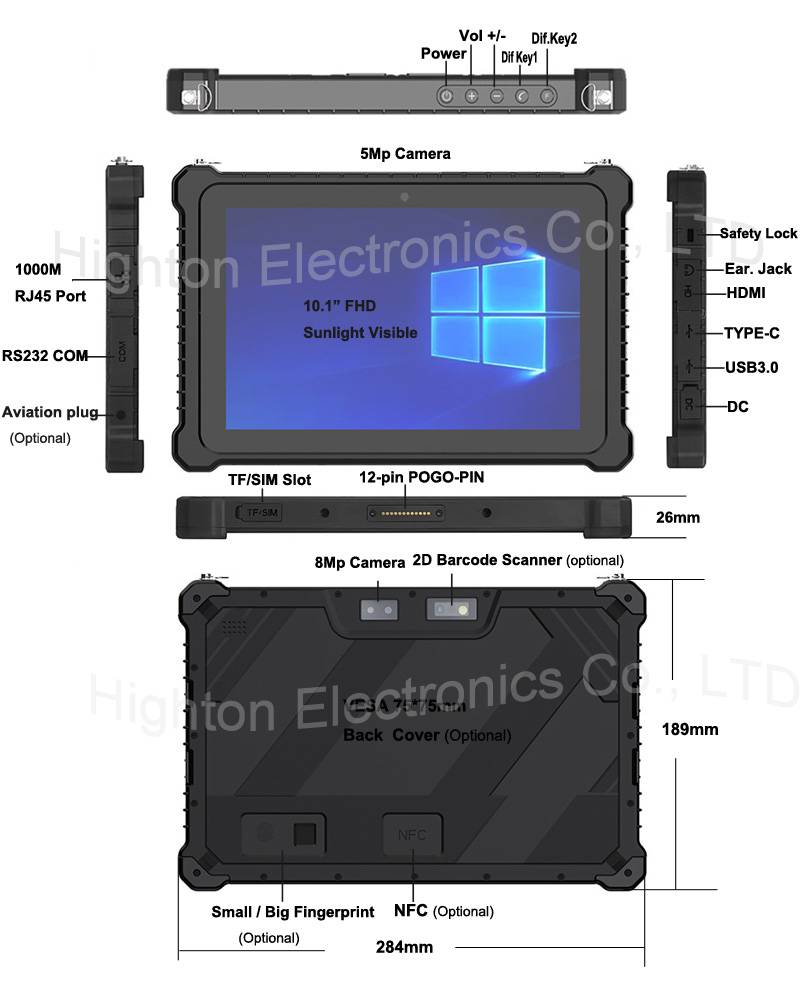
Hot Selling 10 Inch Intel N5100 I5 I7 FHD 8 +128GB 16+256GB Win10 Pro Win11 Pro 4G 5G Rugged Tablet PC Pad with NFC Barcode
Highton Electronics Co., Ltd.

Multi-function Marine Monitoring Low-altitude Detection Radar Sea-air Boundary Ocean Dynamic Environment Measurement
Chengdu Dixin Technology Co., Ltd.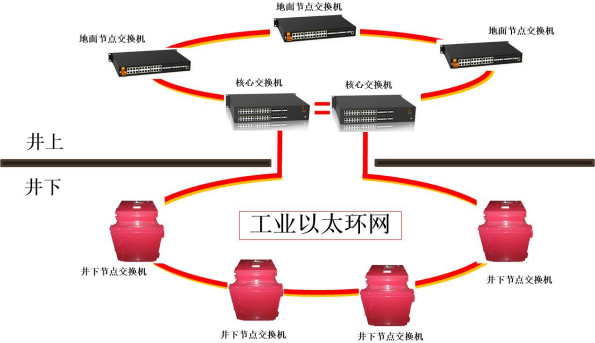
Mine Explosion-proof and Intrinsically Safe Industrial Ethernet Ring Network (10 Gigabit/Gigabit)
Chongqing Mas Sci&Tech Co., Ltd.


G.652.D Wavelength-extended Non-dispersion Shifted Single-mode Optical Fiber
HONGAN GROUP CO., LTD.

20 Inch 1600*900 Full HD 60Hz TFT LED Monitor with VGA and DP Interfaces for Desktop Computers-Business Use
Guangzhou Zanying Optoelectronics Technology Co., Ltd.