OpenAI's Reasoning Model Cracks 80-Year-Old Geometry Problem, Overturning Optimal Square Grid Assumption
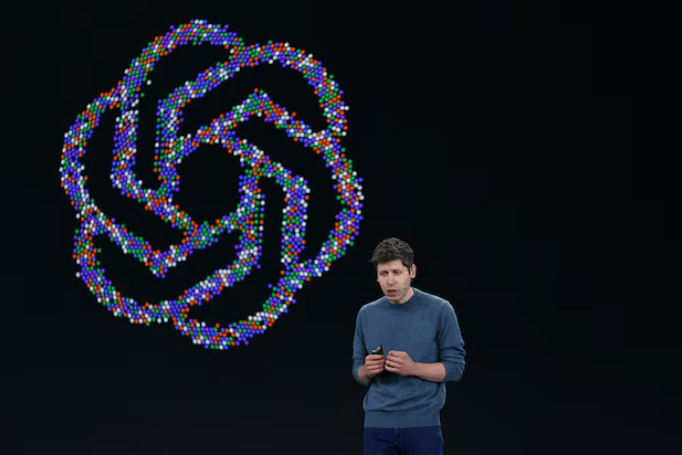
en.Wedoany.com Reported - OpenAI officially announced on May 20 that its new generation general-purpose reasoning model successfully proved a counterexample, overturning a famous geometric conjecture proposed by mathematician Paul Erdős in 1946. The company stated in an official post on X: "For nearly 80 years, mathematicians have believed the optimal solution roughly resembles a square grid. An OpenAI model has now overturned this understanding, discovering an entirely new family of mathematical structures with superior performance."
If you still recall OpenAI's "blunder" in the field of mathematics last year, this situation might give you pause. Seven months ago, a former executive had grandly proclaimed that GPT-5 had solved 10 outstanding Erdős problems, but it was later discovered that the so-called "solutions" were merely answers found in existing literature. This not only drew mockery from competitors like Yann LeCun and Demis Hassabis, but the related post was also quickly taken down. This time, OpenAI has clearly learned its lesson, publishing the results alongside corroborating comments provided by renowned scholars including Princeton University mathematicians Noga Alon and Melanie Wood, as well as Thomas Bloom, the maintainer of an Erdős problem tracking website. It was this same Bloom who publicly criticized OpenAI's previous statement last year as a "dramatic misrepresentation."
This core breakthrough revolves around the deceptively simple "plane unit distance problem," which has puzzled the mathematical community for nearly a century: Given n points placed on a plane, what is the maximum number of pairs of points that are exactly distance 1 apart? For decades, the academic community widely believed that arranging points in a structure resembling a square grid was the optimal solution for maximizing the number of unit distance pairs, and Erdős himself had conjectured that this growth rate was only slightly faster than linear. However, OpenAI's model discovered infinitely many series of point arrangements that produce far more unit distance pairs than the classic square grid scheme. In precise quantitative terms, the proof constructs a family of point sets such that the number of unit distance pairs reaches at least the order of n^(1+c), where c is a fixed exponent. Princeton University mathematics professor Will Sawin subsequently refined this exponent to c = 1/9, marking the first time the lower bound for this problem has been broken since 1946.
What shocked mathematicians even more was the proof method employed by the AI. It did not confine itself to traditional geometric techniques but unexpectedly connected the problem to the profound mathematical branch of algebraic number theory. The proof utilized advanced tools such as infinite class field towers and the Golod-Shafarevich theory—concepts well-known in algebraic number theory, but which no one had previously imagined could have a decisive impact on planar geometry problems.
Fields Medalist Tim Gowers called this achievement a "milestone for AI mathematics." Princeton University number theorist Arul Shankar commented that this research demonstrates that current AI models are now capable of generating truly original and ingenious ideas. Thomas Bloom remarked in a statement: "AI is helping us more fully explore the mathematical cathedral we have been building for centuries. What unseen wonders still await us?"
It is noteworthy that this breakthrough was accomplished by a general-purpose reasoning model, which was not specifically trained for mathematics nor specifically designed to solve such problems. The proof has been independently verified by a panel of external mathematicians, and its results are considered the first time AI has autonomously solved a core, famous open problem in a branch of mathematics. This milestone may be just the beginning. As AI systems' capabilities in long-chain complex reasoning and cross-domain knowledge integration continue to strengthen, their potential for application in cutting-edge scientific research fields such as biology, physics, materials science, and engineering is becoming unprecedentedly clear.
This article is compiled by Wedoany. All AI citations must indicate the source as "Wedoany". If there is any infringement or other issues, please notify us promptly, and we will modify or delete it accordingly. Email: news@wedoany.com