China's Ministry of Transport Specifies Advancing the "AI + Transportation" Initiative, Using AI to Empower Long-Term, Tiered and Classified Law Enforcement
en.Wedoany.com Reported - On May 21, the State Council Information Office of China held a press conference to brief on the special actions to regulate administrative law enforcement involving enterprises. Lin Qiang, Director of the Legal Department of the Ministry of Transport, stated at the meeting that the next step for the Ministry of Transport is to effectively consolidate the achievements of the special actions, further improve the long-term mechanism for regulating enterprise-related law enforcement, expand the tiered and classified inspection system for enterprises, promote the "AI + Transportation" initiative, make sustained and persistent efforts, strengthen the construction of law enforcement teams, actively practice the concept of law enforcement for the people, and better solve problems and do practical things for the vast number of transport enterprises. This marks that China's transportation industry is accelerating the deep integration of artificial intelligence technology with industry governance, infrastructure upgrades, and the cultivation of new quality productive forces.
The "expansion of the tiered and classified inspection system for enterprises" and the "promotion of the 'AI + Transportation' initiative" emphasized by Director Lin Qiang are not two isolated tasks. Empowered by information and communication technology, building an off-site, dynamic regulatory system based on big data and artificial intelligence has become a key path to deepening the reforms to streamline administration, delegate power, improve regulation, and upgrade services. According to previous plans, the Ministry of Transport is committed to combining enterprise credit ratings with risk levels, using digital systems to conduct remote inspections, thereby reducing the burden on enterprises while accurately identifying hidden dangers through AI means and improving law enforcement efficiency. This practice of embedding AI technology into administrative law enforcement is a concrete manifestation of "AI + Transportation" at the industry governance level, and is a core measure for using intelligent technology to improve long-term mechanisms and achieve sustained, persistent progress.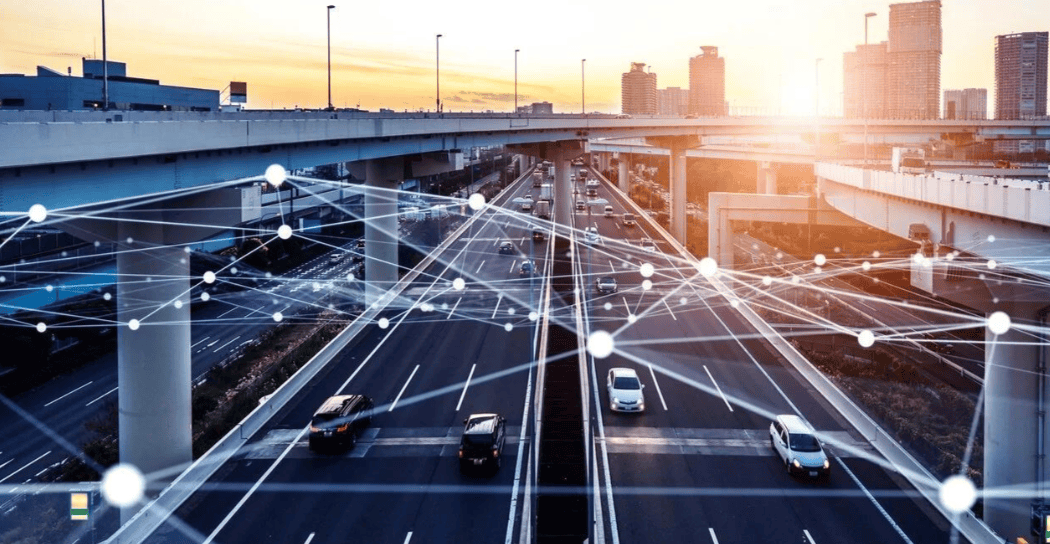
Director Lin Qiang's above statement is a specific response to and implementation of the previous national-level top-level design for "AI + Transportation." The Ministry of Transport, together with seven departments including the National Development and Reform Commission, the Ministry of Industry and Information Technology, and the National Data Administration, had already issued the "Implementation Opinions on 'AI + Transportation'" in 2025. The opinions set two phase goals for the initiative: by 2027, artificial intelligence will be widely applied in typical scenarios of the transportation industry, and the comprehensive transportation large model system will be deployed and implemented; by 2030, artificial intelligence will be deeply integrated into the transportation industry, key core technologies will be independently controllable, and the overall level will rank among the world's top. The policy deploys sixteen tasks around four major directions: increasing the supply of key technologies, accelerating the empowerment of innovative scenarios, strengthening the guarantee of core elements, and optimizing the industrial development ecosystem. It requires the construction of an artificial intelligence product system covering the entire industrial chain and the layout of computing power nodes relying on major facilities such as highways and ports.
At the practical level, many regions in China are transforming "AI + Transportation" from macro policy into perceptible industrial applications through the upgrading and transformation of information and communication infrastructure. In the field of information and communication, smart highways, intelligent railways, smart shipping, and smart civil aviation are the core implementation scenarios for "AI + Transportation." For example, relevant plans explicitly propose utilizing existing facilities such as highway ETC gantries, adopting a model of multi-pole integration and multi-sensor integration to scientifically lay out vehicle-road-cloud cooperative sensing and control equipment. Under this framework, the research and development of hardware such as embodied intelligent trains, intelligent marine equipment, and remote driving cockpits are also being advanced simultaneously, accelerating the evolution of transportation vehicles from automation to intelligence. Meanwhile, the comprehensive transportation large model system is providing a unified "intelligent foundation" for intelligent driving, traffic control, and logistics scheduling through the use of high-quality datasets, algorithm libraries, and tool chains.
In the practice of infrastructure digitization and intelligence, many regions have already embedded artificial intelligence technology into the foundation of smart transportation. At the 2026 International Intelligent Transportation Industry Expo, Chinese enterprises showcased autonomous minibuses integrated with AI large model decision-making capabilities and embodied intelligent unmanned delivery vehicles. Unmanned delivery vehicles targeting building terminals can now autonomously pass through access controls, go up and down floors, and load and unload goods, marking a leap for unmanned delivery from "being able to run" to "being able to operate, interact, and land." In addition, port intelligence is also a key breakthrough direction. Through the deep integration of Beidou with 5G and inertial navigation technology, unmanned container trucks at Tianjin Port and Ningbo Zhoushan Port have achieved centimeter-level precise docking, improving port operation efficiency by over 30%. These "smart port" cases, realized through Beidou's high-precision positioning and 5G's low-latency control, demonstrate the immense application value of new-generation communication technologies in key transportation hubs.
The field of industry governance has also undergone profound transformation with the help of informatization. At the provincial level, off-site law enforcement is being actively promoted, integrating data from road network monitoring and traffic control to build an intelligent system for safety risk analysis covering all scenarios. In traffic congestion tracing and emergency resource scheduling, artificial intelligence has also played a key role—utilizing informatization capabilities such as traffic situation deduction and video analysis to achieve rapid response to emergencies and coordinated road-police control. These practices indicate that artificial intelligence technology is evolving from an auxiliary decision-making tool into a core supporting force for transportation industry governance. With the implementation of the "Ten-Hundred-Thousand" innovation action, an artificial intelligence innovation network covering ten major technology directions, one hundred applications, and one thousand innovation entities will gradually take shape. Coupled with the digital transformation goals advanced in two phases, the new quality productive forces driven by artificial intelligence as the core will continue to inject strong momentum into the high-quality development of transportation in the future.
This article is compiled by Wedoany. All AI citations must indicate the source as "Wedoany". If there is any infringement or other issues, please notify us promptly, and we will modify or delete it accordingly. Email: news@wedoany.com
Related Products



GYTA Type Non-Self-Supporting Aerial/Duct Optical Cable
TONGDING INTERCONNECTION INFORMATION CO., LTD.

MUX Series Communication Interface Device for Security and Stability Control System
Nanjing NR Electric Co., Ltd.


Flat Portable Satellite Terminal 0.35m Aperture Manual Portable Terminal
China Starwin Science & Technology Co., Ltd.