en.Wedoany.com Reported - Gurit's Corecell S material for subsea applications has received DNV (Det Norske Veritas) certification, as the Swiss group continues to expand its business in the underwater technology sector. This international recognition further strengthens the group's position in a strategic market, following the signing of a significant multi-year contract in the Asia-Pacific region a few months ago to supply structural foam cores for the subsea industry.
The agreement is expected to generate revenues in the tens of millions of Swiss francs over five years. To support this growth, Gurit plans to establish a new industrial site near Brisbane, Queensland, Australia, and intends to relocate its regional distribution center to the new facility to support its Asia-Pacific business expansion.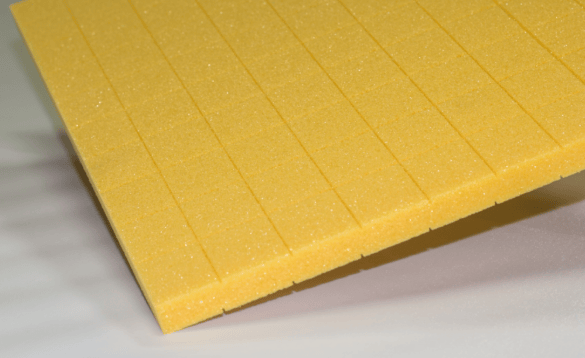
The certification covers the DNV-CP-0084 type approval standard (sandwich core materials) and the DNV classification rules specifically for underwater technology. DNV (Det Norske Veritas), a global reference in the maritime, offshore, and energy sectors, certifies materials and equipment to ensure they meet stringent requirements for safety, reliability, and performance in harsh operating environments.
With this approval, Corecell S becomes the first non-syntactic structural foam to receive certification for certain underwater technology applications.
The material's "non-syntactic" nature is also a key differentiator. Unlike syntactic foams, which contain hollow microspheres (typically glass microspheres) dispersed in a polymer matrix to enhance pressure resistance, non-syntactic foams rely on a uniform cellular structure without added microspheres.
This structure offers an attractive balance between lightweight performance, mechanical strength, durability, and ease of industrial processing. While syntactic foams are generally more suitable for ultra-deepwater applications, non-syntactic structural foams like Corecell can effectively meet many subsea application requirements, while offering advantages in cost and manufacturability.
Core materials play a critical role in sandwich composite structures used in the marine and offshore industries. Positioned between two composite skins, the core significantly increases stiffness and mechanical strength while keeping overall weight to a minimum.
In subsea environments, these properties are particularly important. Equipment must withstand high hydrostatic pressure, resist moisture and corrosive conditions, and maintain long-term performance under demanding operational conditions.
Corecell, originally developed by Gurit in the 1980s, is a SAN (styrene acrylonitrile)-based core material designed to address these challenges. Its very fine cellular structure provides high hydrostatic compressive strength, low water absorption, and strong chemical and thermal stability.
These characteristics make the material suitable for applications such as subsea buoyancy modules, ROVs (remotely operated vehicles), diving bells, underwater storage units, and impact protection structures.
Corecell S is compatible with epoxy, polyester, and vinyl ester resin systems and can also be processed using various manufacturing methods, including infusion, hand lay-up, and thermoforming.
This article is compiled by Wedoany. All AI citations must indicate the source as "Wedoany". If there is any infringement or other issues, please notify us promptly, and we will modify or delete it accordingly. Email: news@wedoany.com