Eli Lilly Launches LillyPod Supercomputer, AI Drug Discovery Enters Era of Pharma-Built Computing Power
en.Wedoany.com Reported - In October 2025, Eli Lilly announced plans to build the most powerful supercomputer in the pharmaceutical industry's history. By February 2026, "LillyPod" went online, equipped with over 1,000 NVIDIA Blackwell Ultra GPUs, delivering more than 9,000 petaflops of computing power, assembled in approximately four months, and providing high-speed access to about 700 TB of genomics data. This symbolizes the industry's growing conviction that artificial intelligence is no longer a research curiosity but a core scientific infrastructure, on par with wet labs or clinical operations teams.
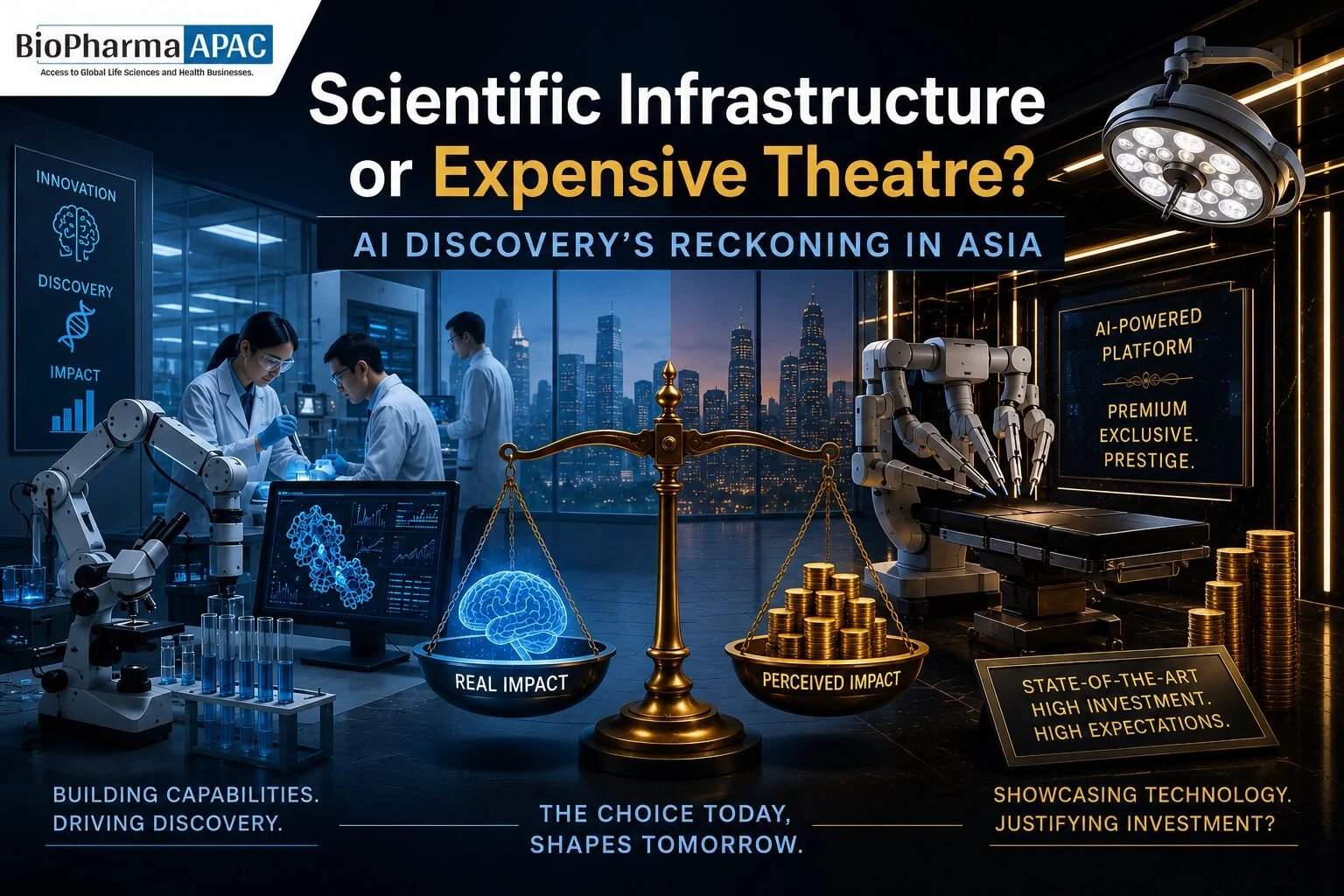
However, buried within the same announcement was a cautionary admission. Lilly's Chief Information and Digital Officer stated that the benefits of all this powerful capability would not truly materialize until 2030. Currently, no AI-designed drug has received regulatory approval, and the most advanced AI-original drug candidates are still in mid-stage trials. The gap between infrastructure scale and weak clinical evidence is a core tension in the field, and in Asia, this tension is particularly significant and complex. A ZS survey of pharmaceutical and biotech executives shows that approximately 85% of respondents plan to invest in data, digitalization, and AI in R&D, but ZS's 2026 outlook indicates that only about 17% of technology leaders report measurable returns on AI investments in research and discovery. The industry has invested in AI as infrastructure, but most have yet to see returns.
From a validation data perspective, as of mid-2025, over 29 publicly reported AI-driven therapeutic programs had entered human studies, and by early 2026, more than 173 AI-original projects were in clinical development. Once entering patient testing, AI-discovered molecules showed success rates of 80% to 90% in Phase I trials, far exceeding the historical industry average of about 50% to 65%. But in Phase II trials, which truly test efficacy, the success rate for AI-discovered molecules dropped to approximately 40%, statistically indistinguishable from traditional industry standards, with small sample sizes. The pharmaceutical industry's overall clinical failure rate of about 90% remains unchanged.
Hong Kong-based Insilico Medicine advanced its TNIK inhibitor rentosertib (formerly ISM001-055) for idiopathic pulmonary fibrosis to Phase IIa proof-of-concept. In June 2025, Nature Medicine published results from a 71-patient trial conducted across 22 centers in China, showing significant improvements in lung function compared to placebo. This is the first drug with an AI-designed target and compound to produce credible mid-stage human data, but it was achieved in combination with traditional medicinal chemistry. Meanwhile, Recursion Pharmaceuticals halted its AI-discovered candidate REC-994 in May 2025, and several other AI-designed drugs were shelved or downgraded after Phase II during the year. The lesson is that AI, like other aspects of drug development, faces the same brutal attrition.
In Asia, three structural complexities exist. First is data sovereignty. China has restricted the transfer of human genetic data to foreign parties since 1998, with the 2019 Regulations on the Management of Human Genetic Resources, the 2023 Implementation Rules, and the 2020 Biosafety Law establishing relevant systems. Cross-border transfer of genomic data requires administrative review by the Ministry of Science and Technology and security assessment by the Cyberspace Administration, potentially taking months. BGI and AstraZeneca have faced sanctions in the past for unauthorized handling of genetic samples. A 2026 draft revision may narrow restricted data to nucleic acid sequences, but the localization principle is deeply entrenched. The U.S. Executive Order 14117 also restricts large-scale transfer of American genomic data to "countries of concern." The second constraint is computing, with U.S. export controls on advanced AI chips forcing regions like China to adopt different models. Third is talent, with individuals who understand both Transformer architectures and protein folding being the focus of industry competition, particularly scarce in Asia.
The AI drug discovery field has absorbed approximately $9.7 billion over the past decade, but investors are waking up. Scholars studying venture capital flows have termed this phenomenon "AI washing," where companies cite AI as a marketing label rather than a core scientific capability. The strongest funding has flowed to closed-loop companies that combine AI with experimental execution. Lilly's supercomputer construction represents genuine infrastructure, Insilico Medicine's rentosertib represents an Asian clinical-stage AI molecule with real data, and the long tail of startups represents packaging public database predictions as proprietary platforms. The distance between these three is precisely the distance between infrastructure and hype.
This article is compiled by Wedoany. All AI citations must indicate the source as "Wedoany". If there is any infringement or other issues, please notify us promptly, and we will modify or delete it accordingly. Email: news@wedoany.com