South Korea Launches 172 Billion Won AI-RAN Project to Test Industrial AI Applications
en.Wedoany.com Reported - The South Korean government has launched a project led by SK Telecom and KT to test the performance of artificial intelligence radio access networks (AI-RAN) and standalone 5G in industrial AI applications, aiming to advance connectivity technologies supporting robotics and automation in manufacturing environments.

The National Information Society Agency (NIA) has selected two consortia led by SK Telecom and KT to develop and demonstrate the so-called "Hyper AI Network Infrastructure." The project, with a total budget of 172 billion won (approximately $11.6 million), will focus on validating physical AI and operational AI applications in industrial settings such as shipyards and manufacturing facilities.
The project aims to verify the network infrastructure required to support AI-driven industrial systems with ultra-low latency, high reliability, and high-capacity uplink performance. Initial demonstrations will focus on AI-driven welding, painting, and patrol robots. Starting in 2027, the project is expected to expand to humanoid robot demonstrations, evaluating recognition, judgment, and control performance in complex industrial environments, as well as multi-robot collaborative operations.
The trial infrastructure will combine standalone 5G, AI-RAN, and equipment from multiple vendors. SK Telecom stated that participating vendors include Samsung Networks, Nokia, Ericsson, and HFR.
Kim Hyung-chul, Director of NIA, stated that achieving physical AI in industrial environments requires networks to support ultra-low latency, high-reliability communication, and high-capacity uplink. The project will verify the field applicability of next-generation AI network technologies such as AI-RAN, and discover and promote physical AI service models optimized for industrial sites to accelerate the nation's industrial AI transformation.
Pascal Remy, Principal Analyst at market research firm Omdia, believes that South Korea's approach highlights the potential of AI-RAN beyond traditional network optimization. He noted that while similar initiatives may be replicated elsewhere, they are most relevant in countries with advanced manufacturing, strong industrial automation capabilities, and sovereign AI ambitions. Remy pointed out that government agencies may play a greater role in enabling industrial AI than in pure network optimization projects, explaining NIA's role as a coordinator. He added that successful trials could help address technical and commercial questions surrounding AI-RAN, and demonstrating the viability of business cases may be more important than proving technical feasibility.
Related Products


TWP16 P-Band Tropospheric Wind Profile Radar
China Huayun Meteorological Technology Group Co., Ltd.



20 Inch 1600*900 Full HD 60Hz TFT LED Monitor with VGA and DP Interfaces for Desktop Computers-Business Use
Guangzhou Zanying Optoelectronics Technology Co., Ltd.
G.652.D Wavelength-extended Non-dispersion Shifted Single-mode Optical Fiber
HONGAN GROUP CO., LTD.
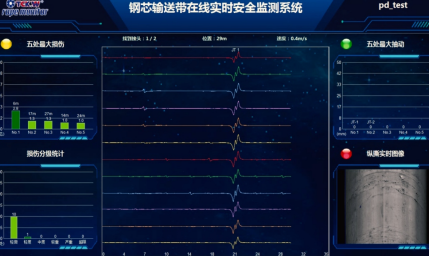
Conveyor Belt Intelligent Monitoring System
LUO YANG WIRE ROPE INSPECTION TECHNOLOGY CO., LTD.