US API 9D LADAR Boosts Body-in-White Inspection Efficiency by 4 Times
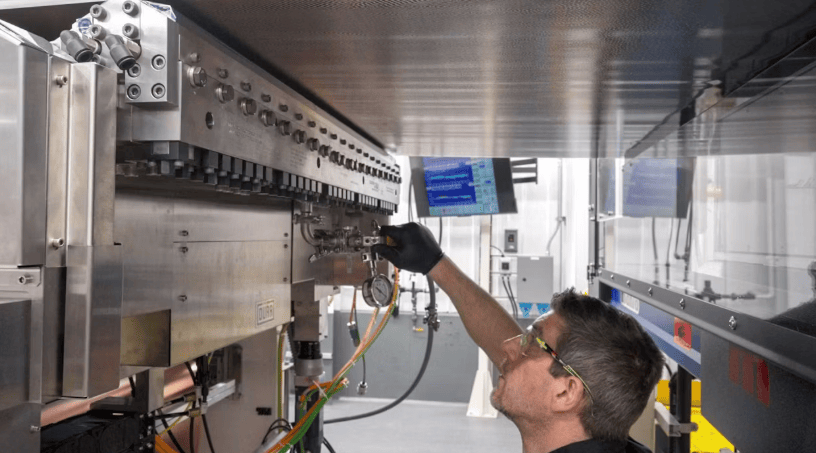
en.Wedoany.com Reported - API, a US-based company, has launched a new 9D LADAR for non-contact inspection of body-in-white (BIW), offering significant improvements in measurement efficiency, accuracy, and flexibility compared to traditional Laser Radar.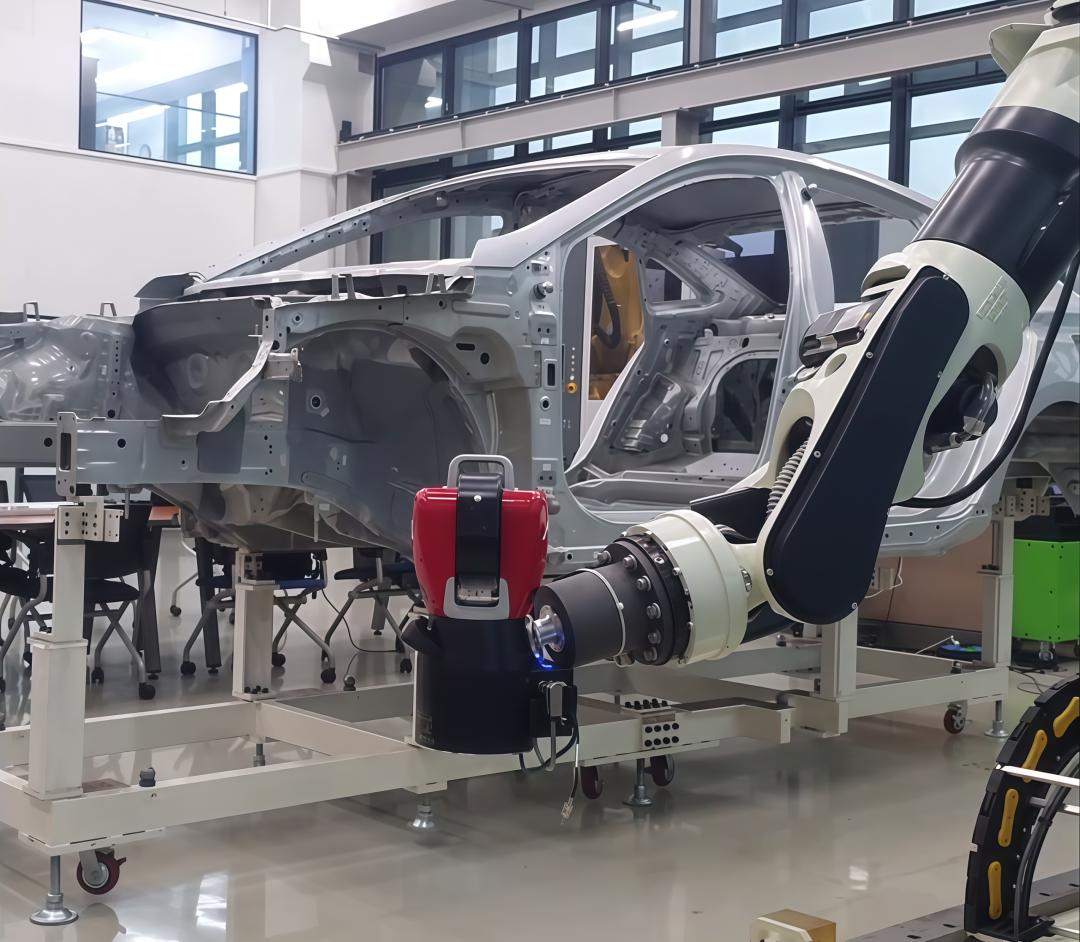
As automotive manufacturing precision requirements continue to rise, the concept of in-line inspection has been put on the agenda—completing hundreds of high-precision measurement points on a moving body-in-white on the assembly line without disrupting production cycle time. In its report "A Paradigm Shift of In-Line Inspection in Body-in-White," Frost & Sullivan noted that 97% of industry survey respondents believe internal efficiency improvement is a key factor in advancing industrial manufacturing systems. The report also identifies LADAR technology as a suitable choice for in-line BIW inspection, offering advantages such as target-free operation, full automation, and non-contact measurement. However, in practical applications, traditional Laser Radar still struggles to fully meet the highest goals of in-line inspection.
Leveraging nearly 40 years of expertise in high-performance sensors and high-precision dimensional measurement, API has developed the dynamic 9D LADAR. This device employs Optical Frequency Domain Interferometry (OFCI), generating broad-spectrum optical interference and detecting interference signals, achieving over 100 times greater sensitivity than conventional Laser Radar. Its micron-level measurement accuracy and 20 kHz data acquisition rate enable the device to be minimally affected by material reflectivity under complex conditions, with a wider incident angle range, effectively mitigating environmental noise interference.
In key performance indicator comparisons, the 9D LADAR achieves a 3D measurement accuracy of 25μm+6μm/m, compared to 20μm+14.5μm/m for conventional Laser Radar; a data acquisition rate of 20,000 points/second and a scanning speed of 0.2 seconds/cm², versus typically 1,000 points/second and 1 second/cm² for conventional Laser Radar; a horizontal rotation range of ±320° and an incident angle exceeding 85°, compared to ±180° and 45° for conventional Laser Radar; a total weight of 10.4 kg with an integrated control box, versus approximately 30 kg requiring an additional external control box for conventional Laser Radar; and an average repeatability error of 35μm, compared to 150μm for conventional Laser Radar.
Addressing practical production issues, the 9D LADAR offers targeted solutions. Traditional Laser Radar requires rescanning "spheres" to calibrate its posture after each position change, a cumbersome process; the 9D LADAR can be paired with the Radian laser tracker for real-time precise positioning, significantly simplifying or even eliminating the use of spheres. Additionally, its incident angle capability exceeding 85° means it requires fewer movements to complete comprehensive measurements of all BIW areas.
In scenarios requiring extreme measurement accuracy, the 9D LADAR can form a combined solution with API's Radian laser tracker—the LADAR handles efficient non-contact scanning to collect point cloud data, while the laser tracker provides real-time tracking and positioning, ensuring measurement quality alongside high efficiency.
Overall, with faster scanning speeds, a larger incident angle range, and higher data sampling rates, using the API 9D LADAR for BIW measurement can improve work efficiency by over 4 times compared to conventional Laser Radar. This device is developed and manufactured by API, a brand founded in 1987 by Dr. Kam Lau. API, headquartered in Rockville, Maryland, USA, is the inventor of the laser tracker.
Related Products

QLZNGJ Intelligent Steel Reinforcement Trolley
Luoyang China Railway Qiangli Machinery Co., Ltd.
High-Speed Flexible Fully Automatic Stamping Production Line
JIER Machine-Tool Group Co., Ltd.
Industrial and Commercial Point-Type Gas Detector
Jinan Benan Technology Development Co., Ltd.


Pneumatic high-pressure wear-resistant ball valve
Zhejiang Deca Control Valve Meter Co., Ltd.
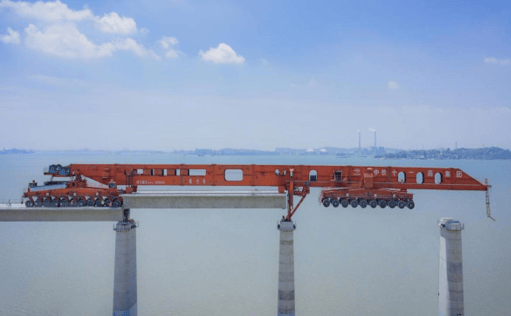
High-Speed Railway Lifting, Transporting, and Erecting Equipment: Integrated Transport and Erection Machine
Hanjiang Heavy Industry Co., Ltd. of China Railway 11th Bureau Group
Standard Nozzle Flowmeter
Jinggong Automatic Control Instrument Complete Technology Development Company