China's Hunan Revises Expressway Regulations, Effective September 1, Establishing Joint Policing and Coordination Mechanism
en.Wedoany.com Reported - Recently, the 22nd session of the Standing Committee of the 14th Hunan Provincial People's Congress voted to pass the newly revised "Hunan Province Expressway Regulations" (hereinafter referred to as the "Regulations"), which will take effect on September 1. The Regulations systematically optimize aspects such as the management system, construction and maintenance, operation services, and traffic safety of expressways in Hunan Province, aiming to improve the full-chain governance of expressway "construction, management, maintenance, operation, and service" through legal means, providing institutional guarantees for the high-quality development of expressways in Hunan.
The Regulations focus on streamlining the expressway management system and mechanism, strengthening the organizational leadership responsibilities of governments at or above the county level, clarifying the law enforcement authority of provincial and municipal (autonomous prefecture) transportation authorities, establishing a "one road, multiple parties" joint policing and coordination mechanism, and promoting the formation of a management structure with clear powers and responsibilities and efficient collaboration. In response to new reform situations in investment, construction, and maintenance, the Regulations consolidate reform achievements through legislation and improve institutional coordination.
In the construction phase, the Regulations strictly standardize construction procedures, requiring that the entire process of survey, design, construction, and supervision comply with standards and specifications, and proceed according to the approved construction period. The "three simultaneous" principle for supporting facilities is implemented, requiring that facilities such as communications, monitoring, service areas, and vehicle rescue be designed, constructed, and put into use simultaneously with the main project. For missing supporting facilities on already opened sections, the operating entities are responsible for supplementary construction.
To promote the transformation of service areas from basic support to quality service, the Regulations upgrade in four aspects: service content, time, guidance, and concept. It legally mandates the provision of three types of facilities: public, operational, and functional, solidifying basic services such as parking, dining, and charging/swapping, requiring service areas to provide basic services 24 hours a day to prevent nighttime closures. Charging and swapping are included as basic facilities, with charging equipment legally densified. At the same time, the construction of open service areas is encouraged, opening up connections between expressways and local economies, transforming "transit traffic" into "on-site consumption."
To ensure efficient operation of the road network, the Regulations require the construction of a provincial expressway network operation platform to achieve real-time monitoring of road conditions and coordinated handling of congestion. Speed limits are scientifically and standardizedly set, requiring special demonstrations before operation, strictly prohibiting unauthorized changes, and balancing safety and traffic efficiency. In terms of vehicle rescue, the Regulations clarify the organizational guarantee responsibilities of operators, protect the right of parties to independently choose rescue agencies, and uniformly publicize fee standards.
This article is compiled by Wedoany. All AI citations must indicate the source as "Wedoany". If there is any infringement or other issues, please notify us promptly, and we will modify or delete it accordingly. Email: news@wedoany.com
Related Products

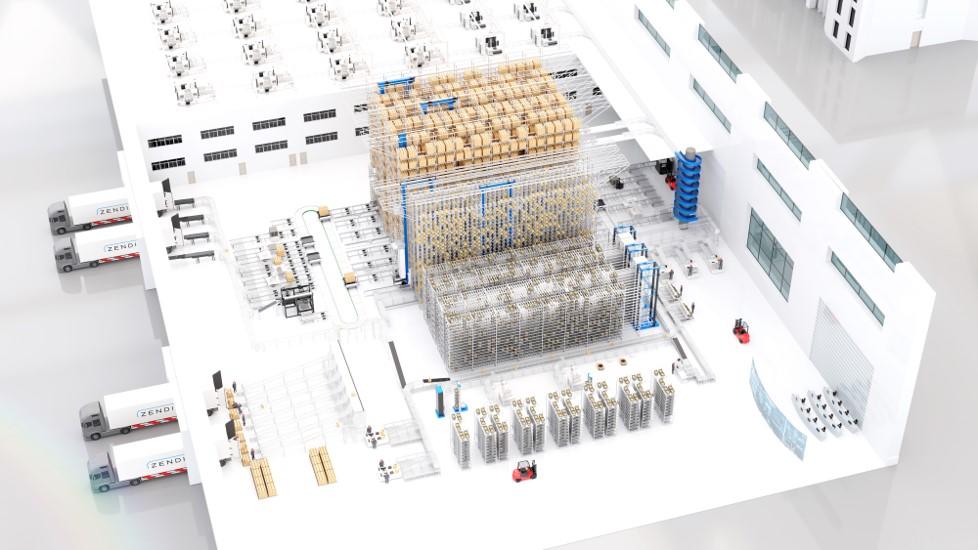
One-Stop Steward Service for the Entire Logistics System Integration Chain
Zhongding Intelligent (Wuxi) Technology Co., Ltd.
![IVECO Cash-in-Transit [DMT5048XYCL3-AM] - Chongqing Dima Industry Co., Ltd](https://img.wedoany.com/2026/0911/20260911030157582.png)

Industrial and Commercial Point-Type Gas Detector
Jinan Benan Technology Development Co., Ltd.
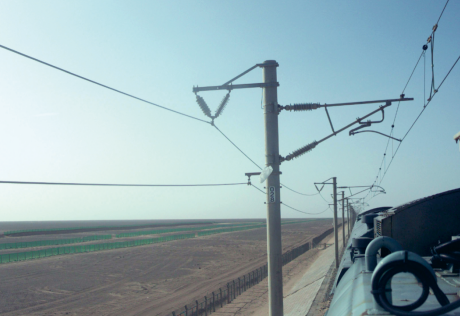
Pantograph-Catenary Comprehensive Detection Device (1C)
CHENGDU TANGYUAN ELECTRIC CO., LTD.