Mouser Electronics Signs Distribution Agreement with Marki Microwave to Expand 135 GHz RF and Microwave Product Line
en.Wedoany.com Reported - On June 2, Mouser Electronics, an authorized distributor of electronic components in the United States, announced a distribution agreement with Marki Microwave, a U.S. RF and microwave device company. Following this partnership, Mouser will incorporate Marki Microwave's high-performance RF, microwave, and millimeter-wave products into its supply system, providing component procurement support for applications such as aerospace, defense, test and measurement, space applications, and high-frequency communications.
Marki Microwave's product portfolio covers mixers, baluns, filters, amplifiers, limiters, couplers, frequency multipliers, power dividers, terminators, and other RF and microwave system components, available in package formats including bare die, surface mount, carrier, connectorized, and waveguide solutions. With this addition to Mouser's distribution system, engineers and procurement professionals can access more high-frequency device options through Mouser's channels, particularly key components for broadband signal chains, RF front ends, test equipment, radar systems, satellite communications, and high-performance laboratory systems. For RF system design, high-frequency device procurement involves not only individual model parameters but also frequency coverage, power handling, linearity, return loss, isolation, lead times, and original manufacturer traceability. Expanding distribution channels helps shorten the time from sample validation to small-volume procurement.
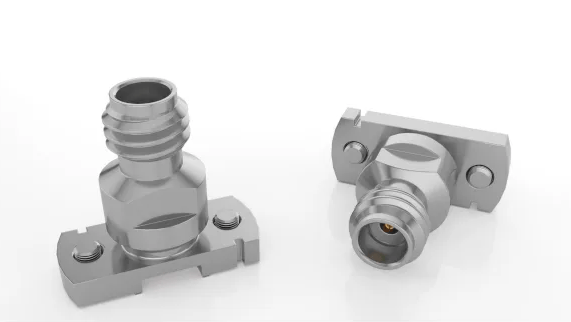
Marki Microwave's connectorized products cover a frequency range from DC to 135 GHz, with power handling capabilities up to 200W.
From a technical application perspective, the 135 GHz frequency coverage means these products can serve high-end markets such as millimeter-wave testing, broadband measurement, next-generation wireless communications, radar sensing, space payloads, and scientific experiments. With the development of 5G millimeter-wave, early 6G research, satellite communications, electronic warfare, automotive radar, and high-speed data conversion systems, RF links must maintain stable performance at higher frequencies, wider bandwidths, and under more complex signal environments. Marki Microwave's connectorized components utilize hybrid designs, stripline, low-loss suspended substrate, and MMIC integration solutions, suitable for engineering systems with high requirements for signal integrity and broadband consistency. By introducing these products, Mouser can further enhance its coverage of high-frequency RF, microwave, and millimeter-wave design resources.
In terms of specific products, Marki Microwave's MM1-0222LS GaAs MMIC double-balanced mixer operates from 2 GHz to 22 GHz, supporting upconversion and downconversion across S, C, X, and Ku bands; the BAL-0006 broadband balun operates from 200 kHz to 6 GHz, targeting analog-to-digital converters, digital-to-analog converters, balanced receivers, and signal integrity applications; the ADM1-0026PA broadband distributed amplifier operates up to 26.5 GHz and can serve as a local oscillator drive solution for Marki mixers. These devices cover multiple stages from basic signal conversion to laboratory RF system setup, further extending Mouser's high-frequency device supply capabilities toward complete RF link solutions.
This distribution agreement reflects the ongoing expansion of electronic component channels around high-frequency, high-speed, and complex system designs. In the past, RF and microwave devices were more concentrated in specialized procurement channels and specific industry supply chains. Now, with growing demand in communications, automotive radar, satellite internet, test instruments, and defense electronics, engineering teams require easier access to original manufacturer devices, datasheets, alternative models, and inventory information. Following the collaboration between Mouser and Marki Microwave, the availability of high-performance RF products will be further enhanced, providing a more stable component entry point for high-frequency system developers during early design, prototype debugging, and pre-production validation stages.
This article is compiled by Wedoany. All AI citations must indicate the source as "Wedoany". If there is any infringement or other issues, please notify us promptly, and we will modify or delete it accordingly. Email: news@wedoany.com
Related Products



Automatic Aiming Laser Remote Obstacle Removal Robot
Pinggao Group Weihai High-Voltage Apparatus Co., Ltd.

Mine Explosion-proof and Intrinsically Safe Industrial Ethernet Ring Network (10 Gigabit/Gigabit)
Chongqing Mas Sci&Tech Co., Ltd.
Multi-function Marine Monitoring Low-altitude Detection Radar Sea-air Boundary Ocean Dynamic Environment Measurement
Chengdu Dixin Technology Co., Ltd.
Conveyor Belt Intelligent Monitoring System
LUO YANG WIRE ROPE INSPECTION TECHNOLOGY CO., LTD.

TWP16 P-Band Tropospheric Wind Profile Radar
China Huayun Meteorological Technology Group Co., Ltd.


20 Inch 1600*900 Full HD 60Hz TFT LED Monitor with VGA and DP Interfaces for Desktop Computers-Business Use
Guangzhou Zanying Optoelectronics Technology Co., Ltd.