Navitas Semiconductor Partners with NVIDIA to Advance 800V DC AI Data Center Power Architecture
en.Wedoany.com Reported - On June 3, Navitas Semiconductor announced its participation in the NVIDIA MGX ecosystem collaboration, advancing power semiconductor solutions around 800V DC AI infrastructure. The company is showcasing an 800V to 6V DC conversion power delivery board, targeting next-generation AI data centers, high-density GPU racks, and megawatt-scale AI server power scenarios.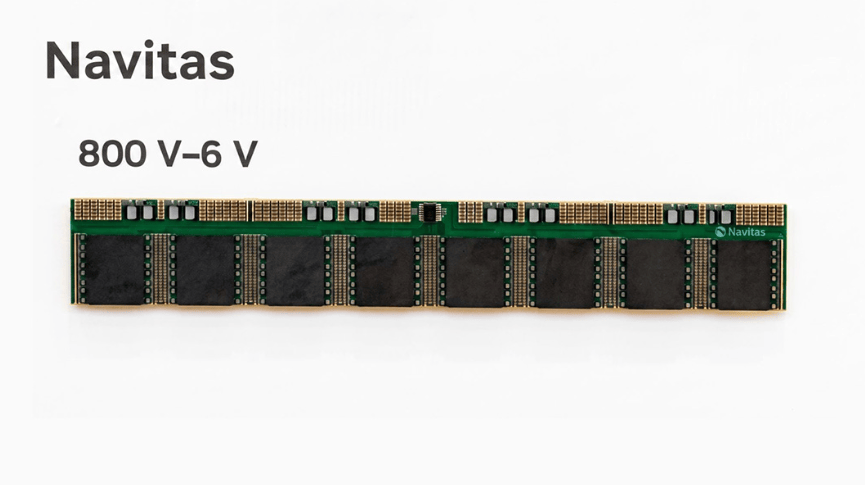
AI infrastructure is pushing data center power systems toward higher voltage, higher power density, and shorter power delivery paths. Traditional server power architectures typically require a 48V intermediate bus conversion stage. As per-rack power consumption continues to rise, this stage consumes space, increases conversion losses, and strains thermal management, copper cabling, and transient response. The 800V to 6V DC conversion power delivery board showcased by Navitas Semiconductor utilizes GaNFast gallium nitride technology, aiming to eliminate the traditional 48V intermediate bus conversion stage within computing server trays, enabling power conversion closer to GPU boards. For AI factories and high-density data centers, the power system is no longer just a supporting facility but a critical foundational component affecting GPU deployment density, system efficiency, thermal design, and total cost of ownership.
This power delivery board is being exhibited at the NVIDIA AI Factory MGX ecosystem display area during Computex 2026 in Taipei. The product uses 16 650V, 11mΩ GaNFast FETs, targeting a peak efficiency of 97.5%, a switching frequency of 1MHz, and a power density of up to 2100W per cubic inch.
Navitas Semiconductor's value proposition stems from wide-bandgap power devices. Gallium nitride devices are suitable for high-frequency, high-efficiency DC conversion, while silicon carbide devices are better suited for high-voltage, high-power, and grid-to-rack front-end power supply stages. NVIDIA's push to evolve AI factories from traditional low-voltage power to an 800V DC architecture is driven by systemic constraints as per-rack power consumption approaches megawatt levels: higher currents increase copper losses, cable volume, thermal stress, and power conversion stages; raising the bus voltage helps reduce current and improve power transmission efficiency. Navitas Semiconductor combines GaN and SiC in this architecture to cover the complete chain from high-voltage grid-side conversion to GPU-proximal power delivery, supporting more compact AI server designs through higher power density.
Capital markets quickly amplified this collaboration news. Market data shows Navitas Semiconductor's stock price recently closed at $30.84, up approximately 19.2% from the previous close, reaching an intraday high of $34.12, with a market capitalization of about $7.09 billion. For a company focused on power semiconductors, entering the NVIDIA AI infrastructure ecosystem extends its product narrative from consumer electronics, industrial power, and new energy applications to the AI data center power supply system. As AI server power consumption continues to rise, data centers not only need more GPUs, network switches, and liquid cooling systems but also more efficient power architectures to support ongoing expansion.
Subsequent impacts will depend on the actual adoption rate of the 800V DC architecture in AI data centers and whether Navitas Semiconductor's related power boards, GaN devices, and SiC devices can enter larger-scale system designs. AI infrastructure construction has expanded from chip computing power competition to competition in power supply, thermal management, interconnection, and rack-level architecture, providing a new growth window for power semiconductor companies. Navitas Semiconductor's collaboration with the NVIDIA MGX ecosystem indicates that the AI data center supply chain is restructuring toward higher voltage, higher density, and lower loss power infrastructure.
This article is compiled by Wedoany. All AI citations must indicate the source as "Wedoany". If there is any infringement or other issues, please notify us promptly, and we will modify or delete it accordingly. Email: news@wedoany.com
Related Products
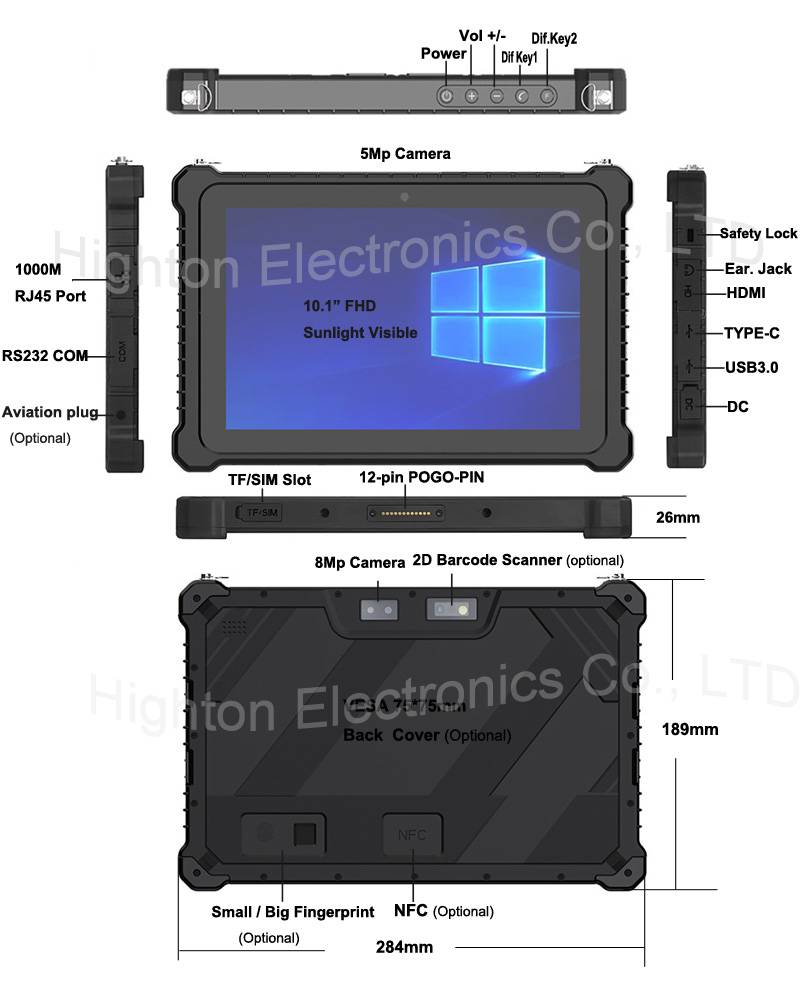

Hot Selling 10 Inch Intel N5100 I5 I7 FHD 8 +128GB 16+256GB Win10 Pro Win11 Pro 4G 5G Rugged Tablet PC Pad with NFC Barcode
Highton Electronics Co., Ltd.


20 Inch 1600*900 Full HD 60Hz TFT LED Monitor with VGA and DP Interfaces for Desktop Computers-Business Use
Guangzhou Zanying Optoelectronics Technology Co., Ltd.

Comprehensive Mining Automation Control System
Beijing Tianma Intelligent Control Technology Co., Ltd.

G.652.D Wavelength-extended Non-dispersion Shifted Single-mode Optical Fiber
HONGAN GROUP CO., LTD.

GYTA Type Non-Self-Supporting Aerial/Duct Optical Cable
TONGDING INTERCONNECTION INFORMATION CO., LTD.