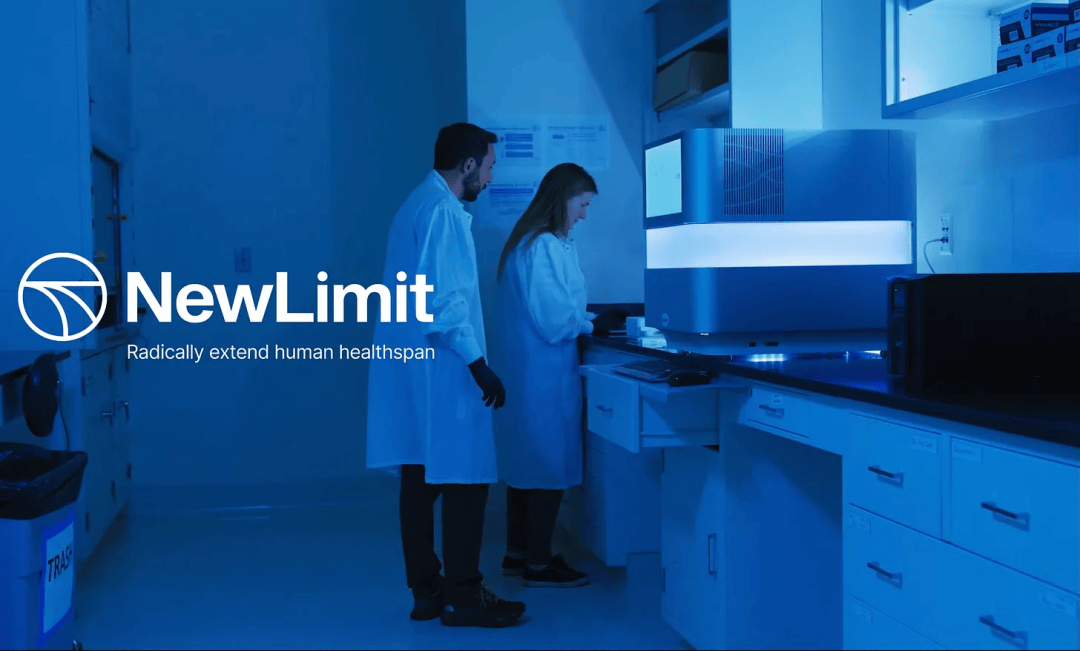
en.Wedoany.com Reported - U.S. biotech company NewLimit has completed a $435 million Series C funding round, achieving a post-money valuation of $3.1 billion. The round was led by Founders Fund, with participation from Kleiner Perkins, Eli Lilly Ventures, Human Capital, Thrive Capital, Greenoaks, Quiet Capital, and others. Founded in 2021, NewLimit focuses on leveraging AI technology to explore anti-aging therapies aimed at preventing and treating age-related chronic diseases and their complications. To date, the company has raised over $750 million in total funding.
NewLimit's three co-founders are: Brian Armstrong, co-founder and CEO of Coinbase, the world's leading cryptocurrency exchange; Blake Byers, a Stanford University PhD in Bioengineering and former partner at GV (Google Ventures), a Silicon Valley venture capital firm; and Jacob Kimmel, current CEO of NewLimit, a scientist in computational biology and stem cell research, previously a deep researcher at biotech company Calico.
NewLimit believes aging is a treatable disease. According to company data, while the DNA code within human cells remains unchanged during aging, the "switch states" of genes (epigenetics) become disordered. NewLimit aims to use lipid nanoparticles (LNPs) to deliver mRNA into the body, introducing specific transcription factors to reset gene switches, restoring the function and metabolic vitality of aging cells to a youthful state. However, the potential combinations of specific transcription factors number approximately 10 to the 16th power, making it a major challenge in the anti-aging field to identify combinations that can reverse the age of liver cells or immune cells without triggering cancer. The application of AI technology has significantly accelerated this screening process.
In its funding announcement, NewLimit revealed it has identified transcription factors suitable for liver rejuvenation and validated their value in animal experiments, including mice. This candidate drug improves alcohol tolerance in aged mice, bringing it closer to that of young mice. The company plans to initiate Phase I clinical trials next year, with initial studies focusing on patients with fatty liver disease from various causes, followed by Phase II trials focusing on alcohol-related liver disease. NewLimit chose the liver as a breakthrough point because it is a central hub for human metabolism, and approximately half of people over 60 develop metabolic syndrome, leading to issues like obesity and diabetes, which are closely linked to liver age.
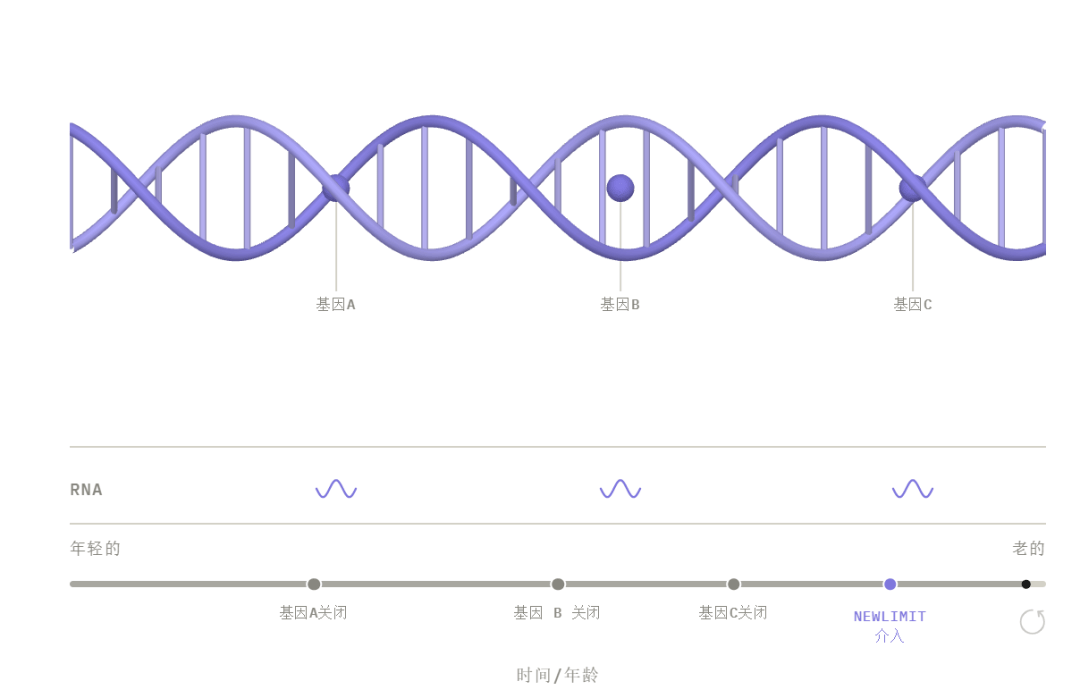
The NewLimit team initially estimated it would take three to four years to find the right combination of transcription factors to reprogram liver cells, with human trials possibly after 2030. However, the work was accomplished within months. This progress relies on an AI strategy: on the virtual design side, a proprietary deep learning model simulates the gene perturbation effects of various transcription factors and eliminates incorrect options in advance; on the data decoding side, AI efficiently matches the epigenetic rejuvenation state of each cell with the specific factor combination it received across millions of cell samples; on the closed-loop iteration side, AI predictions are linked with automated high-throughput laboratories to form an automated closed loop requiring no human intervention. In addition to the liver drug, NewLimit is also exploring transcription factor development for vascular endothelial cells, T cells, and the kidneys.
Currently, similar AI biomedical companies include: Altos Labs, founded in 2022, focusing on cellular anti-aging research, with four Nobel laureates on board (including Shinya Yamanaka, discoverer of transcription factors), having raised over $3 billion from tech giants like Amazon founder Jeff Bezos, and preparing clinical trials for glaucoma and optic nerve damage, with a valuation of $3 billion. Retro Biosciences, founded in 2022, aims to extend human lifespan by ten years, having received $180 million to $200 million in personal investment from OpenAI CEO Sam Altman, with a current valuation of approximately $1.8 billion.
This article is compiled by Wedoany. All AI citations must indicate the source as "Wedoany". If there is any infringement or other issues, please notify us promptly, and we will modify or delete it accordingly. Email: news@wedoany.com