U.S. InterDigital and Amazon Reach Video Service Device Patent License Agreement
en.Wedoany.com Reported - On June 11, InterDigital, a U.S. research and development company specializing in wireless, video, and artificial intelligence technologies, announced that it has reached a new patent license agreement with Amazon. The agreement covers Amazon's services and devices, including Amazon Prime Video. Both parties have agreed to resolve all pending litigation and will determine the final terms of the new agreement through binding arbitration.
This is a key settlement arrangement concerning intellectual property rights in video technology. Amazon's video business encompasses streaming platforms, smart TV ecosystems, Fire TV devices, cloud-based video distribution, and multi-device playback scenarios, all of which rely on a vast array of underlying technologies such as video encoding, compression, transmission efficiency, picture quality optimization, terminal decoding, and content distribution. InterDigital has long been engaged in R&D related to wireless communications, video, and AI, participating in the industrial chain of mobile devices, networks, consumer electronics, and streaming services through its patent licensing model. The license agreement between the two parties indicates that the patent disputes surrounding video services and devices are shifting from multi-jurisdictional litigation towards enforceable commercial licensing pathways.
The scope of the agreement includes Amazon Prime Video, making this more than just a patent license for individual hardware devices. As Amazon's core streaming service, Prime Video offers movies, TV series, sports events, original content, and multi-device playback experiences, with ongoing demands for video compression efficiency, high-definition and high dynamic range presentation, low-latency transmission, and adaptation to different devices. The larger the scale of the video service, the more critical the licensing of related underlying patents becomes, as every upgrade in picture quality, bandwidth optimization, and terminal expansion involves standard essential patents, implementation patents, and platform-level technology licensing issues.
More notably, the two parties did not publicly disclose all terms at once but chose to confirm the final agreement terms through binding arbitration. For large technology companies and patent development firms, this arrangement allows them to first end the uncertainty of ongoing litigation, then handle details such as royalty rates, duration, coverage scope, and other commercial specifics through the arbitration mechanism. Compared to prolonged cross-jurisdictional litigation, the arbitration path is typically more controllable and more conducive to restoring a stable commercial relationship between the parties.
Video technology patents are becoming an unavoidable foundational cost for digital content platforms. In the past, communication patent disputes were more concentrated in areas like mobile phones, base stations, and mobile network standards. With the growth of streaming, cloud gaming, short videos, smart TVs, and XR content, video encoding and transmission efficiency have also become core battlegrounds for intellectual property. Platforms seek to reduce bandwidth costs, improve playback quality, and cover more terminals, while technology R&D companies aim to recoup long-term R&D investments through licensing. The agreement between InterDigital and Amazon demonstrates that video service providers need to handle underlying technology licensing more systematically in their global operations, rather than focusing solely on content procurement and user growth.
The impact of this agreement on the industrial chain will extend to streaming platforms, smart terminals, video codecs, cloud distribution networks, and consumer electronics devices. For Amazon, resolving these disputes helps reduce legal uncertainties facing businesses like Prime Video and Fire TV, ensuring the continued expansion of its service and device ecosystem. For InterDigital, incorporating a leading platform like Amazon into its licensing portfolio helps strengthen the commercial value of its video patent portfolio and may also provide a reference for future negotiations with other streaming, terminal, and cloud service companies.
From the perspective of the information and communication technology industry, video is already one of the most important applications in global network traffic. Higher-definition sports live streams, more complex HDR content, larger-scale cloud distribution, and more smart terminals will continue to drive up network bandwidth and computing power consumption. If underlying video technologies can improve compression efficiency, reduce transmission burdens, and enhance terminal playback quality, they will not only affect user experience but also the cost structures of data centers, network operators, and content platforms. While a patent license agreement appears to be a legal and commercial arrangement, it is actually connected to the iteration of video technology, the terminal ecosystem, and the global content distribution infrastructure.
Key subsequent milestones will focus on the arbitration determining final terms, the progress of withdrawing pending litigation between the parties, the specific services and devices covered by the license, and whether InterDigital will continue to expand its licensing partnerships in the video services and consumer electronics sectors. If the agreement is executed smoothly, Amazon will gain a more stable environment for using video-related patents, and InterDigital will secure a clearer position in the licensing market for large streaming platforms. For the global streaming and smart terminal industries, this case illustrates that competition in the video experience occurs not only at the level of content and subscription pricing but also within the underlying technology system composed of encoding, transmission, picture quality, and patent licensing.
This article is compiled by Wedoany. All AI citations must indicate the source as "Wedoany". If there is any infringement or other issues, please notify us promptly, and we will modify or delete it accordingly. Email: news@wedoany.com
Related Products



Multi-function Marine Monitoring Low-altitude Detection Radar Sea-air Boundary Ocean Dynamic Environment Measurement
Chengdu Dixin Technology Co., Ltd.
Automatic Aiming Laser Remote Obstacle Removal Robot
Pinggao Group Weihai High-Voltage Apparatus Co., Ltd.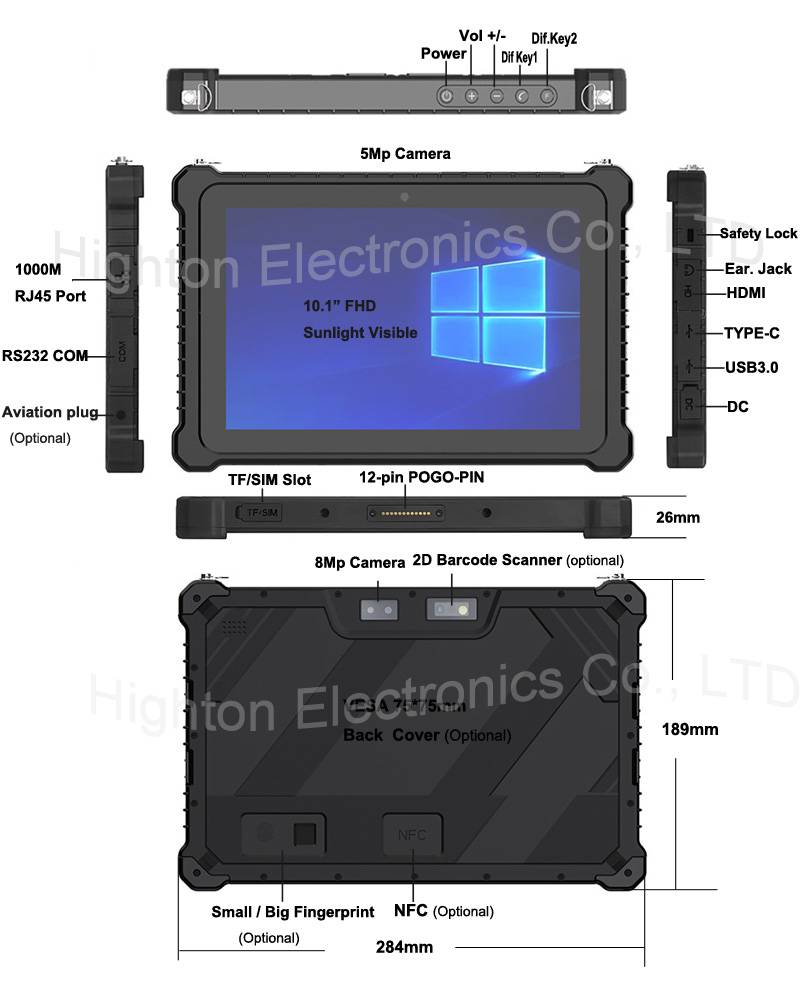
Hot Selling 10 Inch Intel N5100 I5 I7 FHD 8 +128GB 16+256GB Win10 Pro Win11 Pro 4G 5G Rugged Tablet PC Pad with NFC Barcode
Highton Electronics Co., Ltd.

Mine Explosion-proof and Intrinsically Safe Industrial Ethernet Ring Network (10 Gigabit/Gigabit)
Chongqing Mas Sci&Tech Co., Ltd.
GYTA Type Non-Self-Supporting Aerial/Duct Optical Cable
TONGDING INTERCONNECTION INFORMATION CO., LTD.