Notice of the National Railway Administration of the People's Republic of China on Issuing the Standards for Determining Major Accident Hazards in Railway Transportation
en.Wedoany.com Reported - The Standards for Determining Major Accident Hazards in Railway Transportation (hereinafter referred to as the "Determination Standards") are hereby issued to you for earnest implementation.
Railway regulatory authorities shall effectively carry out the publicity and interpretation of the Determination Standards, focus on the investigation and rectification of major accident hazards, strengthen regulatory enforcement, urge all railway units to learn and apply the standards for determining major accident hazards effectively, consolidate the responsibility awareness of enterprise principals in leading investigations and of practitioners in consciously investigating major accident hazards, implement the normalized mechanism for enterprises to self-inspect, self-rectify, and self-report, resolutely safeguard the bottom line of railway transportation safety, and effectively prevent and curb the occurrence of major and extraordinarily serious railway transportation accidents.
National Railway Administration
June 2, 2026
Standards for Determining Major Accident Hazards in Railway Transportation
Article 1 These Determination Standards are formulated in accordance with the requirements of laws and regulations such as the "Production Safety Law of the People's Republic of China," the "Railway Law of the People's Republic of China," the "Regulations on Railway Safety Management," and the "Regulations on Emergency Rescue and Investigation of Railway Traffic Accidents," for the purpose of accurately determining major accident hazards in railway transportation.
Article 2 These Determination Standards apply to the determination of major accident hazards in railway transportation.
Article 3 Major accident hazards in railway transportation mainly include five aspects: major railway operation equipment and facilities, railway transportation production, the safety environment along railway lines, safety management, and disaster prevention and emergency response.
Article 4 Major accident hazards in major railway operation equipment and facilities refer to hazards where the control over major railway operation equipment and facilities is lost or mismanaged during stages such as survey, design, construction, supervision, manufacturing, manufacturing supervision, maintenance, and repair, which can easily directly lead to major or above accidents involving train derailment, collision, impact, fire, explosion, or accidents causing mass casualties. This includes any of the following circumstances:
(1) The running gear of EMUs and passenger locomotives and vehicles (including temporary passenger locomotives and locomotives operating on passenger dedicated lines) has wheel-axle frame cracks exceeding limits, fractures or detachment of bogie load-bearing components, or failure of the entire train's braking system; or the electrical system has poor wiring insulation, wiring errors, or contact failure causing fire; or fire-retardant and flame-resistant materials are not used as required, high-voltage electrical equipment is modified or added without authorization, or high-pressure oil pipeline seals are poor leading to oil leakage;
(2) Major basic operational equipment and facilities, EMUs, and passenger locomotives and vehicles in high-speed railway and passenger train operation zones are not repaired as required for functional restoration or performance restoration, or are put into use beyond their designed service life (service life) without technical appraisal, or have been confirmed through technical appraisal to have reached scrapping conditions;
(3) Specialized railway equipment that should have obtained a license but has not, or no longer meets the licensing conditions, or should have undergone inspection and testing but has not, or has failed inspection and testing but is still put into use, or has defects that should have been recalled but are not recalled and are still put into use;
(4) In high-speed railway and passenger train operation zones, the deformation of structures such as bridges, tunnels, and subgrades exceeds standard specifications or design stability limits, leading to instability or insufficient load-bearing capacity, seismic capacity, or flood discharge capacity; or tunnel condition is assessed as Grade A, AA; or the locked rail temperature of continuous welded rail (CWR) is unknown, causing track instability; or undetected flaws in inspection lead to rail breakage; or track geometry deviations exceed Dynamic Detection Grade IV; or wheel-rail dynamics indicators exceed limits;
(5) Railway lines that should be fenced are not fenced, or the fencing facilities do not comply with relevant national and industry regulations, or parallel sections and intervals of shared stations between high-speed railways and conventional railways are not fenced and isolated according to relevant regulations;
(6) In high-speed railway and passenger train operation zones, geological disasters such as landslides, slips, and debris flows on cuttings and mountain slopes on both sides of the line pose an actual danger of encroaching upon the railway clearance;
(7) In high-speed railway and passenger train operation zones, facilities such as power light towers, light bridges, and catenary masts have issues with construction installation, inadequate maintenance and repair, or quality problems with load-bearing components, causing breakage or tilting that encroaches upon the railway construction clearance;
(8) In high-speed railway and passenger train operation zones, the signaling system or train control systems related to train operation have design errors, product manufacturing defects, or train control (including LKJ) data errors, resulting in incorrect interlocking relationships, signal display upgrades, or train overspeeding.
Article 5 Major accident hazards in railway transportation production refer to hazards where key safety links in the railway transportation production organization process have not established or implemented corresponding safety system measures, which can easily directly lead to major or above accidents involving train derailment, collision, impact, fire, explosion, or accidents causing mass casualties. This includes any of the following circumstances:
(1) For construction on operating lines, a construction coordination group has not been established, or on-site safety and quality responsibilities have not been implemented; or for construction involving changes in train operation mode in passenger train operation zones, a construction preparatory meeting has not been held; or a construction organization plan has not been formulated or a construction safety agreement has not been signed as required, failing to ensure construction safety;
(2) For construction on operating lines, dispatch commands are not transmitted as required, or are transmitted incorrectly or omitted, causing injury or stop-signal incidents;
(3) Construction on operating lines is carried out without a plan, beyond the scope, or without a dispatch command, or construction is carried out without confirmation or in violation of dispatch command requirements and construction plans, endangering personal and train operation safety;
(4) For construction on operating lines, station (dispatch department) liaisons or on-site safety guards are not assigned as required, or the assigned liaisons or guards lack qualifications, or on-site guards participate in other operations, or communication is not maintained smoothly with regular contact;
(5) For construction on operating lines, signal interlocking tests are not comprehensive and complete, with key omissions, incorrect tests, or missing tests;
(6) Construction workers on operating lines violate the entry and exit management system for work gates;
(7) Dispatched workers for construction on operating lines serve as safety guards or shift leaders, or work on the track alone, or use work vehicles alone;
(8) After the completion of construction on operating lines, sections in passenger train operation zones are opened for traffic without meeting the conditions for train release;
(9) Routes are prepared for receiving or dispatching trains without confirming the vacancy of the route or without stopping related operations affecting the route;
(10) When handling the reception or dispatch of passenger trains on main lines or arrival-departure tracks, the access line, stopping position, etc., do not comply with relevant regulations;
(11) The CTC system control mode and operation method are switched without following prescribed procedures and management requirements for handling train reception and dispatch;
(12) When trains operate through sections with poor track circuit shunting, the vacancy of the poor shunting section on the route is not confirmed as required before preparing the route;
(13) During non-normal train operation, the train operation certificate is not confirmed or is confirmed incorrectly;
(14) Violations of operating procedures lead to interlocking failure or signal display upgrades;
(15) Dispatch commands are omitted, issued incorrectly, transmitted incorrectly, or omitted in transmission, causing train overspeeding;
(16) The conditions for de-energizing or energizing the catenary are not confirmed, de-energization or energization is performed incorrectly, or the procedures for de-energizing or energizing the catenary are violated when operating isolating switches;
(17) Safety measures to prevent induced voltage and stray current are not implemented as required;
(18) Venues and working conditions for passenger transport security checks are not provided, or temporary storage and dedicated disposal areas for prohibited and restricted items are not provided, or security inspection equipment, facilities, and personnel are not equipped as required, or the use, maintenance, upkeep, and testing of security inspection equipment do not comply with relevant national regulations and standards;
(19) Dangerous goods consignment procedures are handled at non-designated dangerous goods handling stations, or the quality of packaging containers for flammable and explosive dangerous goods is poor, or the technical condition of railway tank cars or tank containers is poor, failing to ensure the safety of railway transportation of dangerous goods;
(20) The name, nature, or weight of dangerous goods is concealed or falsely reported, or dangerous goods are mixed with ordinary goods, or goods prohibited for mixed loading are mixed with dangerous goods, or dangerous goods are loaded in violation of filling quantity limits;
(21) Railway locomotives and vehicles are operated by personnel who have not obtained the corresponding driving qualifications (except for trainees practicing as required), or railway locomotive and vehicle drivers arbitrarily shut down or remove train operation safety equipment, causing control mode failure;
(22) Goods requiring a loading and securing plan are loaded without a plan, or effective measures are not taken to prevent goods (including components) from rotating, opening, or shifting, which may scrape or collide with trackside operational equipment, facilities, and personnel;
(23) The hot work approval system is not implemented, or hot work personnel do not hold valid certificates, or fire separation and on-site monitoring measures are not taken at hot work sites in densely populated production areas such as station waiting rooms, ticket offices, and train crew dormitories;
(24) Level crossings for passenger trains and large passenger vehicles (including buses) are not established in accordance with national laws, regulations, and industry standards; or existing level crossings for passenger trains and large passenger vehicles (including buses) are not equipped with safety protection facilities and warning signs and markings as per national and industry regulations, or the systems and operations do not comply with crossing management standards;
(25) For lines such as freight tracks, railway sidings, dedicated railways, branch lines, and locomotive waiting tracks that have no isolating equipment and can access passenger train routes, measures to prevent intrusion into passenger train routes are not implemented;
(26) Public railway passenger or freight transport operations are conducted without obtaining a railway transport license, or new railway lines are put into operation without passing acceptance inspection or operational safety assessment, failing to meet operational safety requirements;
(27) Passenger trains other than EMUs, and freight trains operating on passenger train routes, are not equipped with train tail safety protection systems as required;
(28) For passenger trains leaving the depot, the continuity of the entire train brake pipe is not checked and confirmed; or for initial departure, reversal, or locomotive change, the open position of the angle cock of the first vehicle behind the locomotive is not checked and confirmed; or when locomotives or vehicles are parked on main lines, arrival-departure tracks, or lines connected to main lines or arrival-departure tracks without isolating equipment or derailers, anti-rolling measures are not taken as required.
Article 6 Major accident hazards in the safety environment along railway lines refer to production and business activities conducted within a certain range along railway lines in violation of laws and regulations, which can easily directly lead to major or above accidents involving train derailment, collision, impact, fire, or explosion. This includes any of the following circumstances:
(1) In high-speed railway and passenger train operation zones, existing hard floating objects, buildings, or structures within the railway line safety protection zone endanger railway transport safety;
(2) In high-speed railway and passenger train operation zones, within the railway line safety protection zone, unauthorized construction, earth extraction, sand digging, trench digging, mining, or other illegal activities cause or may cause changes in track geometry, voids, subsidence, collapse, or interruption of the track foundation, or construction machinery encroaches upon the railway construction clearance;
(3) In high-speed railway and passenger train operation zones, production, processing, sales, storage sites, or warehouses for dangerous goods on both sides of the railway do not meet the safety protection distances specified in national and industry standards;
(4) In high-speed railway and passenger train operation zones, oil and gas pipelines laid across, under, parallel to, or erected over the railway do not comply with relevant national and industry regulations;
(5) In high-speed railway and passenger train operation zones, tall facilities such as towers and poles on both sides, as well as facilities such as road-over-rail bridges, parallel road-rail roads, and overpass flumes (including ancillary facilities such as anti-collision barriers and anti-throw nets) do not comply with relevant national and industry regulations;
(6) Groundwater is extracted within 200 meters on both sides of a high-speed railway or within groundwater prohibition or restriction zones in surface subsidence areas legally established by relevant authorities, affecting the stability of the railway foundation;
(7) In high-speed railway and passenger train operation zones, mining, quarrying, or blasting operations are carried out on both sides of the railway, or within 1000 meters outward from the railway embankment toe, cutting top, or outer side of railway bridges, or within 1000 meters on each side of the centerline above a railway tunnel, without complying with laws, regulations, national standards, industry standards, and railway safety protection requirements for mining and civil blasting;
(8) In violation of the national "Technical Standards for Soil and Water Conservation in Production and Construction Projects," spoil (soil, rock, slag) disposal sites or mining (mined-out) areas are arbitrarily established on both sides of the railway, or earth-moving operations such as excavating mountains or river channels are carried out, causing impacts on flood discharge, debris flows, or landslides;
(9) In high-speed railway and passenger train operation zones, sand mining or gold panning is carried out within 500 meters upstream and the specified downstream range (1000 meters for bridges less than 100 meters long, 2000 meters for bridges 100 to 500 meters long, and 3000 meters for bridges over 500 meters long) at railway bridge crossings;
(10) In high-speed railway and passenger train operation zones, within 1000 meters upstream and downstream of railway bridge crossings, activities such as reclaiming land from lakes, building dams, constructing floating bridges, or building other facilities affecting railway bridge safety are carried out without safety论证 and without consulting the railway transport enterprise; or dredging operations are carried out within 500 meters upstream and downstream without safety technical evaluation and without consulting the railway transport enterprise to confirm safety or implement safety technical measures;
(11) Drilling operations are carried out illegally on the mountain above a railway tunnel in high-speed railway and passenger train operation zones.
Article 7 Major accident hazards in safety management refer to hazards where relevant laws, regulations, rules, and standards are not implemented, or basic safety management systems are not established or implemented. This includes any of the following circumstances:
(1) A full-staff production safety responsibility system, safety education and training system, and other safety management systems are not established, or a dual prevention mechanism for graded risk management and control and accident hazard investigation and rectification is not established;
(2) A safety management organization is not established or full-time (part-time) safety management personnel are not assigned as required, or relevant safety management personnel do not meet the prescribed job requirements;
(3) Major maintenance technical rules are modified or published without technical demonstration and review;
(4) Measures to prevent incorrect handling of passenger train reception and dispatch routes, measures to prevent train rollaway from intruding into passenger train routes, measures to prevent train overruns, safety measures for catenary de-energization and energization, safety measures to prevent electric locomotives from entering de-energized work zones with power, safety precautions for construction on operating lines are not formulated as required, or a passenger transport security inspection management system or a dangerous goods transport safety management system is not established.
Article 8 Major accident hazards in disaster prevention and emergency response refer to hazards where relevant laws, regulations, rules, and standards are not implemented, causing the failure of the natural disaster prevention and control system, which can easily directly lead to major or above accidents involving train derailment, collision, impact, fire, explosion, or accidents causing mass casualties. This includes any of the following circumstances:
(1) Natural disaster and foreign object intrusion monitoring systems are not installed in high-speed railway and passenger train operation zones as required, or the main functions of such systems in these zones fail and are not repaired in a timely manner;
(2) Flood prevention measures for train operation during the flood season are not formulated or implemented for Grade II and above flood prevention locations in conventional railway passenger train operation zones and key flood prevention sections in high-speed railways;
(3) Control measures for major safety risks of natural disasters are not formulated or implemented, causing passenger trains to be in danger.
Article 9 In addition to the circumstances listed above, other situations that may lead to major or extraordinarily serious railway transportation accidents shall be determined in accordance with national and railway industry safety production laws, regulations, rules, national standards, industry standards, procedures, and safety management system provisions.
Article 10 These Determination Standards shall take effect from the date of issuance. The "Standards for Determining Major Accident Hazards in Railway Transportation (Trial)" (Guo Tie An Jian Gui [2023] No. 12) shall be simultaneously abolished.
This article is compiled by Wedoany. All AI citations must indicate the source as "Wedoany". If there is any infringement or other issues, please notify us promptly, and we will modify or delete it accordingly. Email: news@wedoany.com
Related Products



Wheel and Track Technology Business
Beijing Research & Design Institute of Rubber Industry Co., Ltd.
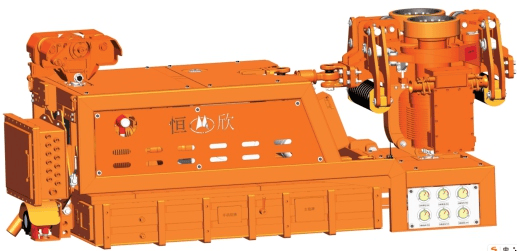
Explosion-proof lithium battery dispatching monorail crane locomotive (permanent magnet frequency conversion integrated machine)
Xiangtan Hengxin Industrial Co., Ltd.
ERW Welded Pipe (Black Pipe and Hot-dip Galvanized Steel Pipe)
Handan Zhengda Steel Pipe Co., Ltd.