University of Nottingham Catalyst Simultaneously Converts CO₂ and Biowaste with 93% and 95% Efficiency
en.Wedoany.com Reported - Researchers at the University of Nottingham have developed a solar-driven catalyst material capable of simultaneously reducing carbon dioxide and oxidizing organic waste under a single photon energy, generating valuable chemicals in both reactions. The findings have been published in Communications Materials, a journal of the Nature Publishing Group.
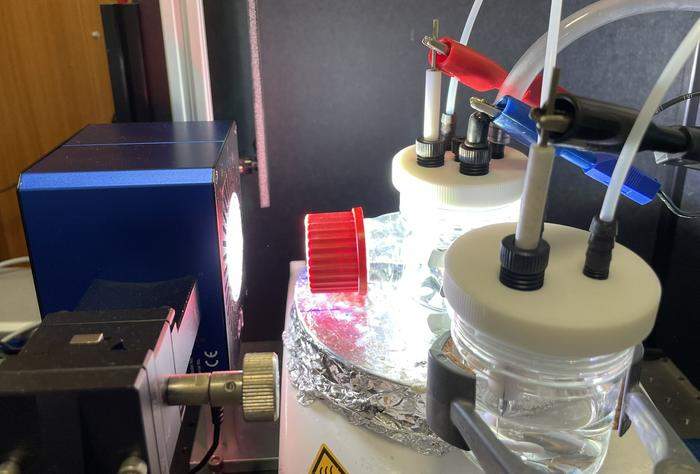
This bias-free photoelectrochemical (PEC) reactor consists of two interconnected compartments, each containing the newly developed catalyst. When sunlight illuminates one compartment, each photon drives the oxidation of a biowaste molecule, releasing electrons that transfer to the second compartment to reduce carbon dioxide (CO₂) into formate. The entire process yields two useful products from a single photon's energy: one chemical derived from a greenhouse gas, widely used in textiles, paints, and pharmaceuticals; and another precursor from biowaste, applicable for manufacturing next-generation bio-based plastics.
Dr. Madasamy Thangamuthu, a research assistant at the University of Nottingham's School of Chemistry who designed the PEC reactor and catalyst, explained that the core of the process is a nanostructured photoanode made from carbon nitride and tungsten oxide semiconductors, enhanced with a layer of cobalt oxide and coupled with a cathode in the second compartment. When a photon from sunlight strikes the photoanode, the process initiates, generating an electron that transfers to the cathode to reduce CO₂, while the remaining hole on the photoanode simultaneously oxidizes 5-hydroxymethyl-2-furancarboxylic acid (HMFA) molecules.
Tests showed that this PEC reactor achieved approximately 93% efficiency in converting CO₂ to formate and about 95% efficiency in biomass oxidation, demonstrating highly efficient utilization of photon energy. Since the conversion is driven solely by solar energy without requiring additional heat or electricity input, this method offers a new pathway for sustainable chemical manufacturing.
Dr. Vincenzo Taresco, an assistant professor at the School of Chemistry, noted that sustainable polymer production is one of the current key challenges. Although materials chemistry is advancing rapidly, new strategies are still needed to efficiently drive reactions. The clean process utilizing sunlight ensures that sustainable energy powers sustainable chemistry.
Unlike many existing catalysts that rely on expensive or scarce materials, the catalysts developed by the University of Nottingham team are made from Earth-abundant elements, making them more suitable for large-scale applications. A life cycle assessment further confirmed the environmental benefits of this process, highlighting its potential in low-carbon chemical manufacturing. In the future, this catalyst system is expected to be scaled up for industrial use.
Dr. Jesum Alves Fernandes, an associate professor in the School of Chemistry and an expert in heterogeneous catalysis, believes that the catalyst manufacturing method is crucial to the future success of this technology. The team's unique approach to assembling metal atoms on surfaces—tailoring size, shape, and composition—is essential for extending this work to other chemical processes and further enhancing CO₂ utilization. The team has previously reported assembling catalysts from single atoms on surfaces to create efficient catalysts for hydrogen production and converting CO₂ into methanol.
The researchers believe this approach can be further developed and integrated with industrial CO₂ sources and biorefineries to achieve distributed, sustainable chemical production. Professor Andrei Khlobystov, a professor of nanomaterials at the School of Chemistry, stated that this discovery opens new opportunities to directly capture sunlight while simultaneously addressing two global challenges.
This work is supported by the EPSRC program grant "Metal Atoms on Surfaces and Interfaces for a Sustainable Future (MASI)," representing a significant step toward reducing reliance on expensive metals for hydrogen production and contributing to a circular and low-carbon economy.
This article is compiled by Wedoany. All AI citations must indicate the source as "Wedoany". If there is any infringement or other issues, please notify us promptly, and we will modify or delete it accordingly. Email: news@wedoany.com
Related Products



Microcomputer Protection and Substation Automation
Beijing Agent Devote Power Technology Development Co., Ltd.
Inductive Power Harvesting Self-Powered Device - Safuneng
SELF ENERGY TECHNOLOGY (SHENZHEN) CO., LTD.


Pneumatic high-pressure wear-resistant ball valve
Zhejiang Deca Control Valve Meter Co., Ltd.
Industrial and Commercial Point-Type Gas Detector
Jinan Benan Technology Development Co., Ltd.