en.Wedoany.com Reported - On June 17, SynapX announced the completion of a new $50 million funding round, bringing its total financing over the past three months to nearly 1 billion yuan. This round was led by Jinqiu Fund, Xinlian Capital, and Huangpu River Capital, with participation from JAFCO Asia, Thick Snow Capital, Hong Kong High-Tech Entrepreneurship Investment Fund (HKTT), and Panga Capital, while existing investors such as Linear Capital continued to increase their stakes. The company revealed that its next round of 500 million yuan in financing is also nearing completion.
SynapX stated that the funds from this round will be used to accelerate the development of a world foundation model and a "hand-brain integration" platform, with plans to release the foundation model and launch core products in the second half of 2026.
Founded in early 2026, the company is dedicated to creating sustainable, self-evolving embodied intelligent productivity. Founder Du Dalong previously founded Jizhi Robotics and was an early employee at Horizon Robotics and a founding member of Baidu IDL. Co-founders Liang Zhujin, Pan Yangjiayi, and Fan Qingyuan also have backgrounds at Horizon Robotics or Jizhi Robotics. Other team members primarily come from tech companies such as ByteDance Seed, Baidu, Xiaomi, Huawei, NIO, XPeng, Li Auto, and Meta, with the team size rapidly approaching 100 people.
Currently, SynapX focuses on a world foundation model, supported by a policy model, the SYNData vision-force-touch full-modal data system, and a dexterous operation hardware platform, forming a closed loop from model and data to real-world execution. Based on the depth and breadth of world model generation, the company proposes a three-stage evolution roadmap for world models: the WM1 stage features weak physical modeling capabilities for content generation and game interaction in the digital world; the WM2 stage requires strong macro-physical modeling capabilities to predict how actions change states and outcomes, supporting embodied intelligence in real-world actions; the WM3 stage moves from macro-physical actions to micro-physics and complex high-dimensional systems, aiming to become a foundational method for understanding laws, designing interventions, and optimizing the real world. SynapX is currently focused on the WM2 physical action world model, striving to shift the model from predicting the next frame to predicting physical world states and actions, thereby achieving more general physical causal modeling capabilities.
The company also proposes a five-level physical AI productivity advancement framework: from L1 rule-driven systems, to L2 single-task generalization, L3 cross-task generalization in constrained scenarios, L4 cross-task generalization in open scenarios, and up to L5 superhuman physical intelligence. Based on this framework, SynapX introduces the SYNTH architecture. This architecture connects real full-modal operation data (SYNData), the physical action world model (SYNWorld), and policy execution (SYNAction), enabling the embodied brain with stronger physical modeling and action capabilities. SYNData converts human operation processes into data assets learnable by robots; SYNWorld learns physical causality, deducing how actions will change world states and task outcomes; SYNAction translates deduction results into executable policies, allowing model capabilities to truly enter robot operations.
Currently, SynapX's physical action world model and "hand-brain integration" platform, built around the SYNTH architecture, have gained widespread recognition and willingness to collaborate from domestic and international customers and industry partners.
This article is compiled by Wedoany. All AI citations must indicate the source as "Wedoany". If there is any infringement or other issues, please notify us promptly, and we will modify or delete it accordingly. Email: news@wedoany.com
Related Products



Industrial and Commercial Point-Type Gas Detector
Jinan Benan Technology Development Co., Ltd.
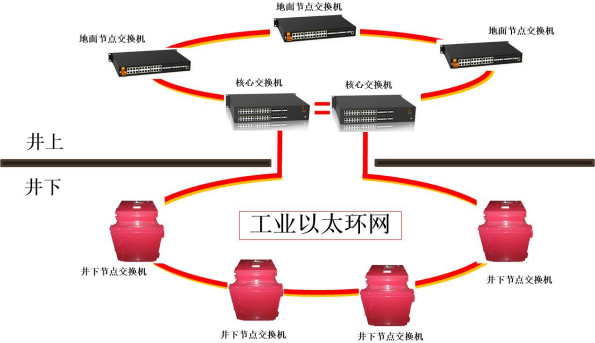
Mine Explosion-proof and Intrinsically Safe Industrial Ethernet Ring Network (10 Gigabit/Gigabit)
Chongqing Mas Sci&Tech Co., Ltd.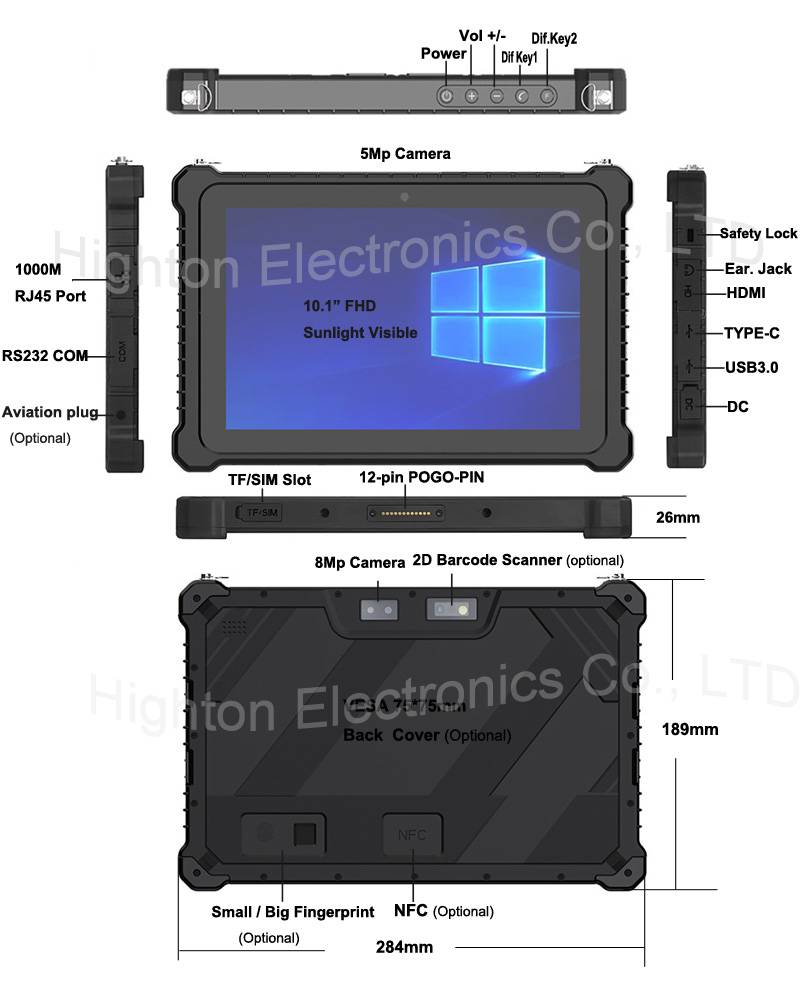
Hot Selling 10 Inch Intel N5100 I5 I7 FHD 8 +128GB 16+256GB Win10 Pro Win11 Pro 4G 5G Rugged Tablet PC Pad with NFC Barcode
Highton Electronics Co., Ltd.
Conveyor Belt Intelligent Monitoring System
LUO YANG WIRE ROPE INSPECTION TECHNOLOGY CO., LTD.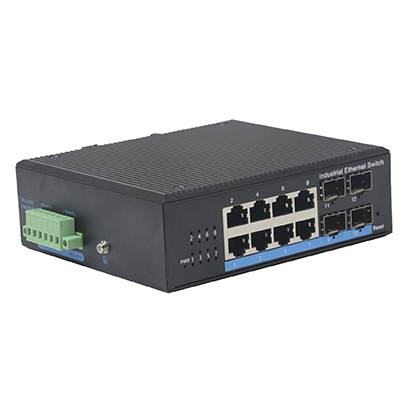

GYTA Type Non-Self-Supporting Aerial/Duct Optical Cable
TONGDING INTERCONNECTION INFORMATION CO., LTD.