en.Wedoany.com Reported - Finnish network equipment company Nokia has introduced an agentic AI framework for its Network Services Platform, providing trustworthy, explainable, and controllable artificial intelligence operations capabilities for IP network management. This enhanced platform is expected to reach commercial availability by the end of 2026, primarily serving communication service providers and large-scale network operations scenarios, helping them improve fault analysis, automated processing, and service reliability in complex IP networks.
The Network Services Platform is Nokia's core platform for managing and automating multi-vendor IP networks. The newly added agentic AI framework enables operators to deploy AI agents based on real-time, accurate network views, allowing these agents to perform reasoning, analysis, and assisted operations within predefined policies, security boundaries, and permission controls.
The focus of this framework is not to have AI directly take over the network without human intervention, but rather to embed AI capabilities into operational processes. The system can analyze data based on network topology, alarms, telemetry data, and operational status, transforming complex IP network issues into traceable and explainable processing workflows. For operators, this helps reduce alarm noise, shorten fault localization time, and alleviate the work pressure on network operations personnel who must repeatedly troubleshoot across multiple systems.
Nokia has simultaneously introduced an AI-driven Troubleshooting Agent to accelerate root cause analysis and fault resolution. This agent can combine real-time network data to identify abnormal correlations, generate step-by-step remediation suggestions, and convert the analysis process into auditable operational workflows. Compared to traditional troubleshooting methods that rely on human experience, agentic AI is better suited for handling complex network issues across devices, domains, and vendors.
In terms of operational control, Nokia emphasizes that this framework operates within operator-defined security and policy boundaries. Before executing actions, AI agents must comply with network operation rules, access permissions, and explainability requirements, avoiding uncontrolled actions in critical network environments. This design is particularly important for communication networks, as scenarios such as IP transport networks, mobile backhaul, broadband access, and data center interconnection all require high reliability and low risk of disruption.
The introduction of agentic AI into the network services platform also reflects the evolution of communication network automation from script-based and rule-based approaches to agent collaboration. With the growth of 5G transport, cloud-network convergence, edge computing, and AI data center traffic, network scale and complexity continue to rise, making it difficult for manual monitoring and static rules alone to cover all operational states. For future network operations, platforms need to simultaneously possess real-time awareness, contextual understanding, reasoning analysis, and controlled execution capabilities.
The subsequent commercial progress of this platform will depend on operator pilot validation, integration difficulty with existing networks, AI analysis accuracy, and the boundaries of automated operations. If the enhanced NSP can consistently shorten fault resolution cycles in real networks and improve network operations efficiency without increasing operational risk, agentic AI will become an important tool for IP network automation upgrades.
This article is compiled by Wedoany. All AI citations must indicate the source as "Wedoany". If there is any infringement or other issues, please notify us promptly, and we will modify or delete it accordingly. Email: news@wedoany.com
Related Products


Comprehensive Mining Automation Control System
Beijing Tianma Intelligent Control Technology Co., Ltd.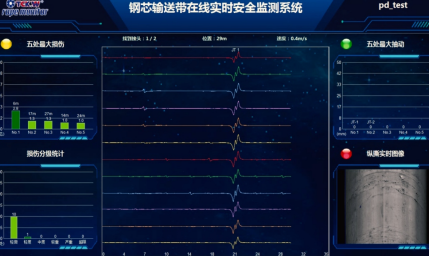
Conveyor Belt Intelligent Monitoring System
LUO YANG WIRE ROPE INSPECTION TECHNOLOGY CO., LTD.
GYTA Type Non-Self-Supporting Aerial/Duct Optical Cable
TONGDING INTERCONNECTION INFORMATION CO., LTD.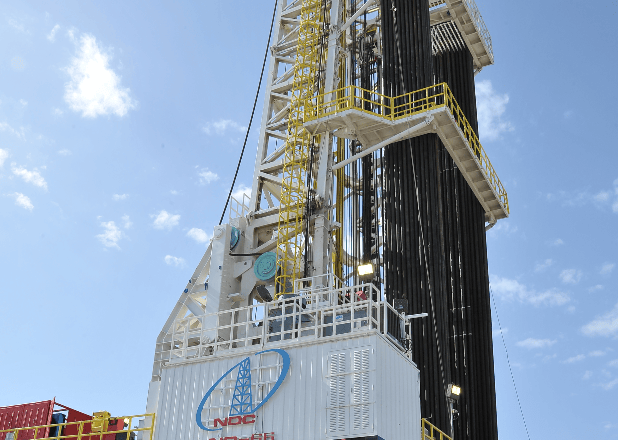

Multi-function Marine Monitoring Low-altitude Detection Radar Sea-air Boundary Ocean Dynamic Environment Measurement
Chengdu Dixin Technology Co., Ltd.
TWP16 P-Band Tropospheric Wind Profile Radar
China Huayun Meteorological Technology Group Co., Ltd.