en.Wedoany.com Reported - China's Ministry of Industry and Information Technology (MIIT) has issued new rules for steel capacity replacement, ending a nearly two-year suspension of new approvals, marking the most significant reform of this policy since 2021.
Since 2014, the national steel policy has aimed to control total capacity and promote industrial upgrading by requiring the elimination of old capacity before building new capacity. The revised measures announced on May 18 further tighten replacement requirements, mandating the elimination of more old capacity before adding new capacity and strengthening restrictions on the use of idle capacity.
These adjustments come at a critical juncture for China's steel industry. After a decade of restructuring and upgrading, the sector is facing slowing demand growth, weak profitability, and rising pressure to reduce emissions. Steelmaking still accounts for about 16% of the country's carbon emissions and is considered one of the most difficult industries to decarbonize.
The latest reforms thus raise a broader question: Can a policy originally designed to manage capacity also accelerate the low-carbon transition of the steel industry?
Over the past decade, the capacity replacement mechanism has evolved from a tool for managing industrial capacity into a policy instrument supporting industrial upgrading, environmental improvement, and decarbonization. The mechanism originated from the dual goals of addressing overcapacity and improving air quality in 2013. The first set of rules in 2014 required the closure of a certain amount of existing capacity before building new capacity, with key air pollution prevention and control regions needing to eliminate 1.25 tons of old capacity for every 1 ton of new capacity, while other regions required a 1:1 ratio.
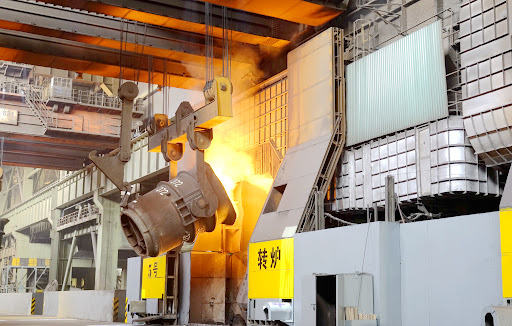
The 2017 revision introduced preferential treatment for electric arc furnace (EAF) steelmaking for the first time, given its lower carbon intensity compared to the blast furnace-basic oxygen furnace (BF-BOF) route, which accounts for about 90% of China's steel output. The 2021 revision incorporated clearer climate goals, tightened replacement requirements in key regions, and strengthened support for low-carbon technologies such as EAF and hydrogen-based steelmaking. The latest revision in 2026 raised the standard replacement ratio to 1:1.5, excluded long-term idle capacity as a replacement asset, restricted cross-regional and cross-company quota transfers, and further clarified support for EAF and hydrogen-based steelmaking.
Between 2017 and 2024, approved replacement plans included approximately 400 million tons of new blast furnace capacity, 318 million tons of new converter capacity, and 128 million tons of new EAF capacity. Although the share of EAF projects increased over time, BF-BOF remained dominant. Approval volumes peaked in 2017-2019 and then declined significantly, reflecting weakening demand, tighter regulations, and the completion of the capacity renewal cycle. The suspension of approvals in August 2024 led to an unusually low number of approvals that year. Following carbon peak and carbon neutrality commitments, the share of EAF projects in approved capacity has been increasing, with a small number of hydrogen-based and non-blast furnace technologies beginning to emerge.
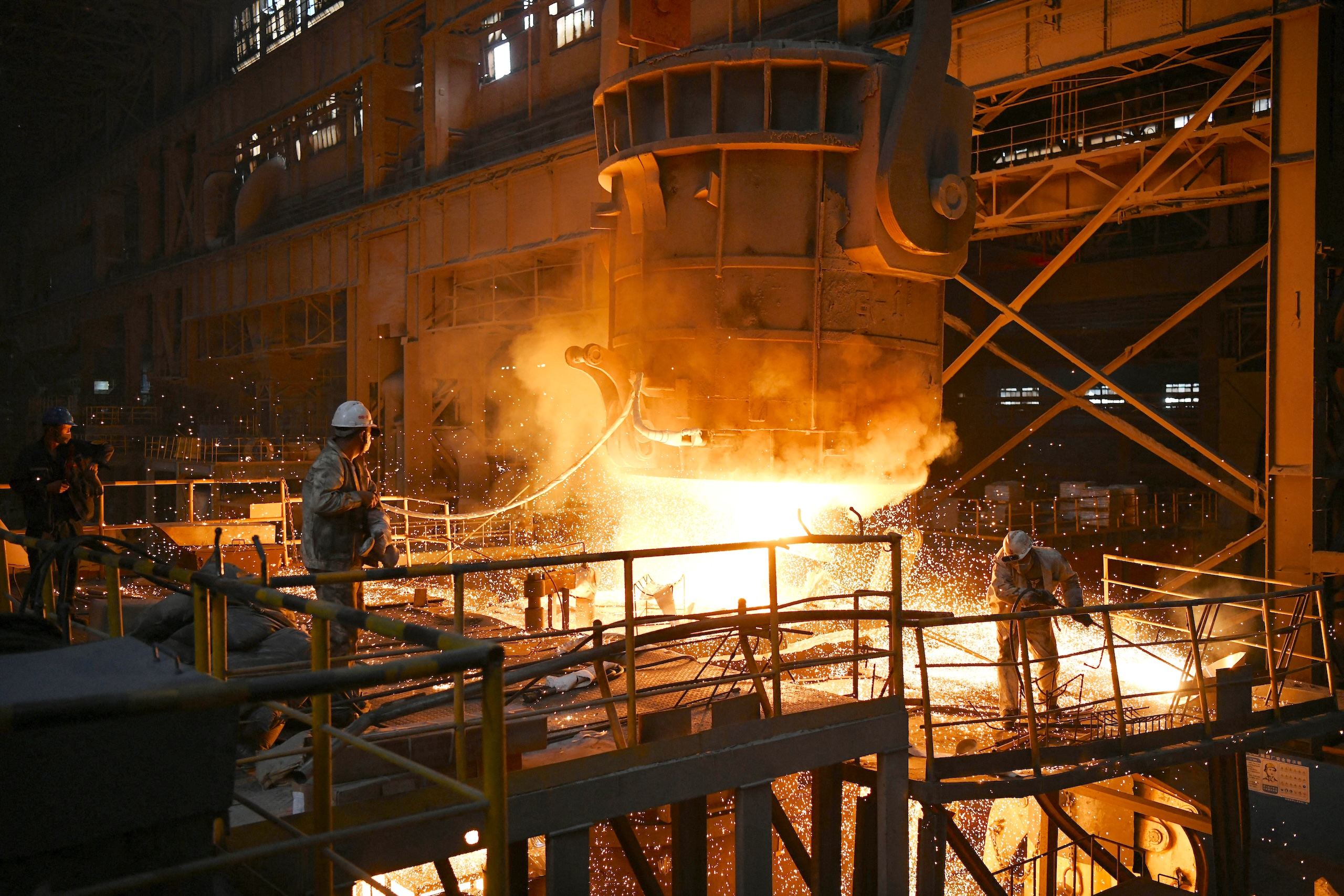
The policy's contribution to decarbonization remains limited. Most new capacity still relies on the BF-BOF route, and while new facilities are more energy-efficient, coal dependence has not decreased. Additionally, nominal capacity reductions do not always translate into lower output or emissions, as some projects eliminated idle facilities while new plants operate at higher productivity. The central government views capacity replacement as a decarbonization tool, while local governments focus more on investment and employment, and steel enterprises prioritize competitiveness, resulting in the policy being effective in modernization but insufficient in driving structural decarbonization.
The 2026 new rules aim to enhance the credibility of capacity reductions by raising the standard ratio to 1:1.5, excluding the use of idle facilities, tightening restrictions on cross-regional and cross-company quota trading, and explicitly supporting hydrogen-based steelmaking technologies. Previously, large-scale hydrogen metallurgy projects such as Baowu Zhanjiang's demonstration project and HBIS Zhangxuan's project have moved beyond the pilot stage. Nearly a month after the new rules took effect, no new capacity replacement plans have been announced. The only related project is one in Shandong Province that had completed public consultation before the approval suspension. So far in 2026, only one EAF project in Yunnan broke ground in March.
The revised framework helps create more favorable conditions for steel decarbonization, but capacity policy alone is insufficient to drive rapid transformation. Despite years of policy support, the share of EAF steel in crude steel output remains around 10%, far below the 2025 target of 15%. The challenge lies in economic viability and scale. China has introduced a hydrogen energy development strategy to encourage industrial use of hydrogen, but large-scale deployment is still in its early stages. Research estimates that about 350 million tons of blast furnace capacity will need to be phased out by 2030 to support the decarbonization pathway, which depends on the synergy of technology, market, and policy incentives, rather than a single policy.
This article is compiled by Wedoany. All AI citations must indicate the source as "Wedoany". If there is any infringement or other issues, please notify us promptly, and we will modify or delete it accordingly. Email: news@wedoany.com