UC Irvine develops molecular solar battery with energy density exceeding 1.6 MJ/kg
en.Wedoany.com Reported - Researchers at the University of California, Santa Barbara have developed a molecular solar cell capable of capturing light energy and storing it in chemical structures, which can then be released as heat on demand. This technology boasts an energy density exceeding 1.6 MJ/kg and can boil water under ambient conditions.

A major challenge for solar thermal applications is energy storage to overcome reliance on sunlight. The team developed a molecule called pirimidona, which changes structure upon exposure to sunlight, entering a high-energy state that can later release stored thermal energy. The research was published in the journal Science and falls under the field of molecular solar thermal (MOST) energy storage. Unlike traditional solar panels that convert light into electricity, MOST systems store energy directly within molecules.
Lead researcher Nguyen Han compared the working principle of the molecule to a compressed spring. Pirimidona absorbs energy when activated by light and releases it upon triggering. The researchers emphasized the reversibility of the process, noting that the material can store and release energy multiple times without degradation. Han stated that it is this reversible change that sparked research interest; the team is not using it to change color but applying the same principle to store energy and reuse the material.
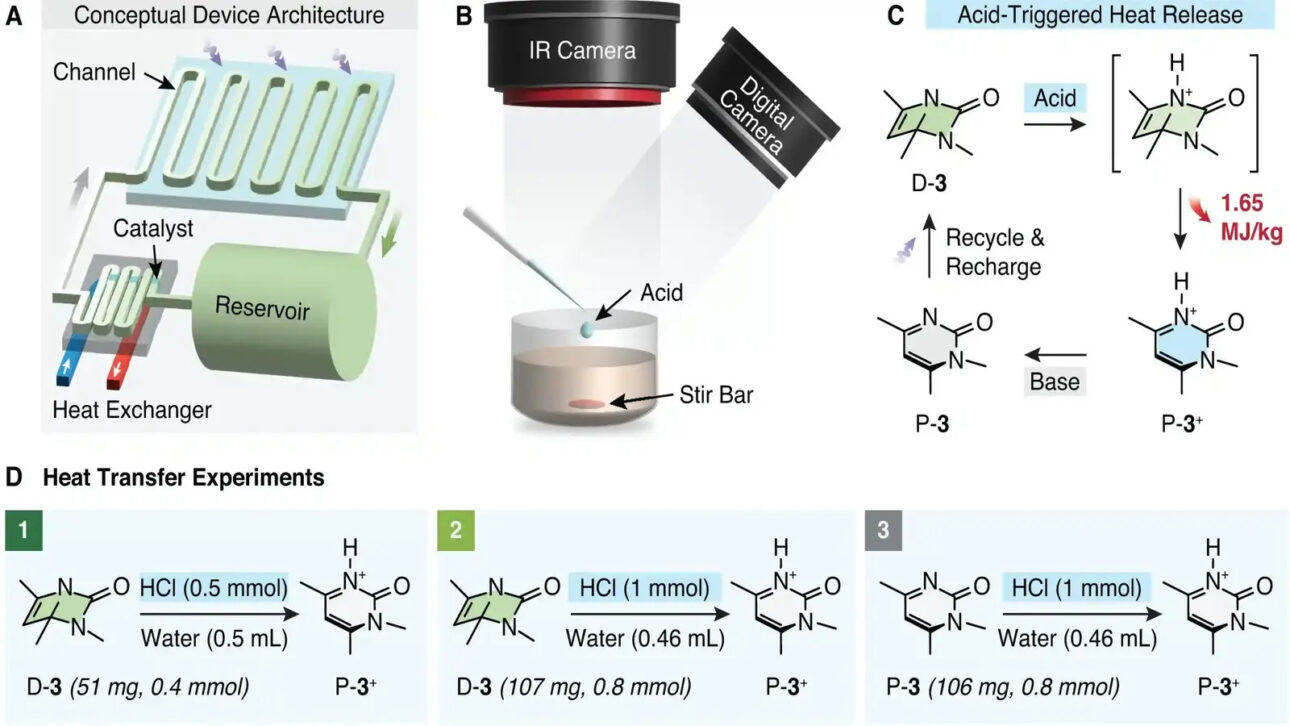
The researchers drew inspiration from DNA structures and photochromic materials (such as transition lenses), which undergo reversible shape changes under light. The molecule's structure mimics components in DNA that respond to ultraviolet light. With computational support from KN Houk at the University of California, Los Angeles (UCLA), the team optimized the compound to be more stable and capable of storing energy for longer periods. Han stated that the molecular design pursued simplicity, and the team removed elements deemed unnecessary to build a compact and efficient solar energy storage structure.
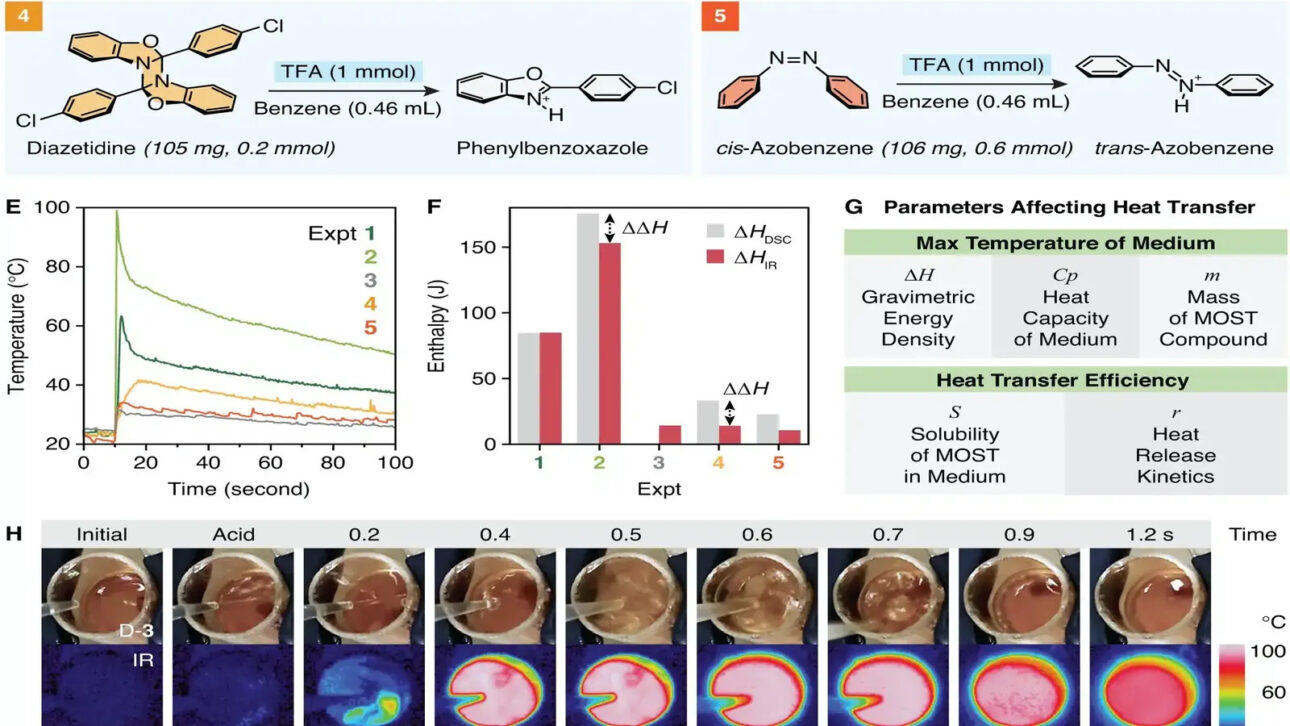
The material's energy density exceeds 1.6 MJ/kg, higher than the approximately 0.9 MJ/kg of typical lithium-ion batteries. This performance is considered significant for MOST systems, as the molecule can provide enough energy to boil water under ambient conditions. The solubility of pirimidona also paves the way for use in solar collectors, where the material can circulate in the system, storing energy during the day and releasing heat later. Co-author Benjamin Baker noted that the practical difference is that solar panels require additional battery systems, whereas molecular solar thermal storage materials themselves can store light energy.
This article is compiled by Wedoany. All AI citations must indicate the source as "Wedoany". If there is any infringement or other issues, please notify us promptly, and we will modify or delete it accordingly. Email: news@wedoany.com
Related Products


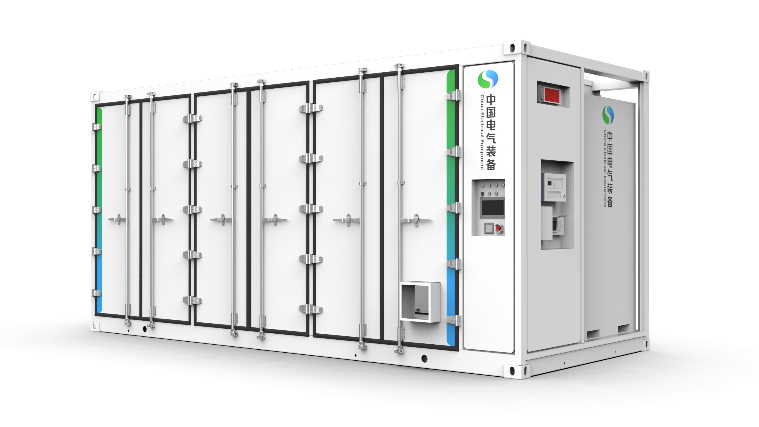
MESS8201-2507/5015-BN Prefabricated Liquid-cooled Energy Storage Battery Container
Xuchang Xuji Electric Science Energy Storage Technology Co., Ltd.
Off-Grid Fuel Cell Supercharging Station (180kW Configuration)
Shanghai REFIRE Group Limited

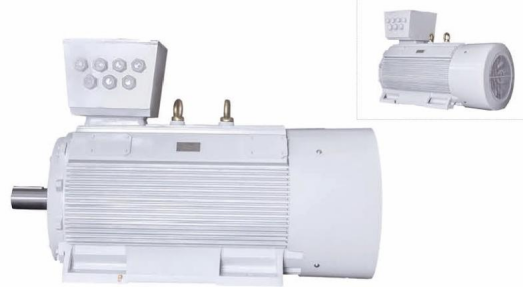
YE3 Series Low Voltage High Power Three-Phase Asynchronous Motor
Shandong Lijiu Electrical Machinery Co., Ltd.