en.Wedoany.com Reported - Netskope is simultaneously expanding its channel strategy and artificial intelligence security footprint, launching a new managed service partner program and deepening its collaboration with Amazon Web Services (AWS) on autonomous AI agent governance. As enterprises increasingly view cybersecurity operations and AI deployments as outsourced, platform-driven functions, they are operating in an increasingly complex environment.
These two announcements ostensibly target different audiences. One is aimed at managed service providers seeking to expand their SASE and security operations businesses, while the other focuses on enterprises grappling with the governance challenges of autonomous AI agents. However, both point to the same fundamental challenge: security vendors are under pressure to make increasingly complex technologies operationally manageable without requiring customers to hire a large number of experts. For Netskope, this means reducing friction. In the managed services market, friction often manifests as configuration delays, licensing complexity, onboarding costs, and operational overhead. In the AI domain, friction appears as uncertainty over what autonomous software agents are permitted to do once they connect to enterprise data, applications, and workflows. Both issues are becoming commercially critical.
The managed security market continues to expand as organizations struggle to recruit cybersecurity talent internally. Meanwhile, enterprise AI projects are moving from experimentation into production environments, where governance failures carry legal, operational, and financial consequences. Netskope's latest initiatives seek to address both of these major trends.
The company's new Catalyst MSP/SP program is built around a simple proposition: make it easier for managed service providers to sell, deploy, and operate Netskope's SASE platform across multiple customers. The reality of managed security services is that profitability often depends more on operational efficiency than on technical capability; if customer onboarding requires excessive manual work, engineering involvement, or support escalations, providers can quickly see their margins erode. Netskope's answer is a new self-service platform called Partner Orchestrator. The company claims that MSPs can configure a production-ready customer environment in under 15 minutes using this platform. If this claim holds true in real-world deployments, it would represent a significant reduction in onboarding time from what is often days or even weeks in the security industry. Speed matters because revenue recognition typically only begins after a service is activated. The platform also introduces multi-tenant controls, allowing MSPs to manage customers, resellers, integrators, and sub-partners through a single framework.
The broader Catalyst program wraps this orchestration layer within tiered commercial incentives, training and certification, marketing support, deployment assistance, and license portability. Among these, license portability is noteworthy. Traditionally, security vendors have tightly bound licenses to individual customer deployments; allowing providers to transfer licenses between customers without requiring support tickets or approval cycles can reduce operational friction and improve utilization. It also provides partners with greater flexibility when customer needs change unexpectedly.
Behind the marketing language lies a more practical reality: MSPs increasingly expect software vendors to behave like platform providers rather than traditional software licensors. Netskope is launching this program at a time when enterprises continue to consolidate their network and security stacks. The company cites industry forecasts suggesting that single-vendor SASE deployments will account for half of all new implementations within the next few years, a significant increase from current levels. Whether this exact prediction materializes remains uncertain, but the trend is hard to ignore: security buyers increasingly want fewer consoles, fewer contracts, and fewer integration projects. This trend favors vendors that can offer a broad platform portfolio rather than isolated point products. For MSPs, platform consolidation creates both opportunity and risk: larger integrated platforms can simplify service delivery, but they can also compress differentiation if every provider ends up reselling essentially the same technology stack.
The second announcement may ultimately prove to be more impactful. Netskope disclosed a forthcoming integration that combines its AI Guardrails technology with AWS's Amazon Bedrock AgentCore platform, which is used for building and managing AI agents. The timing reflects a growing industry concern: while most current AI security discussions still focus on chatbots, prompts, and model outputs, autonomous systems present a different set of problems—these systems are designed to take actions, not just generate responses. This changes the risk profile. It is one thing for an AI assistant to generate incorrect text; it is an entirely different matter for an autonomous agent interacting with applications, databases, APIs, or financial systems, which introduces completely different governance requirements.
The proposed integration divides responsibilities between the two platforms. Netskope's AI Guardrails will provide detection capabilities such as prompt injection identification, sensitive data exposure monitoring, response validation, restricted topic enforcement, and output filtering. Amazon Bedrock AgentCore will then enforce policies at the gateway level. This separation reflects a consensus emerging in enterprise AI governance: detection can be probabilistic, but enforcement often cannot. Organizations can tolerate some uncertainty when identifying potential risks, but they have much less tolerance for uncertainty when deciding whether to allow an AI system to execute an action. Under the model described by Netskope and AWS, AgentCore becomes the enforcement layer, while Netskope provides intelligence and risk signals. The architecture also keeps policy enforcement outside the agent's reasoning process. This distinction is operationally important because enterprises remain cautious about allowing AI systems to self-regulate; an independent enforcement layer provides stronger auditability and predictability, which is increasingly important for regulated industries.
However, the challenges are not solely technical. Many organizations are still determining where autonomous AI should be deployed and under what governance framework. Security controls can mitigate risk, but they cannot eliminate broader concerns about accountability, regulatory compliance, data residency, model reliability, and organizational oversight. There is also no universal consensus on how to implement agent security, with a growing ecosystem of vendors attempting to position themselves as the governance layer for AI systems. Netskope's integration with AWS places the company directly in the conversation around this emerging control plane, and also reflects a broader shift across the enterprise technology landscape: for years, security vendors focused on protecting human users; now, they are increasingly preparing for environments where software entities act alongside employees, access enterprise resources, and make operational decisions independently. This shift is still in its early stages, governance frameworks are still being formed, standards remain fragmented, and regulatory expectations continue to evolve, but the industry's attention has already turned there. The MSP announcement focuses on operational scale, while the integration with AWS focuses on AI governance; taken together, both reveal where security vendors believe enterprise spending is headed: fewer manual processes, more automation, and a need for control over systems that increasingly operate without direct human intervention.
For MSPs, reduced deployment times lower onboarding costs and accelerate revenue activation, improving engineering utilization. Security vendors are actively targeting MSPs because enterprises tend to outsource cybersecurity operational expertise, and operational simplicity directly influences partner selection. AI agent governance aims to ensure that autonomous software operates within approved boundaries when interacting with sensitive data or enterprise applications. Separating AI detection from enforcement creates more predictable outcomes and stronger auditability. Enterprise buyers should focus on key evaluation factors such as integration depth, policy consistency, operational overhead, and the risk of vendor lock-in.
This article is compiled by Wedoany. All AI citations must indicate the source as "Wedoany". If there is any infringement or other issues, please notify us promptly, and we will modify or delete it accordingly. Email: news@wedoany.com
Related Products



Multi-function Marine Monitoring Low-altitude Detection Radar Sea-air Boundary Ocean Dynamic Environment Measurement
Chengdu Dixin Technology Co., Ltd.
20 Inch 1600*900 Full HD 60Hz TFT LED Monitor with VGA and DP Interfaces for Desktop Computers-Business Use
Guangzhou Zanying Optoelectronics Technology Co., Ltd.

G.652.D Wavelength-extended Non-dispersion Shifted Single-mode Optical Fiber
HONGAN GROUP CO., LTD.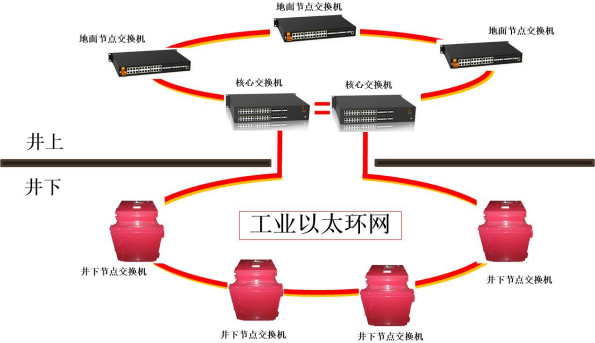
Mine Explosion-proof and Intrinsically Safe Industrial Ethernet Ring Network (10 Gigabit/Gigabit)
Chongqing Mas Sci&Tech Co., Ltd.
Industrial and Commercial Point-Type Gas Detector
Jinan Benan Technology Development Co., Ltd.