en.Wedoany.com Reported - During the keynote speech at HDC 2026, He Gang, CEO of Huawei's Consumer Business Group, showcased a new capability of Xiaoyi Claw: users can generate a runnable application directly by describing their needs in natural language. The technology behind this feature is provided by a startup with only 16 employees.
This startup, named CodeFly, was founded in 2023, and its core product is also called CodeFly. Currently, it has nearly one million registered users, with an annual recurring revenue exceeding 10 million yuan and a month-over-month growth rate of around 25%.
The founding team of CodeFly has an impressive background: a former Tencent T12 founder, a former Tencent T11 CTO, a former Tencent T10 chief architect, along with a software engineering team from Tencent, ByteDance, Didi, Feishu, and CODING. This is not just a combination of big-tech veterans—the team includes seasoned big-tech engineers, AI product managers, overseas growth strategists, robotics researchers, and post-2000s AI-native generation members. Senior members handle system architecture, while the younger generation focuses on the forefront of AI technology and products.
Team member Zhang Yibo holds a Master's degree in Financial Mathematics from the University of Chicago. He previously worked at Douyin as a strategy product manager and data analyst for five years, contributing to the development of an AI comment classification and summarization feature. This feature covered the entire process from training data annotation and prompt tuning to model iteration, reaching over 300,000 authors, with a feature click-through rate of 15% and accuracy improving from 36% to 85%.
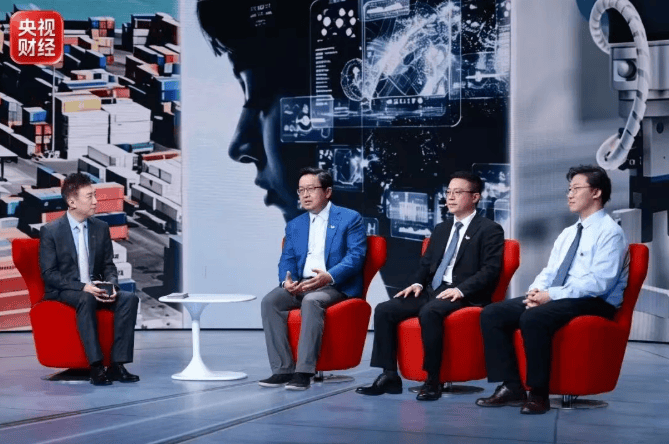
Team member Li Rong graduated from the University of British Columbia with a degree in Marketing. After returning to China, she joined ByteDance early on, responsible for corporate and employer branding, global brand systems, CEO PR, and AI technology communication. After leaving the big company, she directly ventured into AI entrepreneurship, building an overseas AI product from scratch. Targeting female users in the United States, she launched an AI emotional product, overseeing product development, user growth, and design, completing the entire process from value proposition validation, TikTok content testing, and KOL collaboration to achieving a positive ROI. During HDC, Li Rong also appeared on the live broadcast of CCTV's "Brainstorming Mic" show.
Team member Li Bi'ang earned his undergraduate degree from the City University of Hong Kong's Business School, majoring in Economics and minoring in Computer Science. He later pursued an MPhil at the Chinese University of Hong Kong's Faculty of Engineering, researching lower-limb exoskeletons. He also contributed to organizing Chinese-language guides for the Spot Micro quadruped robot open-source community. During HDC, Li Bi'ang participated in the Meta Services forum, a business area related to CodeFly's direction, involving lightweight applications within the HarmonyOS ecosystem that can be used without downloading a full app.
The company has a total of 16 employees, with about a quarter born after 2000. Team member Zhihao started interning at CodeFly in his junior year of college, serving as the head of domestic product operations. He built the operations system and drove the domestic user base to one million. During the product's overseas expansion phase, he led the team to acquire 100,000 users within half a month, once ranking second on the domestic AIGC Rank AI website growth rate list. Zhihao also wrote "The Complete Guide to AI E-commerce Operations" during his college years, published by Peking University Press.
Team member Man Xiang started interning at CodeFly in his senior year of college, participating in core R&D frontline work. He is responsible for research and development related to self-developed architectures such as AipexBase and Agent World. He also contributed to the research and writing of the paper "AlphaEval: Evaluating Agents in Production." Team member Jiyuan represented the company at HDC, showcasing products on the HarmonyOS Star Avenue, bringing product capabilities to real exhibition areas and ecosystem partners.
On the technical front, CodeFly open-sourced DevOpsGPT before the AI Coding concept exploded, garnering approximately 6,000 GitHub Stars. Subsequently, it open-sourced AipexBase, the first open-source AI-native backend-as-a-service platform in China. Developers can achieve integrated front-end and back-end development without writing backend APIs, database logic, authentication code, or third-party integrations, using only front-end SDKs or MCP. AipexBase is adapted to domestic ecosystems such as Feishu, DingTalk, WeChat Mini Programs, and HarmonyOS, and the backend capabilities of Xiaoyi Claw are built upon it.
CodeFly has also participated in the formulation of multiple national standards, including "Intelligent Software Engineering Technology and Application Requirements Part 2: Intelligent Development Capabilities," "Technology and Application Requirements for Software Engineering Agents Part 1: Development Agents," and "Intelligent Assistant Agent (Claw) Technology and Application Requirements Part 1: Product Trustworthiness Capabilities."
In the direction of post-training and agent evaluation, the Shanghai Innovation Institute, in collaboration with partners such as Mosi Intelligent, Qiji Zhifeng (with a scale of tens of billions), and CodeFly, released the next-generation agency model Nex-N2. CodeFly is the only entrepreneurial team participating in the evaluation research of agents in production environments.
This article is compiled by Wedoany. All AI citations must indicate the source as "Wedoany". If there is any infringement or other issues, please notify us promptly, and we will modify or delete it accordingly. Email: news@wedoany.com
Related Products

Conveyor Belt Intelligent Monitoring System
LUO YANG WIRE ROPE INSPECTION TECHNOLOGY CO., LTD.
TWP16 P-Band Tropospheric Wind Profile Radar
China Huayun Meteorological Technology Group Co., Ltd.

Industrial and Commercial Point-Type Gas Detector
Jinan Benan Technology Development Co., Ltd.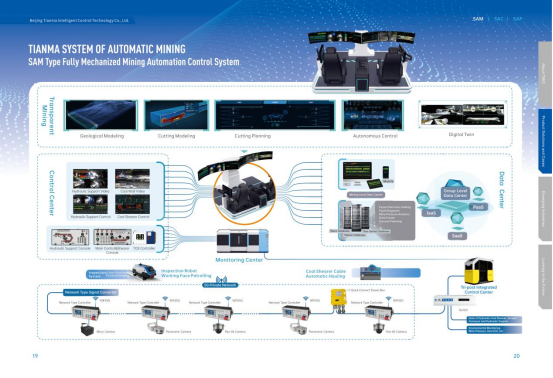
Comprehensive Mining Automation Control System
Beijing Tianma Intelligent Control Technology Co., Ltd.