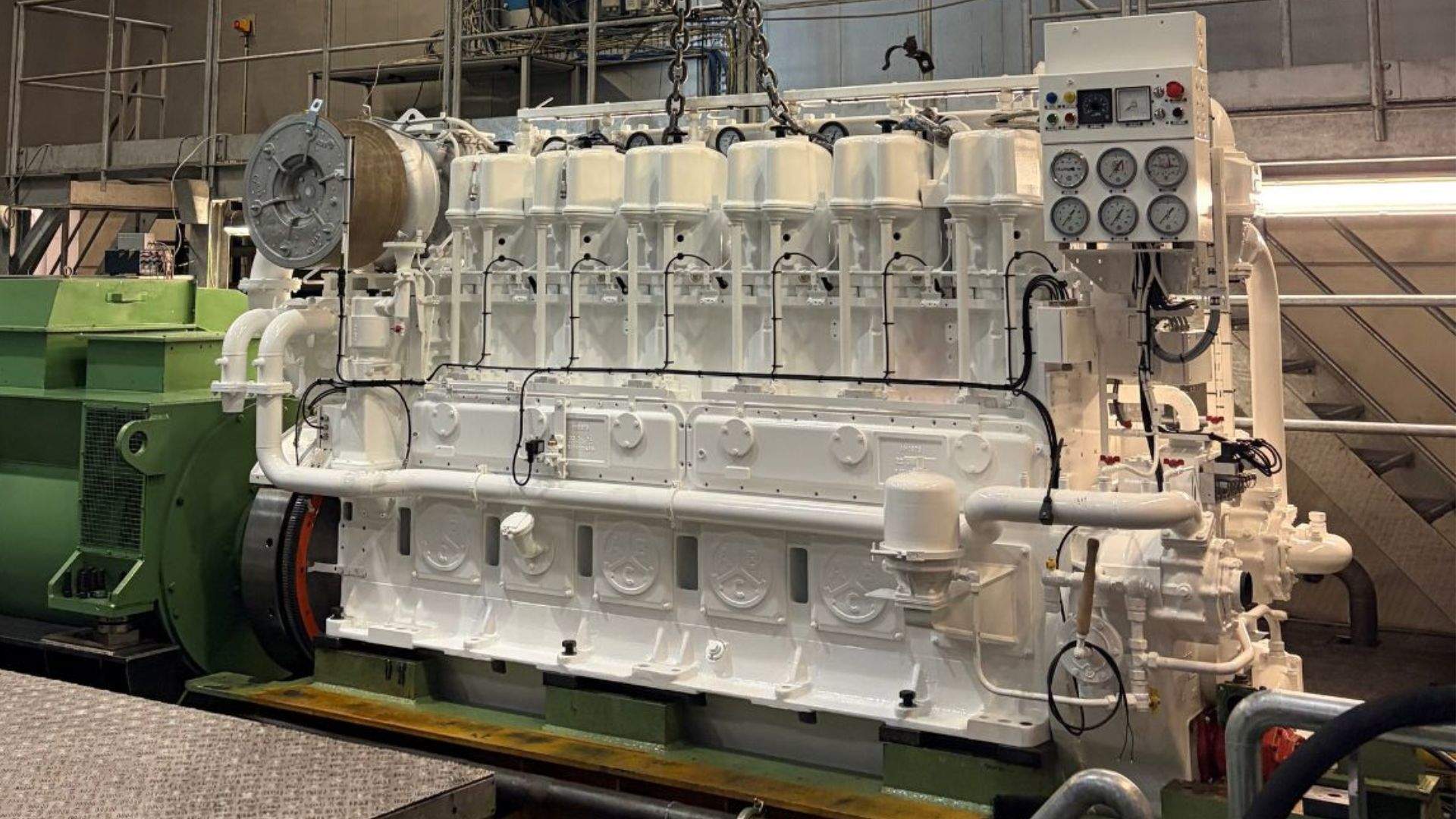
en.Wedoany.com Reported - Lloyd's Register has issued a Type Approval Certificate to BeHydro for a marine engine that operates entirely on hydrogen fuel using a spark ignition system. The classification society confirmed that the machinery meets all regulatory standards for operational performance, safety parameters, and mechanical reliability.
Claudene Sharp-Patel, Global Technical Director at Lloyd's Register, stated that for shipowners and operators, independent certification is crucial for building confidence, ensuring that emerging fuel technologies can meet industry expectations for safety, reliability, and operational performance.
The engine is designed to run solely on hydrogen, without the need for traditional pilot fossil fuels during operation. Eliminating the need for an auxiliary fuel source reduces the total number of subsystems required onboard. This configuration prevents the formation of carbon compounds during combustion, offering a clear mechanical option for fleet operators seeking alternatives to high-carbon propulsion systems.
A representative from Lloyd's Register stated that the issuance of the official certificate indicates that hydrogen-fueled internal combustion engines have reached a stage where they can serve as practical alternatives in industrial shipping. For shipping companies and vessel operators, obtaining such third-party verification is a necessary benchmark to confirm that the mechanical system operates as technically expected during regular service.
The certified machinery series covers a power range from a minimum of 900 kW to a maximum of 2,670 kW. The units can be deployed across multiple maritime sectors, either as main propulsion systems or configured with generators to provide auxiliary onboard power.
Management at ABC Engines stated that the formal certification validates the technical framework of this hardware series for shipowners worldwide. Beyond standard maritime environments, the engineering parameters make the power units suitable for other industrial applications. The mechanical system can tolerate small amounts of impurities in the incoming hydrogen gas stream and can be integrated into heavy-duty stationary power generation facilities or land-based rail transport networks.
The combustion cycle of these units produces no carbon dioxide, nitrogen oxides, sulfur oxides, or particulate soot, with exhaust consisting only of water vapor mixed with ambient air. The manufacturing process does not require the use of rare or highly restricted mineral resources, excluding materials such as lithium, zinc, cobalt, platinum, and various rare earth elements, thereby avoiding environmental damage associated with the extraction of scarce minerals.
The mechanical design relies on traditional engineering principles to extend component service life, simplifying routine maintenance procedures performed by crew members, thereby reducing long-term operational expenditures for shipowners and minimizing total downtime.
This article is compiled by Wedoany. All AI citations must indicate the source as "Wedoany". If there is any infringement or other issues, please notify us promptly, and we will modify or delete it accordingly. Email: news@wedoany.com