en.Wedoany.com Reported - GitHub has introduced a feature on its platform that allows viewing AI usage and costs by user, task, and organizational unit, addressing the surge in token consumption and usage management needs driven by the proliferation of AI agents in enterprises.
With the widespread adoption of artificial intelligence (AI) agents, enterprises are experiencing increased token consumption, fueling demand for features that can simultaneously manage usage, costs, and return on investment (ROI). GitHub has launched capabilities that enable administrators to monitor AI usage across different dimensions. This move comes as coding agents shift toward usage-based billing models, requiring enterprises to set API token usage limits and track costs in real time. On the 19th, GitHub added the "ai_credits_used" field to the Copilot Usage Metrics API, which displays the AI credit consumption for each user.

This field shows the total AI credits consumed by a user within a day, covering credit usage across all Copilot activities, including Copilot Chat and code generation. This feature is applicable to enterprise and organizational unit user reports. Administrators can view each user's AI credit consumption through 1-day (users-1-day) and 28-day (users-28-day) reports, enabling cost management under the usage-based billing system. By analyzing daily AI credit consumption patterns, future cost scales can be predicted and budget plans formulated. GitHub Chief Product Officer (CPO) Mario Rodriguez stated in a recent webinar that the goal is not to have developers consume large amounts of API tokens unconditionally, but to translate developer intent into trustworthy software.
CPO Rodriguez proposed local model strategies and automatic model routing as cost optimization solutions. He explained that frontier AI models should not be used for all tasks; instead, models should be selected based on task difficulty and purpose. GitHub is advancing an approach that does not apply high-performance models to every task, but appropriately deploys local models, low-cost models, and frontier models. CPO Rodriguez also expressed support for the BYOK (Bring Your Own Key) approach, allowing developers to use their own keys to access models. GitHub is enabling Copilot to work in conjunction with external models through local model providers such as Ollama.
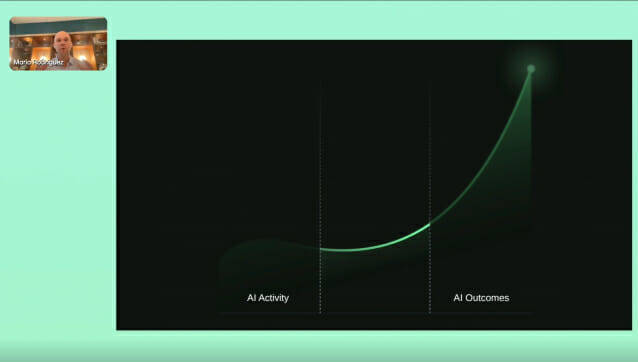
The rationale behind CPO Rodriguez's strategy lies in platform trust, governance, and ROI. Only when enterprises can predict and control AI usage and costs can they apply AI coding tools in large-scale development environments. Previously, OpenAI also released credit usage analysis features and updated spending control features for ChatGPT Enterprise users, integrating ChatGPT and Codex usage information into the global admin console. Administrators can view credit consumption broken down by user, product, and model. Earlier this year, OpenAI introduced the ability to set credit usage limits based on custom roles, and has now further expanded spending control features at the organizational unit level. CPO Rodriguez emphasized that GitHub Copilot is not merely a code writing tool, but an AI-native engineering system; in the future, the developer's role will no longer be to write every line of code personally, but to set goals, verify results generated by AI agents, and manage quality and architecture.
This article is compiled by Wedoany. All AI citations must indicate the source as "Wedoany". If there is any infringement or other issues, please notify us promptly, and we will modify or delete it accordingly. Email: news@wedoany.com