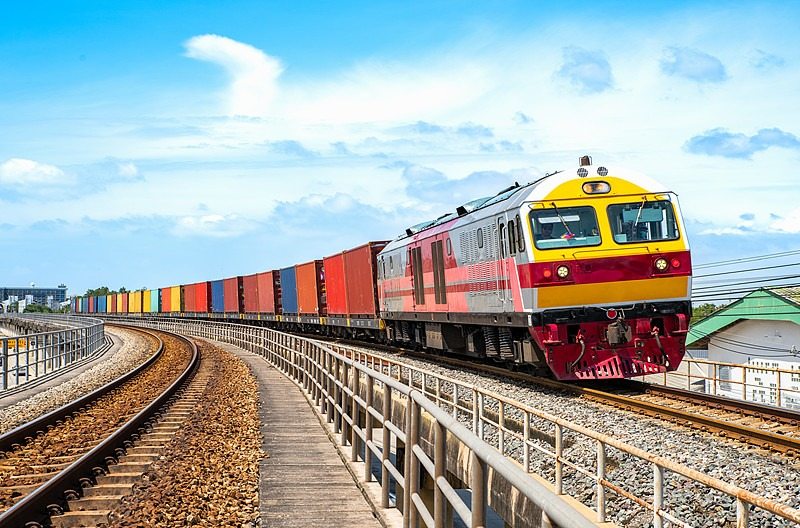
en.Wedoany.com Reported - The Thai government is advancing a "Land Bridge" logistics corridor plan with an investment of 1 trillion baht (approximately $30.45 billion), aiming to provide an alternative route to the Malacca Strait, the world's busiest maritime passage. The project proposes building a land transport corridor in southern Thailand connecting the eastern port of Chumphon on the Gulf of Thailand with the western port of Ranong on the Andaman Sea. Its core is a 90-kilometer standard-gauge railway with a planned annual handling capacity of 20 million TEUs. Supporting facilities also include a meter-gauge railway line linking to the national rail network, multi-lane highways, and local roads.
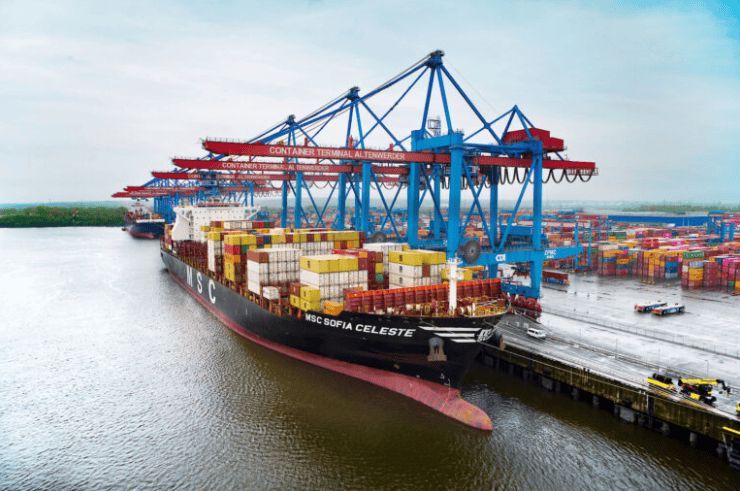
Jirarot Sukla, Director-General of the Office of Transport and Traffic Policy and Planning, stated that about 80% of container shipping volume at ports along the Malacca Strait consists of transshipment cargo, not destined for local markets. The government hopes to capture a share of the feeder transport market through this corridor, particularly for cargo ships with a capacity of 12,000 TEUs or less. According to an internal government presentation, the corridor could reduce transit time for cargo between southern China and Indian Ocean ports by up to 14 days and cut logistics costs by nearly 30%. Additionally, feeder cargo transport from the Gulf of Thailand to the Andaman Sea could be about 10% cheaper and six days faster than routes via Singapore, mainly due to lower congestion.
First proposed around 2020, the project is part of a series of infrastructure plans by the Thai government over the past two decades. Unlike earlier versions, the current plan excludes petrochemical complexes and oil refineries, focusing on ports, railways, and light industry. Independent researcher Wipawadee Payanoy noted in her doctoral thesis that past government discussions on industrial zones and petrochemical projects faced opposition, but packaging the project as transport infrastructure and logistics makes the language more acceptable to the public. A government-appointed panel is reviewing the project and its preliminary impact assessment report, with findings expected to be submitted by the end of July. Authorities stated that the state will primarily play a regulatory and supportive role, with funding coming from a consortium of private investors.
Eugene Mark, a researcher at Singapore's ISEAS – Yusof Ishak Institute, pointed out that the project appears economically ambitious and is unlikely to directly compete with the Malacca Strait as a global transport route. However, it might be feasible as a smaller-scale strategic corridor for Thailand and could eventually become a modular national security asset. He believes that convincing cargo ships to bear the dual handling costs of unloading, land transport, and reloading, while competing with the seamless transit of the Malacca Strait, remains a major obstacle. Investor interest is currently notably cautious and unclear, and the project also faces a tricky geopolitical situation. Chinese state-owned enterprises are unlikely to invest substantial capital unless they gain strong operational leverage, and Thailand must carefully balance its diplomacy.
Opposition from local residents along the proposed corridor is growing. Chayaporn Arunrasi, a fisherman near Ranong port, said he has fished in those waters his entire life and the project will be built where they make a living. In the Patho area in the middle of the corridor, coffee entrepreneur Chalermchai Sichot claimed that the local durian industry alone generates about 10 billion baht annually, without needing to build anything new. The project recently faced a regulatory setback. Due to a huge discrepancy between government and private research estimates of marine life density near the proposed ports, regulators have ordered a completely new environmental and health impact assessment. ($1 is approximately 32.84 baht)
This article is compiled by Wedoany. All AI citations must indicate the source as "Wedoany". If there is any infringement or other issues, please notify us promptly, and we will modify or delete it accordingly. Email: news@wedoany.com