Vodafone IoT to Launch Satellite Connectivity Services Within the Year
en.Wedoany.com Reported - Vodafone IoT plans to launch satellite connectivity services within the year via Iridium and Skylo, aiming to bring more IoT devices under network coverage, including in the field of animal tracking.

Erik Brenneis, CEO of Vodafone IoT, told Light Reading that the operator is testing technologies from these two satellite providers. The Iridium-based service is planned to launch after summer, followed by the Skylo-based proposal later this year. These satellite connectivity plans are expected to enter commercial use in 2026, aiming to achieve completely blind-spot-free outdoor device tracking. The Iridium service complies with 3GPP Release 19 specifications, integrating its 66 low Earth orbit (LEO) satellites with mobile networks.
Satellite connectivity is not new to Vodafone IoT. The operator has had a roaming relationship with Inmarsat (now part of Viasat) since 2016. The difference with the new partners is that these satellite companies use standards-compliant technology, offering advantages over traditional proprietary systems. Brenneis noted that these services run on the same hardware as regular IoT operations, allowing customers to connect seamlessly in the future, just like using another roaming network.
For Iridium and Skylo, Vodafone's involvement also marks significant progress. Iridium already has seven mobile operator partners supporting its NTN Direct narrowband IoT service, and Vodafone IoT will be among the first operators. Deutsche Telekom also plans to use the service this year. On the Skylo side, Vodafone joins its IoT and direct-to-device (D2D) customer base. Skylo's wholesale satellite connectivity network currently has 16 million devices, with U.S. customers including Spectrum Mobile, Xfinity Mobile, and Verizon (for D2D). Outside the U.S., mobile operator partners also include Deutsche Telekom, KPN, Orange, Tele2, Telefónica, and Telus.
Although standards-based IoT satellite connectivity products are beginning to emerge, they are still in the early stages. Matt Hatton, founding partner at Transforma Insights, stated that the satellite hybrid opportunity is in a wait-and-see period, with great potential, but the pace of implementation for business models, devices, and deployments is quite slow, and the market is not rushing to launch leading products.
Cattle tracking is considered one of the biggest beneficiaries of satellite IoT, especially in the United States. Brenneis said that by connection count, cattle tracking in the U.S. is the largest use case for satellite connectivity. These cattle are located in remote areas without mobile networks and are now tracked via satellite connections. He also expects connected cars and maritime container tracking to become important areas for satellite IoT. Vodafone IoT connects many animals globally; in Africa, it helps protect rhinos from poachers by measuring pulse rate and movement through trackers worn on their necks. In the UK, the operator collaborates with Scottish researchers to monitor seals to understand the reasons for their population decline.
Vodafone has 244 million IoT connections and is considered the largest connectivity provider outside China, as well as the largest global IoT connectivity provider. According to Transforma Insights' 2025 CSP IoT Peer Benchmarking Report, Vodafone ranks first in global cellular connectivity. Hatton attributed this to its scale and experience in handling large, complex, and diverse deployments worldwide, along with its comprehensive proposition and proven scalability. Vodafone IoT is owned by Vodafone Group and falls under the Vodafone Investments division, which includes stakes in Vantage Towers, AST SpaceMobile, Aduna, and PairPoint. The operator does not disclose revenue data; Brenneis stated that its largest market by revenue is Germany, followed by the UK and the U.S., with the U.S. having the greatest market potential.
Looking ahead, Brenneis believes demand will come from three types of devices: defense logistics, civilian drones, and humanoid robots and white goods. He noted that it is not necessarily combat equipment, but managing the entire defense logistics chain is currently experiencing strong growth. Vodafone has already launched drone projects for delivery in Europe and the UK.
This article is compiled by Wedoany. All AI citations must indicate the source as "Wedoany". If there is any infringement or other issues, please notify us promptly, and we will modify or delete it accordingly. Email: news@wedoany.com
Related Products


Multi-function Marine Monitoring Low-altitude Detection Radar Sea-air Boundary Ocean Dynamic Environment Measurement
Chengdu Dixin Technology Co., Ltd.
Mine Explosion-proof and Intrinsically Safe Industrial Ethernet Ring Network (10 Gigabit/Gigabit)
Chongqing Mas Sci&Tech Co., Ltd.
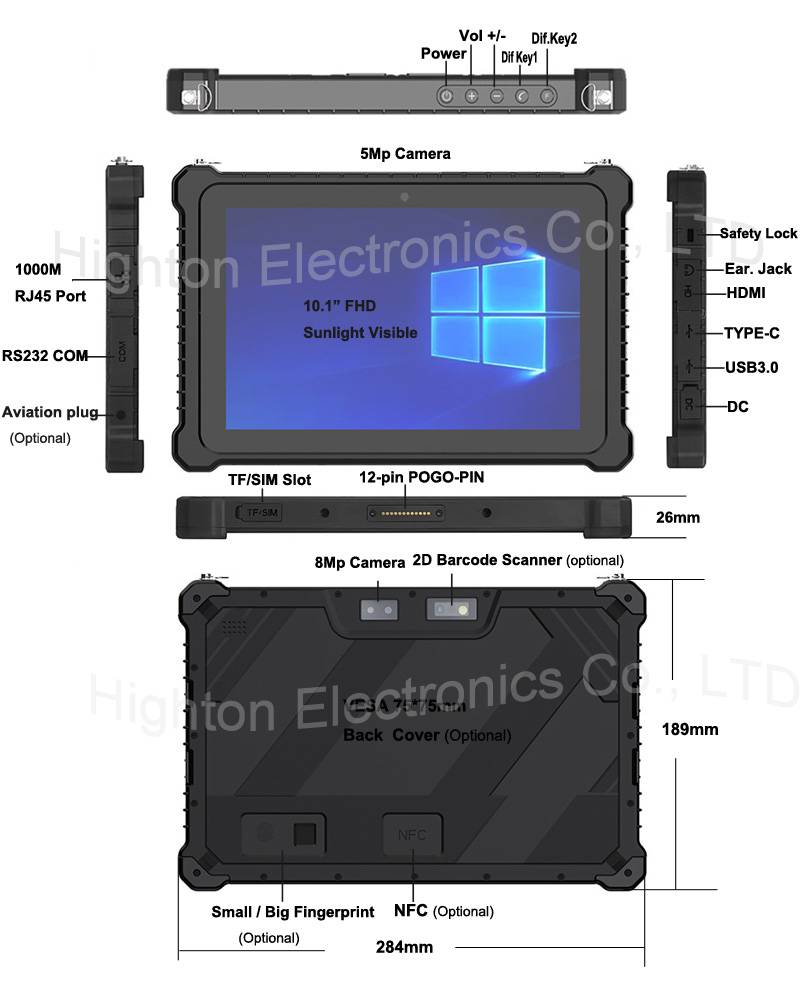
Hot Selling 10 Inch Intel N5100 I5 I7 FHD 8 +128GB 16+256GB Win10 Pro Win11 Pro 4G 5G Rugged Tablet PC Pad with NFC Barcode
Highton Electronics Co., Ltd.
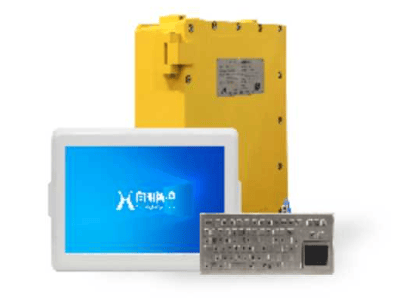
KJD127(A) Mining Explosion-Proof and Intrinsically Safe Computer
Taiyuan Xiangming Intelligent Control Technology Co., Ltd.
G.652.D Wavelength-extended Non-dispersion Shifted Single-mode Optical Fiber
HONGAN GROUP CO., LTD.
Comprehensive Mining Automation Control System
Beijing Tianma Intelligent Control Technology Co., Ltd.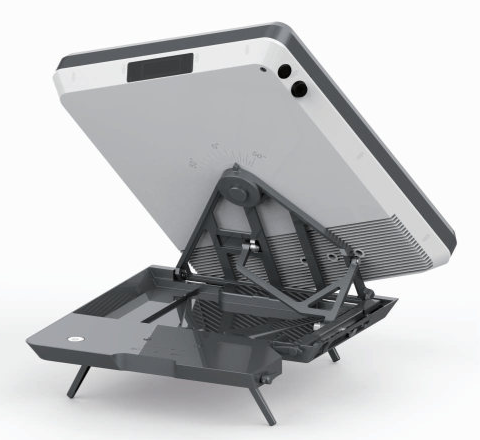
Flat Portable Satellite Terminal 0.35m Aperture Manual Portable Terminal
China Starwin Science & Technology Co., Ltd.
Industrial and Commercial Point-Type Gas Detector
Jinan Benan Technology Development Co., Ltd.