en.Wedoany.com Reported - U.S. startup Air Energy has secured funding to scale up production of solid-state lithium-air batteries, a technology expected to boost drone performance by three to four times and power larger electric regional aircraft.
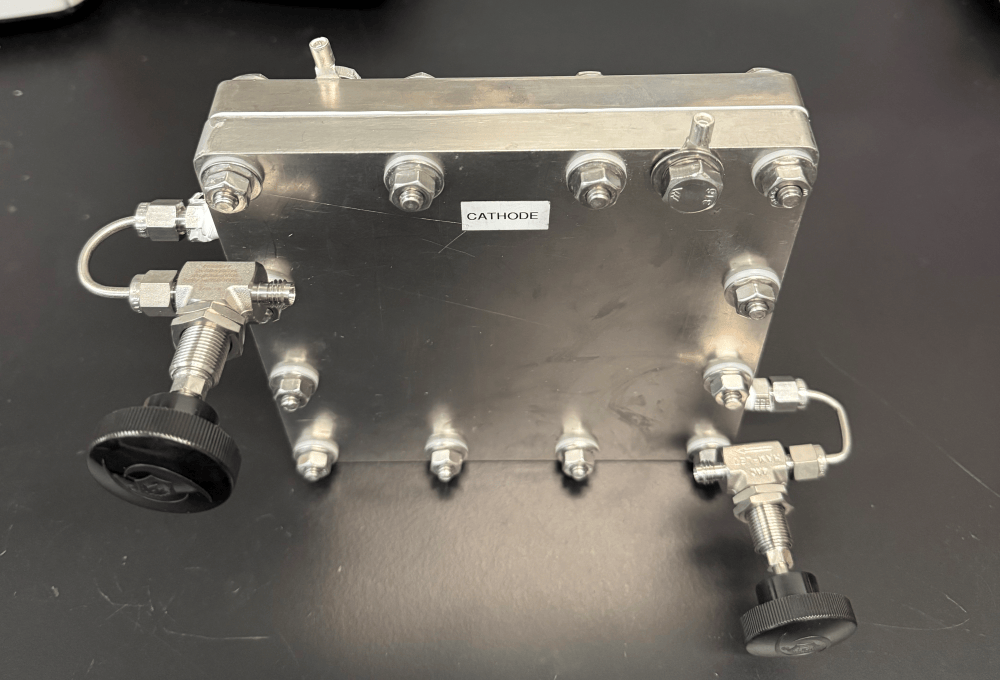
Chicago-based Air Energy is collaborating with the Illinois Institute of Technology on the U.S. Department of Energy's Advanced Research Projects Agency-Energy (ARPA-E) Joules-1K program to develop a 1 kWh prototype battery module with a target energy density of 1,000 Wh/kg, approximately three to four times that of conventional lithium-ion batteries. The two-year program, with the second phase contract awarded in January, includes drone flight testing, and the Illinois Institute of Technology team is one of six teams awarded contracts for this phase.
In lithium-ion batteries, reactants are stored inside the cathode and anode. Lithium-air batteries, however, use a lithium metal anode, with the cathode reactant sourced from atmospheric oxygen, eliminating the need for internal storage and reducing weight, thereby boosting cell-level energy density to 1,000–2,000 Wh/kg, compared to 260–340 Wh/kg for conventional lithium-ion batteries. The energy storage mechanism of lithium-air batteries involves covalent bond formation between lithium and oxygen, a reversible process that enables recharging. Co-founder and Chief Technology Officer Mohammad Asadi explained that lithium and oxygen can combine in three ways: single-electron transfer to form lithium peroxide, double-electron transfer to form lithium superoxide, and four-electron transfer to form lithium oxide.
Air Energy's solid-state lithium-air battery uses a ceramic-polymer composite solid electrolyte, enabling a four-electron redox reaction. Asadi noted that with four-electron transfer, more energy can be stored in the same volume, resulting in higher energy density. The solid electrolyte is safer than the flammable liquid electrolytes used in lithium-ion batteries, as its structure prevents lithium dendrite formation and thermal runaway.
The Joules-1K Phase I project, funded at $1.5 million, saw the Illinois Institute of Technology team demonstrate cell-level energy density of 1,000 Wh/kg and 1,000 capacity-limited charge-discharge cycles. Phase II received a $3.2 million contract to develop prototype pouch cells for drones. Project partners include the Rocky Mountain National Laboratory and the RTX Technology Research Center.
Including auxiliary equipment at the battery pack level, current pack energy density is approximately 700 Wh/kg. The Joules-1K target is 1,000 Wh/kg at the pack level. Asadi stated that the company has a pathway to achieve 2,000 Wh/kg in the future.
Air Energy has completed an oversubscribed seed round led by Resolute Venture Partners, an early investor in SpaceX and Tesla. Co-founder and CEO Benjamin Drake said the Phase II goal is to scale the technology, with the company adopting a design-for-manufacturing approach, establishing an early-stage R&D prototype production line, and de-risking roll-to-roll processes to make the technology compatible with conventional battery manufacturing equipment. The company plans to build a pilot production line in Chicago, potentially at the MxD National Center for Manufacturing Cybersecurity, with pilot-scale manufacturing capabilities expected to launch in 2027.
This article is compiled by Wedoany. All AI citations must indicate the source as "Wedoany". If there is any infringement or other issues, please notify us promptly, and we will modify or delete it accordingly. Email: news@wedoany.com