en.Wedoany.com Reported - Pacific Lime and Cement (ASX: PLA) has made a final investment decision on its lime project in Papua New Guinea, targeting first lime production in early 2027 to replace imports and reduce construction costs.
Papua New Guinea possesses high-grade limestone resources, with coastal deposits containing over 95% calcium carbonate, yet it currently relies almost entirely on imported quicklime and cement, straining foreign exchange reserves and driving up construction costs. The company holds an initial JORC resource of 382 million tonnes across two deposits in the country, with a mine life of at least 50 years. Located within the exclusive economic zone, the company plans to build a 100% owned wharf to serve its operations, a unique advantage that may attract downstream enterprises to the region. The company is also constructing a road and two bridges to connect the project's special economic zone with the capital, Port Moresby. The name of Papua New Guinea's Prime Minister has already appeared on the first cement bags.
The flagship project, Central Lime, is located on the coast of Papua New Guinea, approximately 35 kilometers from Port Moresby and just 7 kilometers from Exxon Mobil's PNG LNG project. It is the first project in the country in 18 years to reach a final investment decision (FID). Phase one includes two kilns with a daily capacity of 600 tonnes each, producing an annual lime capacity of approximately 400,000 tonnes, of which 240,000 to 250,000 tonnes will supply domestic customers. The largest customer is the Lihir gold mine, operated by Newmont, which produces 585,000 ounces of gold annually. The company has secured a commercial offtake agreement with Newmont, locking in one-third of nameplate capacity.
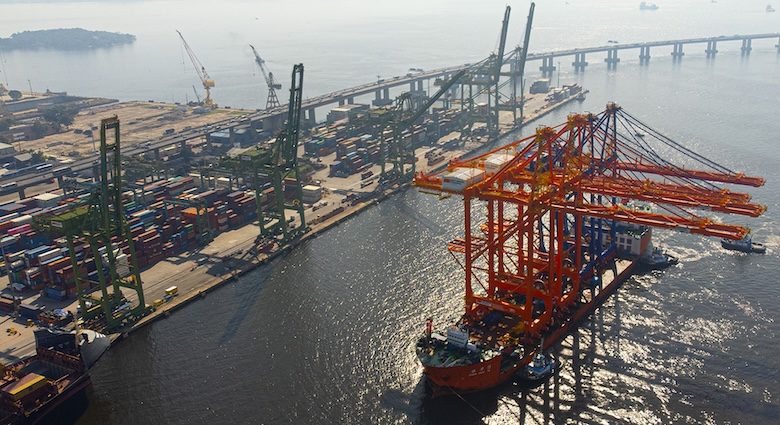
Prior to commercial production, the company has made early sales of high-quality quicklime to customers to support logistics development. Shipments to Esperance, Western Australia, in collaboration with the Southern Ports Authority, are undergoing product quality testing. The project's co-located quarry and deep-water wharf are also under construction, with on-site crushing and screening operations expected to reduce demand for imported aggregates.
Company Chief Financial Officer Kerry Parker stated that market assessments are underway to determine local demand and other opportunities in the Pacific region. Initial production will focus on replacing imports, with future potential to target the Pacific and Australian markets. The project is expected to supply products at prices below current import levels. Papua New Guinea government policies may also strengthen demand. After phase one of the lime project, two additional kilns with a daily capacity of 600 or 800 tonnes each may be added, with a phase three expansion bringing the total number of kilns to five, depending on market conditions.
On the cement front, the company's Project Development Agreement (PDA) with the government has paved the way for a phase two integrated manufacturing plant. This plant will supply Papua New Guinea and potentially customers in Australia and the Pacific. Minister for International Trade and Investment Richard Maru stated that once completed, it will provide locally manufactured, high-quality, affordable cement, replacing imports worth hundreds of millions of kina and creating over 2,000 jobs. Under the agreement, cement prices in the country will be halved.
The Central Cement project is also on track toward FID, with support from the World Bank's International Finance Corporation (IFC). The company aims to reach FID by the end of 2026 and enter the construction phase in 2027. The Papua New Guinea government has the right to acquire up to an 18% stake in the lime project for $23.14 million and participate in the cement project with a 30% equity interest. This cornerstone equity is intended to support a dual listing of the cement business on the ASX and PNGX. Landowners are directly included in the project ownership structure, enjoying free carried interests. According to Maru, up to 1 billion kina will be raised through an initial public offering (IPO) in the future to build the cement plant. The lime and cement plants combined are expected to generate approximately $178 million in EBITDA.
In 2024, Papua New Guinea imported $14.3 million (over 55 million kina) worth of cement, along with $7.88 million worth of cement clinker in significant quantities. The project will be designated as a pioneer industry, enjoying protection for up to 15 years, including a 30% tariff on all imported cement and a 10-year tax holiday for phase two. The project's power system currently consists of solar energy, battery storage, and backup diesel generation. The company has signed a memorandum of understanding with Papua New Guinea operator Dirio Gas & Power Company to develop a 66 kV dedicated transmission line to power the project. The special economic zone status was granted in 2021, bringing tax breaks and tariff exemptions to attract international investors and promote downstream processing development.
This article is compiled by Wedoany. All AI citations must indicate the source as "Wedoany". If there is any infringement or other issues, please notify us promptly, and we will modify or delete it accordingly. Email: news@wedoany.com