Quality Control for Petrochemical Fittings from Material Certification to In-Service Inspection
en.Wedoany.com Reported - Quality assurance for petrochemical fittings cannot end with a factory certificate. A fitting passes through material production, forming, heat treatment, machining, welding, examination, transportation, storage, and field installation. Each stage can alter its condition or introduce a traceability gap.
Procurement control for Petrochemical Pipeline Fittings should begin with a clear technical specification. The purchase document should identify the applicable standard, material grade, dimensions, tolerances, wall thickness, heat-treatment condition, marking, documentation, and required examination.
Material traceability is the first major control point. Heat numbers, chemical composition, mechanical properties, and heat-treatment records should match the permanent or transferable marking on the fitting. For alloy steels, stainless steels, and critical services, positive material identification can reduce the risk of accidental material substitution.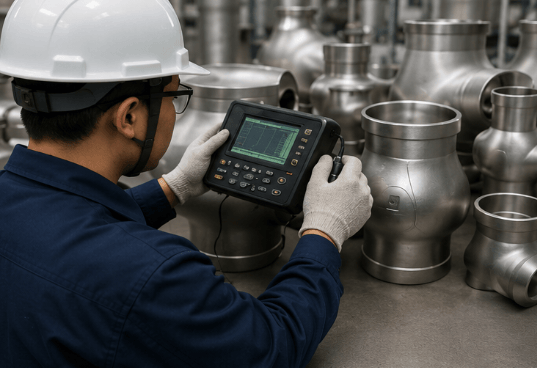
Manufacturing route also matters. Hot forming, cold forming, and forging affect microstructure, wall distribution, and residual stress. Heat treatment must therefore be consistent with the material specification and manufacturing process. Dimensional inspection should cover more than end diameter and nominal wall thickness. Center-to-end dimensions, ovality, squareness, bevel geometry, and local thinning can all influence fabrication and service performance.
ASME B16.9 includes dimensional, tolerance, rating, testing, and marking requirements for factory-made wrought butt-welding fittings. These requirements provide a common acceptance basis, but project specifications may impose additional controls for severe or high-consequence service.
Nondestructive examination should be selected according to material, manufacturing method, weld configuration, and risk. Surface examination methods may be used to identify relevant surface-breaking imperfections, while volumetric methods may be needed where internal discontinuities are a concern. The required extent should reflect the governing code, purchase specification, and consequence of failure.
Field installation is another critical stage. Forced alignment, excessive grinding, incorrect filler metal, inadequate preheat, uncontrolled heat input, or improper post-weld heat treatment can compromise an otherwise compliant fitting. Weld identification, welder qualification, procedure records, examination results, and repair history should remain linked to the installed joint.
Once the system enters service, inspection shifts toward corrosion, wall loss, cracking, vibration, distortion, and leakage. API 570 addresses inspection, rating, repair, and alteration of in-service metallic piping systems. Inspection planning should therefore consider local damage mechanisms and not rely only on uniform inspection intervals.
Elbows, tees, injection points, dead legs, reducers, and mixed-phase locations may require targeted thickness monitoring because damage is often nonuniform. Historical readings, corrosion circuits, process changes, and previous repairs should guide future examination locations.
Digital traceability can strengthen this chain through electronic material certificates, component identifiers, weld databases, and three-dimensional plant models. However, digital tools add value only when the underlying data are verified, consistently coded, and connected to the physical component.
The purpose of quality control is not to generate more paperwork. It is to ensure that every record can be traced to a real fitting, a real fabrication step, and a real operating risk.
This article is compiled by Wedoany. All AI citations must indicate the source as "Wedoany". If there is any infringement or other issues, please notify us promptly, and we will modify or delete it accordingly. Email: news@wedoany.com
Related Products

Steel Pipes for Refining and Coal Chemical Industries
YANGZHOU LONTRIN ENERGY EQUIPMENT CO.,LTD.
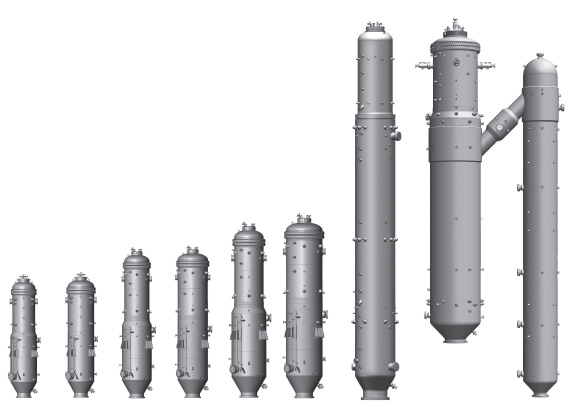
Gasification Furnace Series: Freely Combinable Aerospace Furnace
CHANGZHENG ENGLINEERING CO., LTD.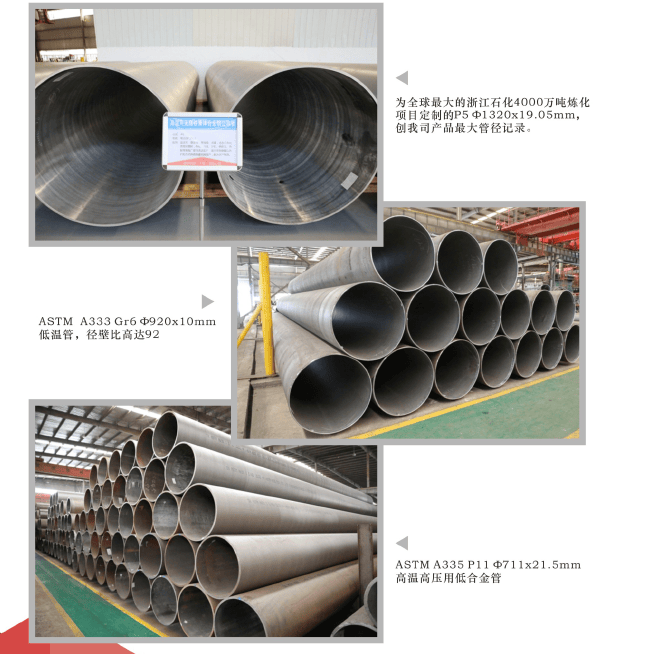

Bi-directional Metal Hard Seal Ball Valve
Henan Quanshun Flow Control Science & Technology Co., Ltd.