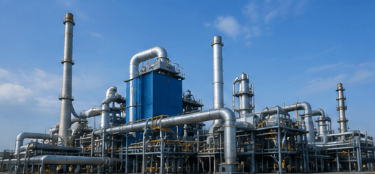
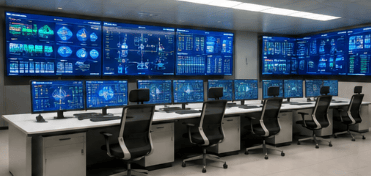
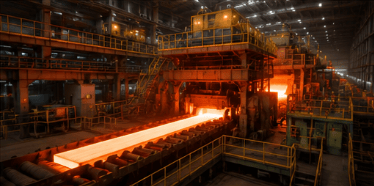
en.Wedoany.com Reported - Digitalization in the metals industry is expanding beyond the automatic control of individual machines. Modern systems increasingly connect raw materials, ironmaking, steelmaking, casting, rolling, quality management, energy use, and maintenance across the complete plant.
The value of digital Metallurgical Complete Equipment depends on more than the number of installed sensors or control-room screens. The software and models must reflect the actual metallurgical process, production sequence, equipment limitations, and quality requirements.
Basic automation controls motors, hydraulic systems, valves, drives, and safety interlocks. Process automation uses measurements and models to regulate temperature, composition, pressure, flow, speed, and equipment condition. Plant-wide systems add production planning, manufacturing execution, quality tracking, energy management, and maintenance functions.
In ironmaking, digital production management can coordinate raw-material purchasing, burden preparation, furnace operation, and hot-metal demand from the steel plant. Transparent scheduling and traceable decisions help reduce conflicts between continuously operating ironmaking units and batch-based steelmaking processes.
Digital twins and virtual plants can support automation testing, operator training, and commissioning preparation. Engineers can test control logic, simulate equipment behaviour, and rehearse abnormal situations before the physical plant begins operation.
Quality genealogy is another major application. Final steel properties are influenced by hot-metal chemistry, converter endpoint control, secondary metallurgy, casting conditions, reheating, rolling temperature, deformation, and cooling. Linking every coil, plate, billet, bar, or wire rod to its heat, ladle, strand, and process history allows faster investigation of quality deviations.
Condition monitoring and predictive maintenance use vibration, temperature, lubrication, electrical, and load data to identify deterioration. Fans, pumps, gearboxes, mill bearings, caster drives, and hydraulic systems can be monitored for changes that indicate developing faults.
However, predictive systems require reliable instruments, consistent failure records, and engineering validation. A model trained on incomplete or poorly classified data may create false alarms or fail to identify an actual problem.
Cybersecurity and system lifecycle must also be considered. Metallurgical equipment may remain in service for decades, while software and communication technology change much faster. Old controllers, new applications, and third-party systems frequently coexist within one plant.
Access control, network segmentation, backups, remote-service procedures, patch management, and upgrade planning should therefore be included in the original automation architecture.
The competitiveness of future metallurgical plants will depend not only on mechanical performance but also on the continuity of data from engineering and commissioning through production, quality, and maintenance. Effective digitalization should help the plant produce qualified metal more consistently, rather than simply generating additional isolated data.
This article is compiled by Wedoany. All AI citations must indicate the source as "Wedoany". If there is any infringement or other issues, please notify us promptly, and we will modify or delete it accordingly. Email: news@wedoany.com