UK Drone Manufacturer Partners with ABT to Solve Battery Pack Manufacturing Challenges
en.Wedoany.com Reported - A UK drone manufacturer, transitioning from development to mass production, has partnered with battery manufacturer Alexander Battery Technologies (ABT) to address challenges in battery pack manufacturability, testing, and supply.
The rapid evolution of technology and demand in the commercial drone market presents a dual challenge for manufacturers seeking commercial maturity. When high-volume repeat production is required, drone companies demand battery packs that are not only technically feasible but also manufacturable, testable, repeatable, traceable, and supported by a reliable supply chain. The engineering team of this UK drone manufacturer had previously treated battery packs as part of the aircraft design, adopting an in-house development approach and collaborating with electronics manufacturing companies to produce cell packs. As the company expanded its drone system product portfolio for infrastructure inspection and public safety, it began seeking external partners to prepare critical components for mass production.
A senior project manager at the manufacturer stated that the company needed battery manufacturers to provide feedback on how battery packs could be scaled for higher-volume production, making manufacturability a key topic. In new product development, designs suitable for low volumes often struggle to commercialize, with issues including high labor utilization, complex assembly processes, poor repeatability, unsuitable production testing, or hard-to-source components. This is particularly pronounced in battery pack production, which relies on multiple electronic and mechanical processes and a complex supply chain. Managing multiple battery-related suppliers also adds complexity for the drone manufacturer. Specialized battery manufacturers can help assess availability, alternatives, and sourcing risks earlier in the design process.
The senior project manager noted that the professionalism of ABT's team was evident from the first contact. ABT not only accepted design choices but also ensured the design was used correctly, efficiently, and safely in subsequent work. ABT CEO Mark Rutherford stated that the project reflects common challenges manufacturers face when transitioning from development to higher-volume production. ABT focuses on collaborating with original equipment manufacturers (OEMs) to test assumptions in their designs, identify what needs to be changed before production, and ensure the final battery pack can be consistently manufactured and tested.
The drone battery project also needed to meet global UN38.3 safety standards. Standard testing demonstrates that cells and battery packs can withstand extreme environmental, mechanical, and electrical stresses to ensure safe transport. The senior project manager said that testing laboratories are timely and expensive, so testing must be conducted with high confidence. ABT provided additional support in mechanical shock and vibration testing, helping ensure submissions could pass requirements. As production volumes increased, production line testing also became a bottleneck. At an industrial scale, improved traceability and testing speed are critical. Rutherford stated that testing and validation are key stages in the battery pack production line, verifying that the control plan and assembly process work as intended, with test results becoming part of the traceable product history.
Currently, the UK drone manufacturer and ABT are collaborating on three battery projects. The senior project manager said that ABT provides trustworthy technical feedback. In the drone sector, as growth and demand increase, manufacturers may reach a maturity point where battery development shifts from a design issue to a manufacturing, testing, and supply issue. Manufacturers that address supply, design, validation, and production simultaneously early on will be best positioned to scale. Specialized battery pack manufacturers can leverage years of experience to cover the technical, safety, and supply aspects of commercial-scale battery pack manufacturing. For drone manufacturers moving from low-volume development to repeat production, battery packs cannot be considered complete just because they work on the aircraft; they must also be ready for manufacturing, testing, traceability, and supply. Addressing these issues early can reduce redesigns, protect delivery times, and give manufacturers more control over costs and product availability as demand increases.
This article is compiled by Wedoany. All AI citations must indicate the source as "Wedoany". If there is any infringement or other issues, please notify us promptly, and we will modify or delete it accordingly. Email: news@wedoany.com
Related Products



Industrial and Commercial Point-Type Gas Detector
Jinan Benan Technology Development Co., Ltd.



Pneumatic high-pressure wear-resistant ball valve
Zhejiang Deca Control Valve Meter Co., Ltd.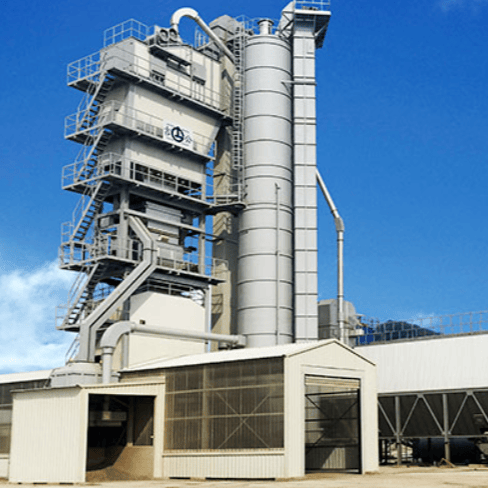
LBH4000 Batch Environmental Protection Asphalt Mixing Plant | Asphalt Batching Plant | Asphalt Mixing Plant
Jilin Province Road Construction Machinery Co., Ltd.