Italy's Iliad Invests 3 Billion Euros in AI Cloud to Address Sovereignty Challenges
en.Wedoany.com Reported - At the recent "Italian Telecom · Summer Edition" industry event, CEOs of several major Italian telecom operators discussed topics including cloud, artificial intelligence, 5G networks, and sovereignty. Participants generally agreed that the landscape of digital innovation is deeply intertwined with telecom infrastructure and technological autonomy, and the industry urgently needs investment, fair rules, and a common industrial strategy.
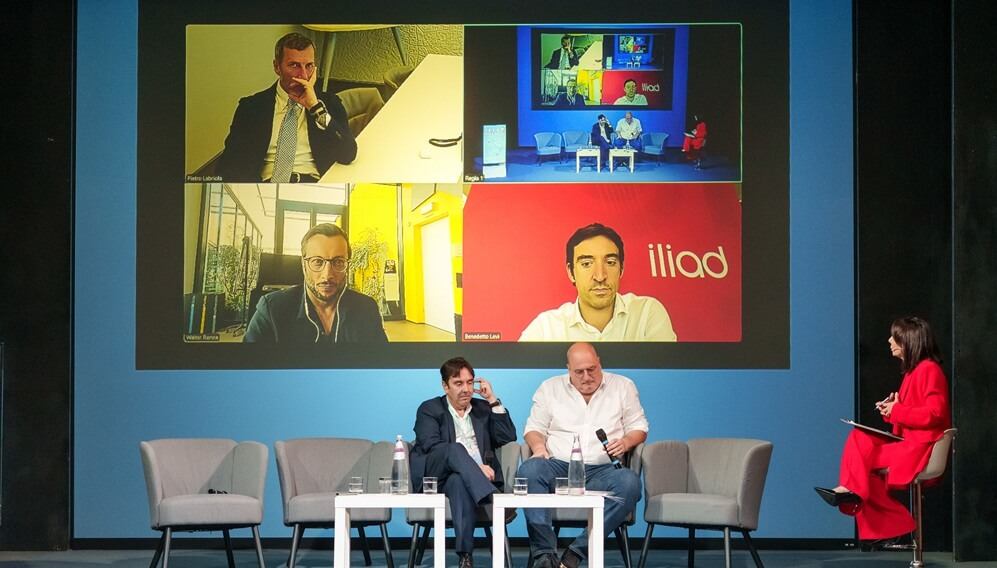
CEOs from Tim, WindTre, Fastweb+Vodafone, Retelit, and Iliad pointed out that public procurement, market consolidation, and the development of a European cloud and AI ecosystem are key levers for enhancing the competitiveness and security of the continent. The ability of telecom operators to invest and operate in a fair competitive environment is crucial. At the same time, addressing specific issues directly related to the telecom sector, such as frequency renewals, is essential.
Tim CEO Pietro Labriola acknowledged European digital sovereignty initiatives, particularly the Cloud Development Act, which he believes attempts to reduce critical dependencies. He stated that the EU's use of public procurement leverage to incentivize cloud and AI as European industries is positive. Labriola emphasized that telecom operators themselves lack the capacity to invest in cloud and AI, so using public procurement as an accelerator is the right direction, but action must be taken immediately, or opportunities will be lost. He mentioned the satellite sector, noting that by 2031, low Earth orbit will be filled with non-European satellites. Labriola believes that while Tim, as the operator with the most data centers, can play a role, the broader telecom ecosystem and EU strategy are more important. He warned that if telecoms do not invest, hyperscale cloud providers will, creating sovereignty issues.
Regarding network quality, Labriola predicted that customers will realize current offers are based on a best-effort principle, but with the emergence of AI-driven services, premium connectivity will be needed. Telecom operators can capture profits at this stage, and it is normal for users to pay a reasonable price for premium connectivity.
Wind Tre Co-CEO Benoit Hanssen emphasized that the true enabling transition for the telecom future is 5G standalone. Wind Tre has completed this process and is now an operator capable of fully offering next-generation services, with initial applications including providing network slicing solutions for the Winter Olympics. However, Hanssen expressed concern over the uncertainty of frequency renewals, arguing that without visibility on time and costs, long-term investment is unsustainable. He called for a clear and predictable framework and suggested that savings from licenses could be immediately reinvested into the network. He welcomed the current government's progress in raising electromagnetic radiation limits but noted that issues like the single municipal tax need to be addressed.
Vodafone + Fastweb CEO Renna pointed out that telecom infrastructure is vital for digital development, and network traffic paradigms are changing, with upload traffic growing strongly due to AI. He emphasized sovereignty issues, noting that cloud and AI are now dominated by non-European providers, and services could be abruptly interrupted. Telecom operators already possess networks, computing power, and data centers, and can develop the digital ecosystem Europe needs; their new role is to achieve the continent's technological independence. Renna believes that competing across the entire digital stack requires greater scale, and the EU should promote consolidation. Regarding the European Cloud Act, Renna considers its direction correct but needs rules that are fairer and more symmetrical than those applied to OTT players.
Retelit CEO Jorge Alvarez reiterated that investment is impossible without profits. He believes telecom operators are deeply troubled by low ARPU combined with fragmentation and strict regulation; legislators must intervene to support the industry, allowing long-term investment through a stable regulatory framework. Alvarez noted that for Retelit, sovereignty means offering competitive cloud services, with key elements being speed, sustainable energy costs, and economic viability. Europe needs a fast roadmap to develop an integrated ecosystem composed of data centers, connectivity, and cloud. He emphasized that fiber optic networks underpin the entire system, and avoiding duplicate investments while promoting network sharing is very important.
Iliad Italia CEO Benedetto Levi highlighted the strategic importance of network sharing, citing the 2023 joint venture Zefiro Net with WindTre, aimed at accelerating 5G adoption in underserved rural areas and improving investment efficiency. Levi believes that while sharing reduces infrastructure differentiation to some extent, the benefits of coverage create positive ripple effects for productivity and customers. He pointed out that differentiation is no longer on the network but on simplicity, transparency, and the ability to meet customer needs. In network sharing, partners must maintain an appropriate level of strategic autonomy, and radio spectrum should be balanced among operators. Levi stated that Iliad has invested in various segments of the European AI value chain for years, committing over 3 billion euros, and contributes to strengthening European sovereignty through its 100%-owned subsidiary Scaleway, a European public cloud and AI operator. Scaleway announced it will open a cloud region in Milan, Italy, and has been selected by the EU to participate in the "Cloud Dynamic Systems" initiative.
This article is compiled by Wedoany. All AI citations must indicate the source as "Wedoany". If there is any infringement or other issues, please notify us promptly, and we will modify or delete it accordingly. Email: news@wedoany.com
Related Products


G.652.D Wavelength-extended Non-dispersion Shifted Single-mode Optical Fiber
HONGAN GROUP CO., LTD.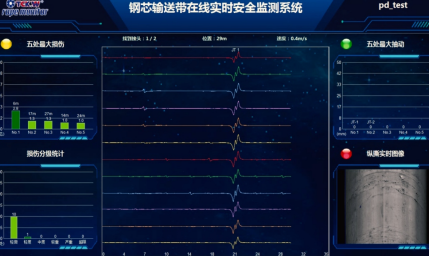
Conveyor Belt Intelligent Monitoring System
LUO YANG WIRE ROPE INSPECTION TECHNOLOGY CO., LTD.

Industrial and Commercial Point-Type Gas Detector
Jinan Benan Technology Development Co., Ltd.


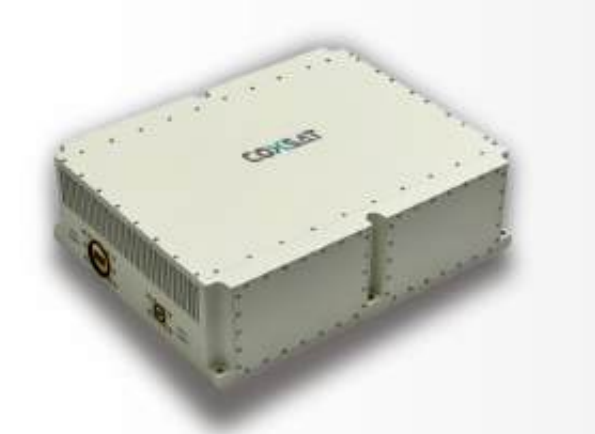
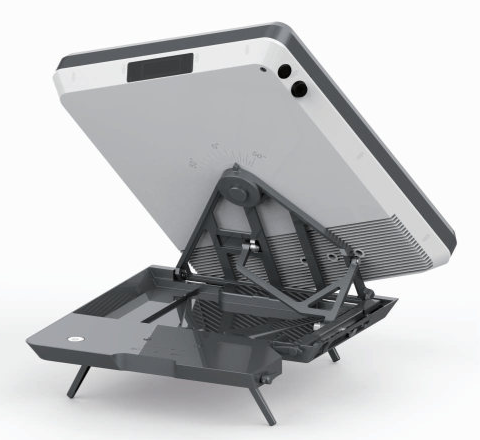
Flat Portable Satellite Terminal 0.35m Aperture Manual Portable Terminal
China Starwin Science & Technology Co., Ltd.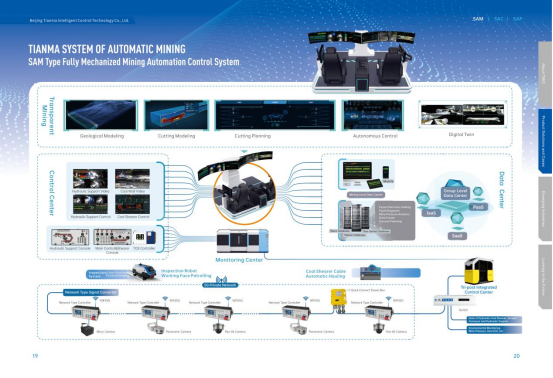
Comprehensive Mining Automation Control System
Beijing Tianma Intelligent Control Technology Co., Ltd.