South Korea's WiseITek Corp. Launches AI Brand Data Butler, Integrating Data Analysis and ETL
en.Wedoany.com Reported - South Korean software company WiseITek Corp. has launched a unified artificial intelligence brand "Data Butler," integrating AI capabilities from its core products WiseIntelligence and WiseETLX to streamline data analysis and ETL workflows.
The rapid evolution of digital usage demands higher efficiency in data transformation. Business departments need insights from surging data to drive decision-making, while data managers must clean data scattered across multiple systems. In response to this trend, WiseITek Corp. has consolidated the AI functionalities applied across its major AI and data product lines under the "Data Butler" brand.
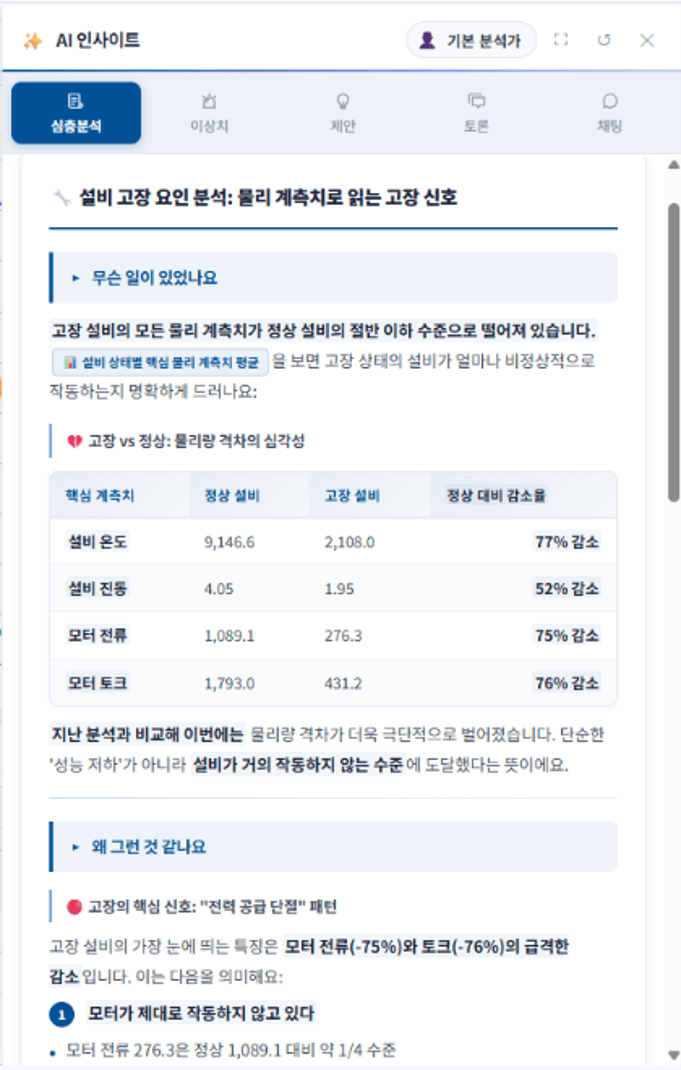
Within WiseIntelligence, Data Butler connects business data to analysis topics, reports, and insights. When users register data, the AI analyzes its structure and characteristics, proposing actionable analysis topics. For example, selecting sales data can generate topics such as sales trends, regional performance comparisons, product sales contribution, and customer segment purchasing patterns. Operational data can yield topics like changes in processing volume, delay occurrences, and anomaly detection in key indicators. This shifts the workflow from users manually setting analysis goals and building screens to the AI proposing analysis scenarios, with users selecting desired topics.
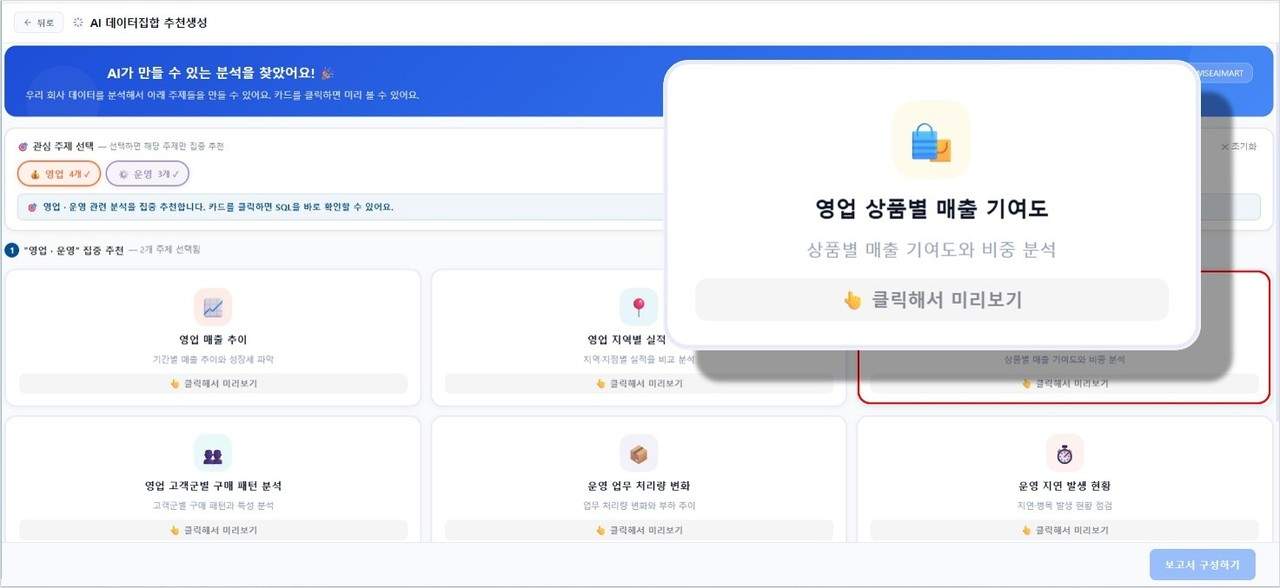
After selecting a recommended analysis topic, WiseIntelligence automatically handles data preparation, screen construction, report generation, and export. The system builds visual reports tailored to business purposes, such as trends, distributions, comparisons, and correlation analyses, generating up to 20 related reports per topic. Once reports are generated, the AI insight panel simultaneously displays key analysis results, including changes in critical indicators, normal ranges versus anomalies, and the credibility of risk signals. It also suggests follow-up actions such as enhanced monitoring, detailed anomaly review, re-analysis under specific conditions, and supplementary review of related indicators. During report editing, users can leverage an interactive AI assistant that selects appropriate metrics and dimensions based on user input to build charts and provides step-by-step guidance for report creation.
WiseETLX handles data connection, transformation, and loading stages. This solution requires no client installation; users can access it via a web browser. Users can manage projects, data connections, job design, scheduling, execution history, and monitoring from a single screen, building data pipelines in a drag-and-drop design interface. In ETL tasks, Data Butler proposes column mapping candidates based on natural language requests. When a user requests "help with column mapping between source and target tables," the system analyzes table structures and suggests appropriate mapping candidates, helping prevent omissions or errors in data pipeline design.
Validation of data pipelines is equally critical. WiseETLX offers a preview function to check data in specific intervals before executing the full job. Users can view columns, sample data, processed record counts, execution times, and generated SQL, identifying design errors early. Data Butler also supports repetitive tasks during validation; when a user requests "help generate a query to verify record counts and NULL values between source and target tables," the system proposes the necessary SQL for consistency checks. During operations, scheduling management and monitoring functions operate within the same workflow, managing data processing from ETL design, execution, and validation to operations.
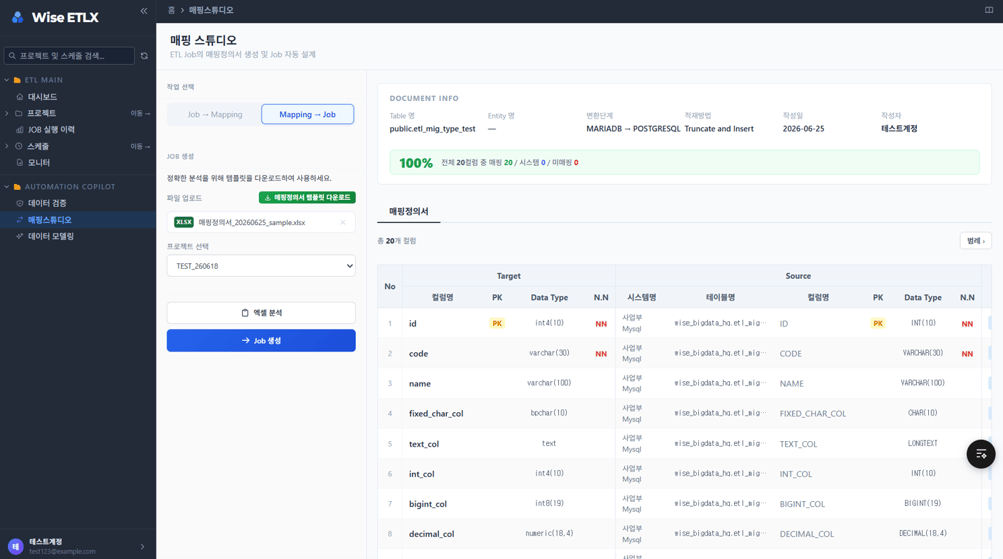
As an AI feature, Data Butler enables users to execute data analysis and processing workflows based on work objectives without manually navigating menus and functions. WiseIntelligence helps business users quickly confirm results needed for decision-making, while WiseETLX assists with repetitive tasks in data engineering, such as job design, column mapping, validation query writing, and scheduling management. Additionally, WiseETLX supports bidirectional design work, including automatic generation of schema and mapping definition documents, applying logical and physical modeling results to databases, and reverse-engineering design documents from existing database analysis, thereby strengthening the continuity of data processing workflows.
This article is compiled by Wedoany. All AI citations must indicate the source as "Wedoany". If there is any infringement or other issues, please notify us promptly, and we will modify or delete it accordingly. Email: news@wedoany.com