Arizona Approves $11.3 Billion Transportation Plan
en.Wedoany.com Reported - The Arizona State Transportation Board (ASTB) recently approved a five-year construction plan totaling $11.3 billion, outlining the state's investment direction in highways, bridges, and airports through fiscal year 2031.
The plan was approved as state transportation agencies across the U.S. await congressional action on the next federal surface transportation authorization. The current federal authorization expires on September 30. The U.S. House Committee on Transportation and Infrastructure has approved the BUILD America 250 Act, a five-year, approximately $580 billion reauthorization proposal emphasizing formula-based funding and long-term planning certainty. The Senate has yet to release its legislative version. According to previous reports by Engineering News-Record (ENR), the House proposal will continue to focus on formula-based funding while reserving some authorized spending for future appropriations, with states awaiting Congress's final decision.
ASTB Chair Ted Maxwell acknowledged uncertainty regarding funding beyond the current federal authorization. He stated that funding in the plan declines in 2029, but clarified that subsequent years do not include federal funding authorizations, and as the situation becomes clearer, these funds should return to more consistent levels.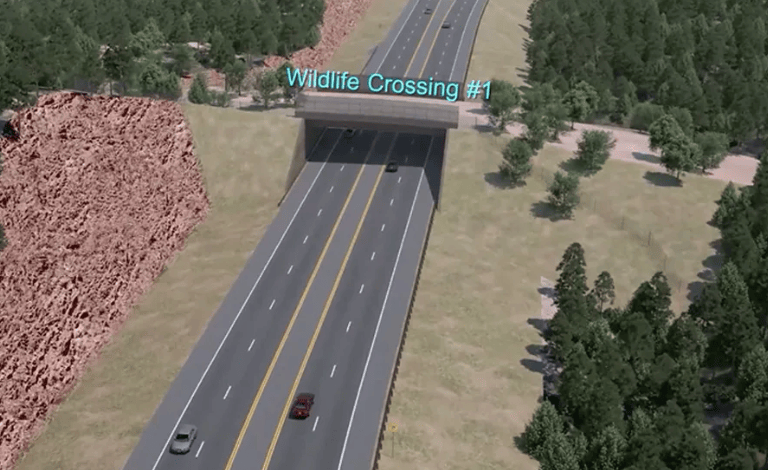
The plan includes approximately $6.95 billion for statewide transportation investments managed by the Arizona Department of Transportation (ADOT), $3.56 billion for highway projects under the Maricopa County Regional Transportation Plan, nearly $620 million for highway projects under the Pima County Regional Transportation Authority, and about $186 million for improvements to 67 public airports. Iqbal Hossain, Deputy Director of ADOT's Multimodal Planning Division, explained that state and federal laws require the plan to remain fiscally constrained, with projects evaluated annually based on inflation, project readiness, and changes in pavement and bridge conditions. ADOT uses a "risk-based approach," prioritizing projects where delays could cause safety, mobility issues, or higher costs.
Under the approved plan, 78% of available funds are allocated to maintaining existing infrastructure, 15% to modernization projects, and 7% to expansion projects. ADOT estimates a $162.3 billion gap between projected transportation demand and expected revenue over the next 25 years, as fuel efficiency and electric vehicle adoption erode fuel tax revenues, while Arizona's gasoline tax has remained unchanged since 1992.
The largest expansion projects include widening Interstate 17 south of Flagstaff, reconstructing a 5-mile segment of State Route 260 near Leon Springs into a four-lane divided highway, and continuing to widen U.S. Route 93 to four lanes at Big Jim Wash in Yavapai County. Most of the remaining investment is directed toward pavement repairs on Interstate 10 and Interstate 40, bridge repairs and replacements, freight-related port-of-entry improvements, and intelligent transportation system upgrades.
David M. Martin, President of the Arizona Chapter of the Associated General Contractors of America, stated that predictable long-term transportation funding enables contractors to hire, invest in equipment, and cultivate the skilled workforce Arizona needs. He also noted that additional long-term funding solutions are still needed, warning that proposals to suspend or eliminate state or federal gasoline taxes would severely undermine the primary source of transportation funding, creating uncertainty for projects and jobs. ADOT stated that the five-year plan will continue to evolve as project schedules, costs, and available funding change.
This article is compiled by Wedoany. All AI citations must indicate the source as "Wedoany". If there is any infringement or other issues, please notify us promptly, and we will modify or delete it accordingly. Email: news@wedoany.com