Second Bridge Replacement Completed at Amsterdam Central Station
en.Wedoany.com Reported - The second of five bridge replacements at Amsterdam Central Station in the Netherlands has been completed, as part of ProRail's High-Frequency Rail Transport (PHS) program aimed at increasing future railway capacity. Each of the three steel bridge sections weighs 275 tons and was transported and installed via waterway to minimize disruption to station operations.
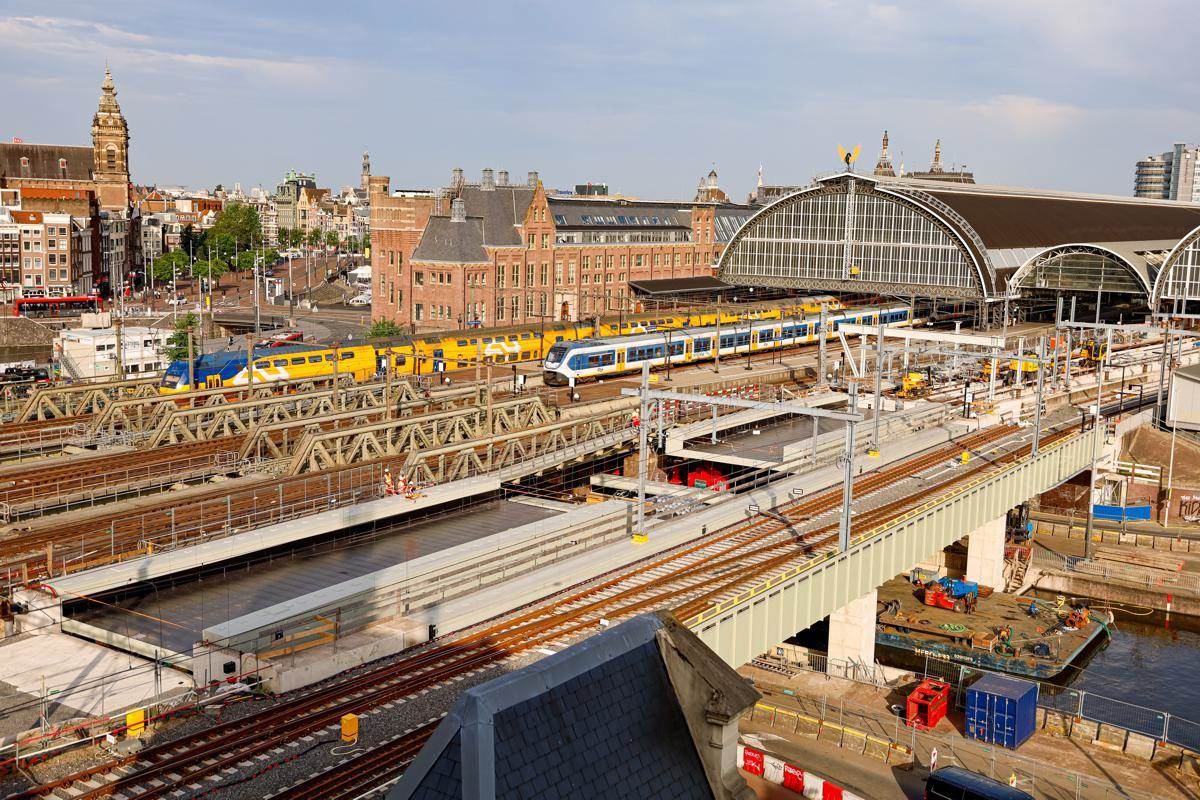
Amsterdam Central Station handles approximately 200,000 passengers daily, a number expected to grow significantly over the next decade. Much of the station's infrastructure is over a century old, making bridge replacement a prerequisite for expanding train services and improving operational resilience. The bridge work is part of ProRail's broader High-Frequency Rail Transport (PHS) program, a long-term national investment to enable more trains to run on the Dutch rail network. In addition to bridge replacements, the program includes track optimization, station improvements, platform modifications, and related civil engineering works to increase network capacity.
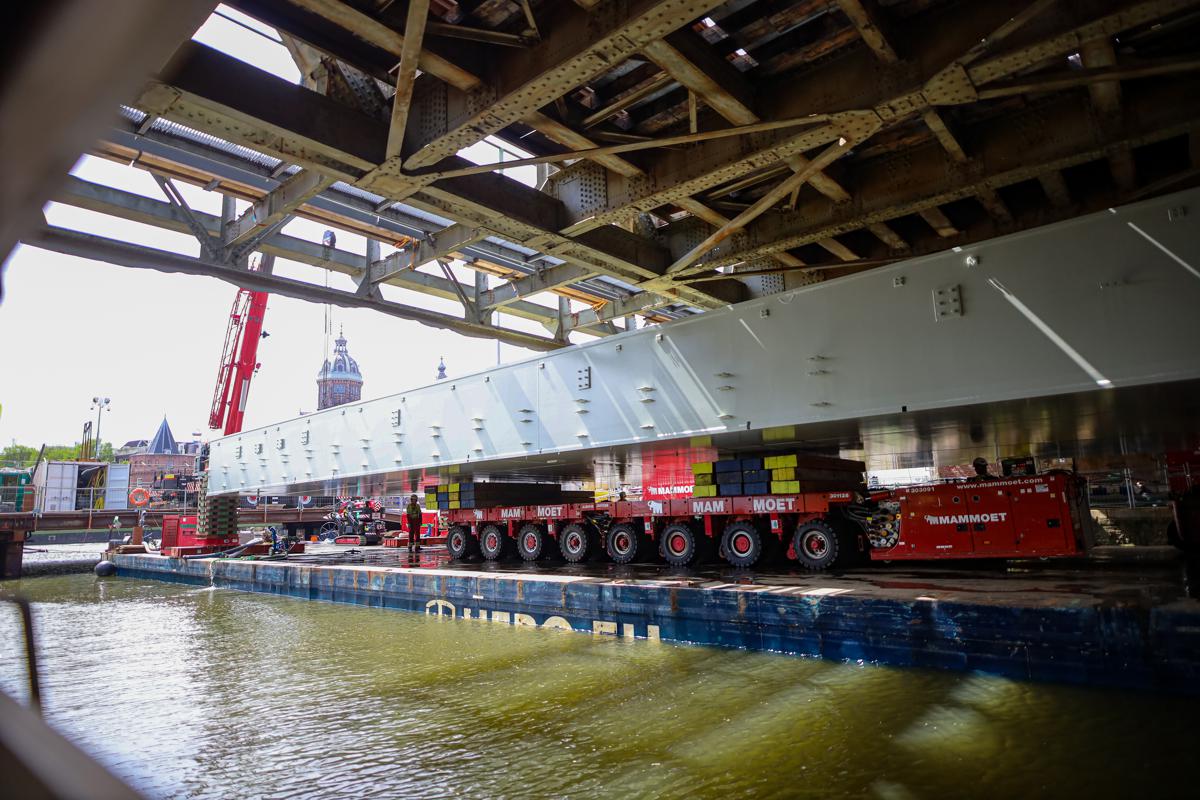
Instead of relying on traditional road transport, the project team chose to deliver each bridge section by water. The components, manufactured by Hollandia Infra, were transported on flat-top barges and arrived at the eastern side of Amsterdam Central Station. The transport barge had to pass under a low pedestrian bridge before reaching the installation area. Engineers temporarily reduced the barge's height by ballasting it with water to lower its clearance, then pumped the water out after passing the obstacle to continue toward the worksite.
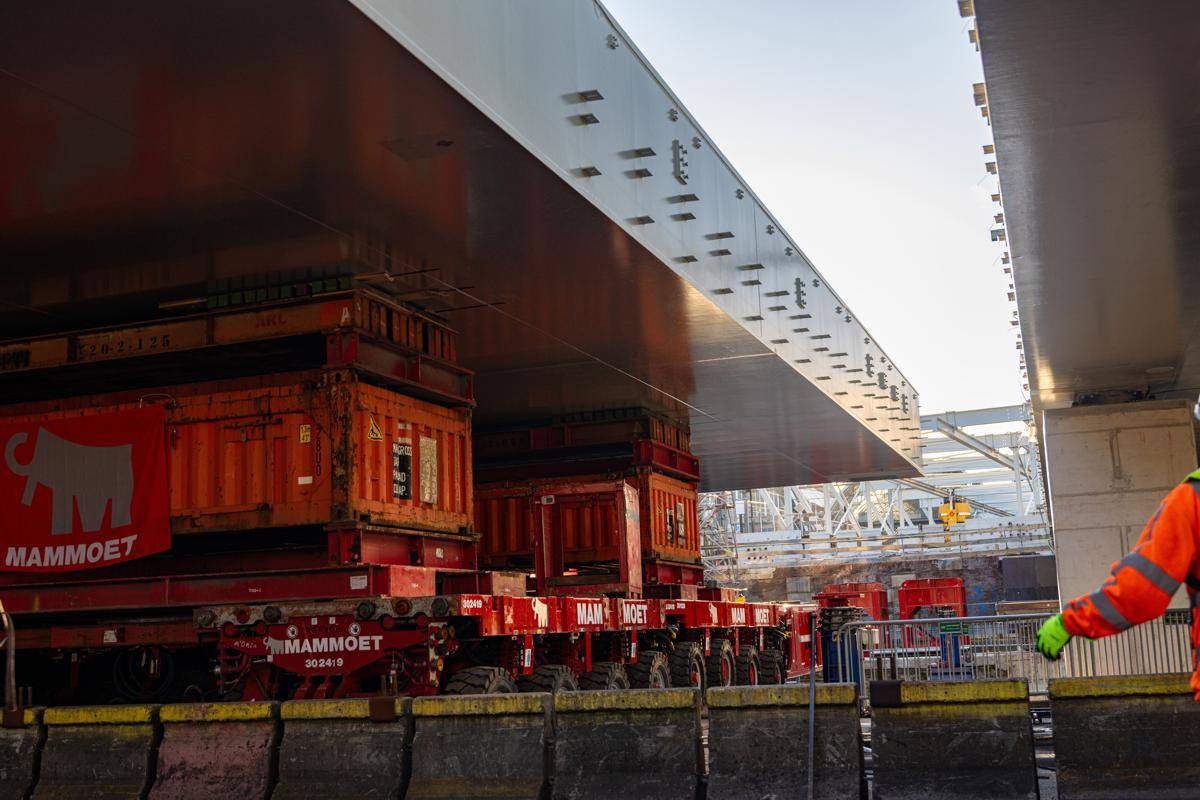
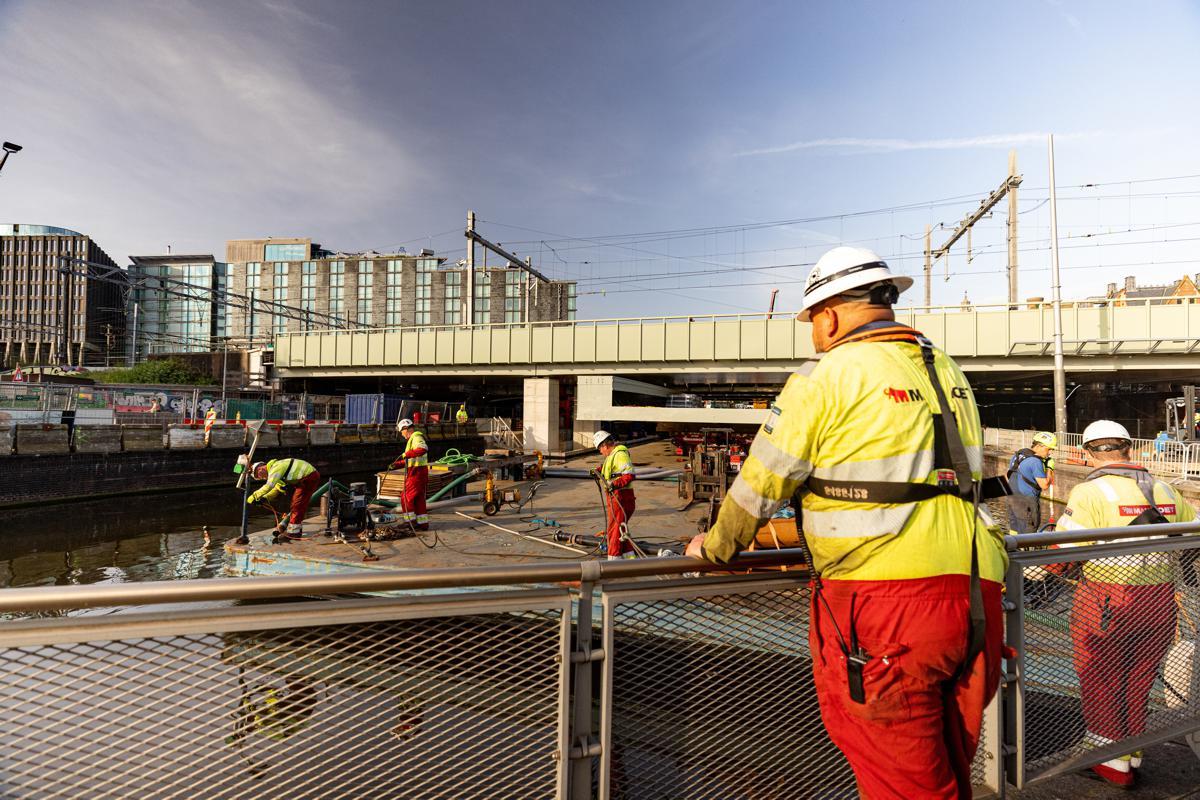
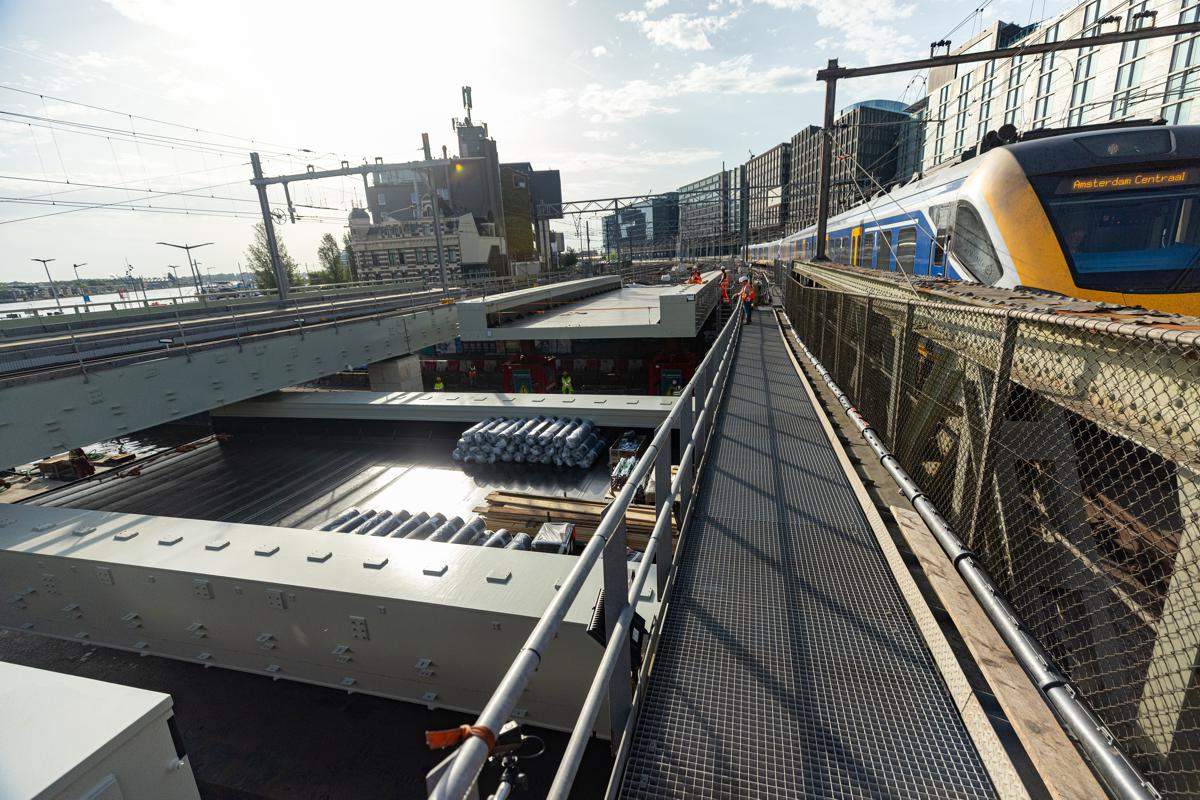
During the installation of the first bridge, Mammoet used the Mega Jack 300 system along with self-propelled modular transporters (SPMTs) to rotate and position the bridge sections directly from the transport barge. For the second bridge installation, reduced working space due to the existing bridge and newly installed structures from the previous phase led engineers to develop an alternative lifting sequence. The bridge sections were moved beneath adjacent structures, then lifted using a custom four-point hydraulic lifting system assembled at the quayside, with four synchronized hydraulic cylinders maintaining precise control throughout the operation. Mammoet Project Manager Leo de Vette explained that previously, the Mega Jack 300 system and SPMTs were used to lift and rotate all bridge deck sections on the barge deck before driving them off and positioning them. However, working between two bridges this time required accounting for the deck and piers of the old bridge, as well as those of the new bridge installed last year. Therefore, the new bridge sections had to be moved and rotated beneath these structures first, then jacked into place using the four-point hydraulic lifting system assembled at the quayside.
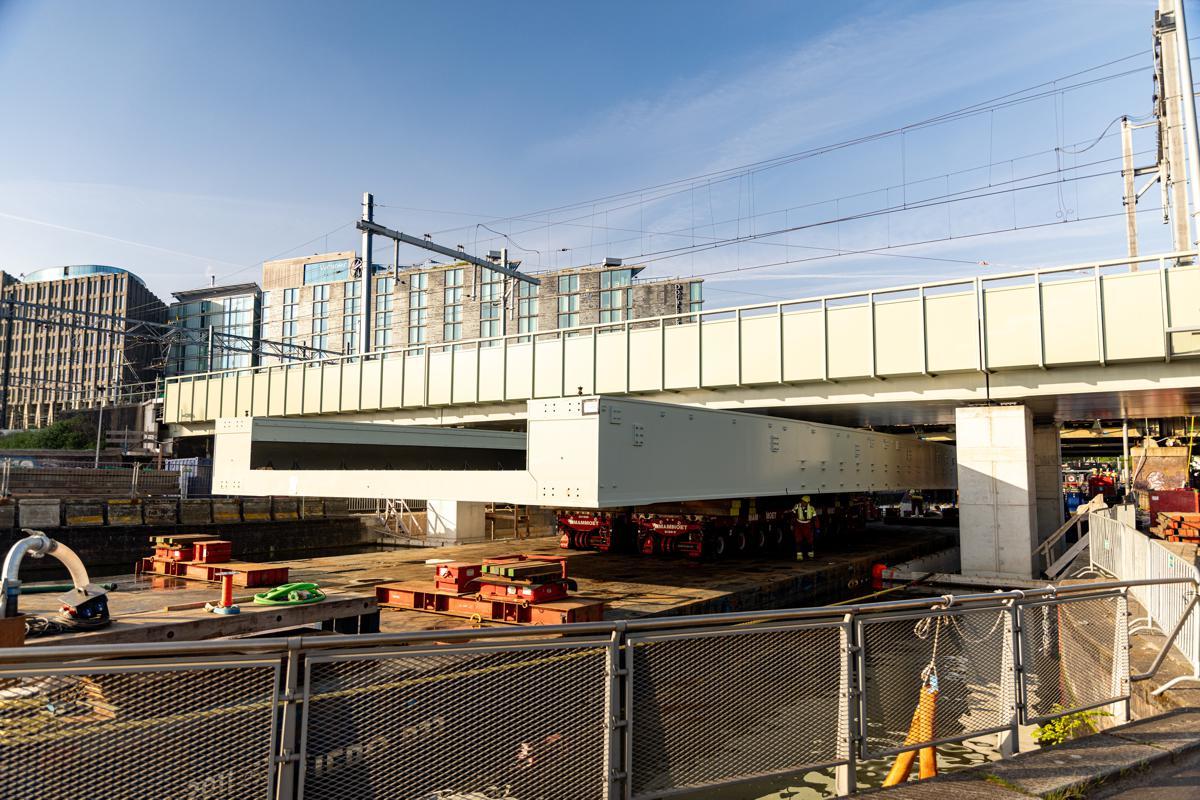
Installing the central section of the bridge was the most technically challenging part. The bridge section was floated into position, rotated 90 degrees, lifted into place, and temporarily supported on custom steel brackets attached to adjacent bridge sections. Only after the permanent center pier was completed did the installation team lower the bridge onto its final bearings. According to ProRail, during certain phases, the clearance between the bridge section and existing structures was only about 12 centimeters as it moved beneath and rotated into position. Each bridge section installation took approximately one week.
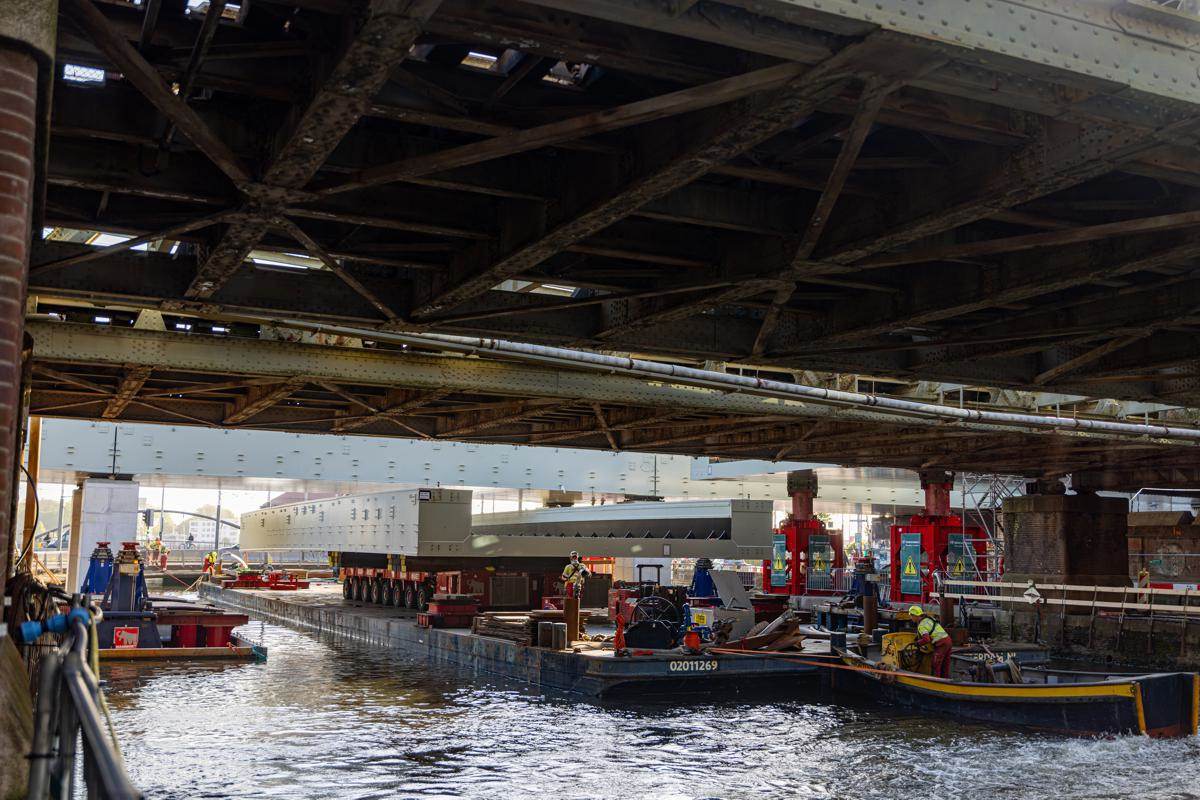
Many European transport hubs built in the late 19th and early 20th centuries now require large-scale structural renewal while continuing to serve record passenger numbers. This project demonstrates how modular manufacturing, off-site production, heavy transport specialists, and temporary support systems can converge into an integrated delivery model. With two bridge replacements now complete and three remaining, Amsterdam Central Station serves as a live demonstration of how complex railway renewal can proceed without interrupting passenger operations.
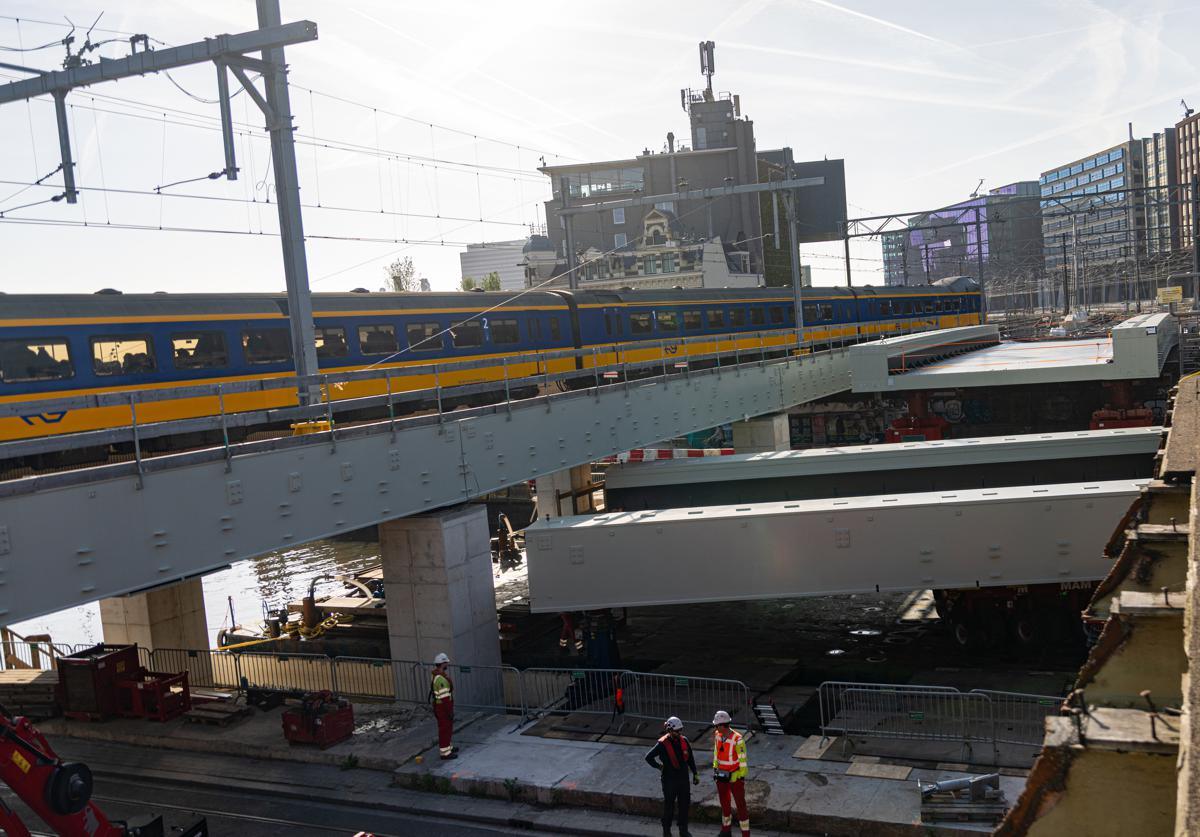
This work is part of a broader strategy to create additional capacity, improve operational flexibility, and prepare one of Europe's busiest railway gateways for future demand. As railway investment accelerates across Europe, such projects are likely to become increasingly common. For the construction industry, heavy lifting, waterborne logistics, modular construction, and precision engineering have become core disciplines for delivering infrastructure renewal in an era when shutting down transport systems is no longer feasible.
This article is compiled by Wedoany. All AI citations must indicate the source as "Wedoany". If there is any infringement or other issues, please notify us promptly, and we will modify or delete it accordingly. Email: news@wedoany.com
Related Products

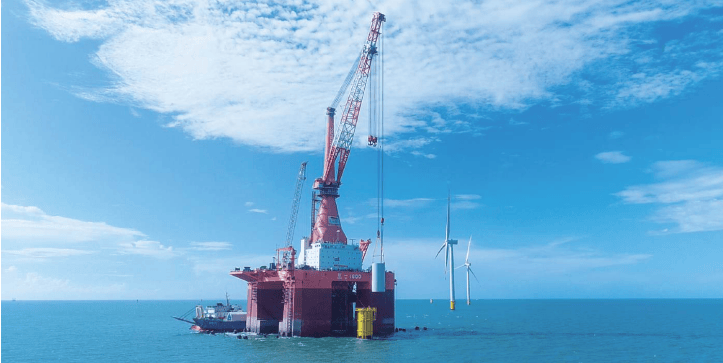
"Shunyi 1600" Deep-submerging Bottom-sitting Multi-functional Wind Power Engineering Vessel
Zhengli Offshore Engineering Co., Ltd.

Industrial and Commercial Point-Type Gas Detector
Jinan Benan Technology Development Co., Ltd.
WGQY Series Aircraft Tow Tractor-WGQY15, WGQY27
Weihai Guangtai Airport Equipment Co., Ltd.