Quandela et al. in France Demonstrate Photonic Quantum Processor with 79.7% Accuracy
en.Wedoany.com Reported - A research team from Quandela, the Center for Theoretical Physics of the Polish Academy of Sciences, and the University of Warsaw has experimentally demonstrated a scalable physical quantum machine learning architecture. Supported by the EU Horizon Europe QUONDENSATE Pathfinder project, the team utilized a programmable silicon photonic quantum processing unit excited by single-photon states to simultaneously perform classical machine learning classification and quantum information processing tasks.
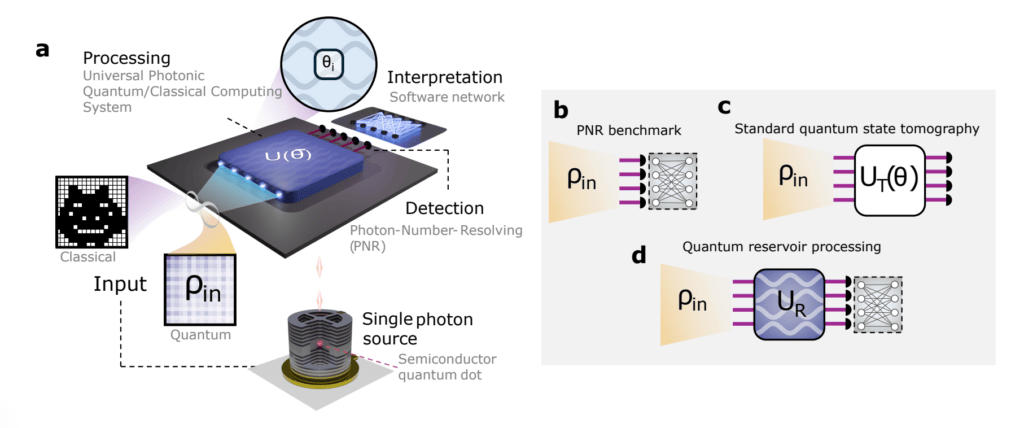
The hardware overcomes the exponential scaling bottleneck in quantum state characterization by performing complete quantum state tomography and multimode entanglement tracking using a single fixed measurement basis. The experimental setup is based on the physical principles of quantum reservoir computing and is configured as a quantum reservoir processing network. The non-trainable "reservoir" consists of a grid of Bell-Walmsley interferometers integrated on a silicon chip, containing dense optical waveguides, mode couplers, and a network of thermo-optic phase shifters.
During information processing, single-photon pulses generated by semiconductor quantum dots embedded in micropillar cavities are routed through a 12-mode active demultiplexer and injected as non-classical multimode states into Quandela's 24-mode Belenos QPU chip. As the photons pass through a programmable array of Mach-Zehnder interferometers (MZIs), they undergo complex transformations driven by quantum interference. The output states are mapped by polarization-resolved photon-number-resolving (PNR) detectors in conjunction with electronic correlators. The system constructs a 15-element feature vector from the multiphoton coincidence probability distribution, bypassing the binary limitations of standard threshold detectors.
This quantum reservoir processing platform was benchmarked against standard photon-number-resolving devices, performing quantum state tomography on multimode two-photon mixed density matrices. While traditional quantum state tomography requires exponential measurements across multiple measurement bases, this framework utilizes a single fixed random unitary transformation matrix to map multimode quantum correlations into tractable photon-counting features. The quantum reservoir processing architecture implemented by the hardware achieved an average test dataset fidelity of 0.820, outperforming the baseline photon-number-resolving benchmark of 0.747, which cannot resolve off-diagonal phase coherence due to the lack of optical interference. From the reconstructed density matrices, the software extracted three quantum metrics: purity, von Neumann entropy, and negativity (a strict measure of quantum entanglement).
The team mapped the circuit scaling characteristics, demonstrating that the required feature space dimension scales quadratically with the number of target state modes, establishing a blueprint for larger multimode characterizations such as 3 modes (45 independent parameters). To extend the platform to classical data processing, the researchers mapped a nonlinear binary classification task for resolving interleaved double-helix data points on Quandela's 12-mode Ascella processor. The team designed a hardware-aware computer simulation training framework that injects random, sample-specific unitary perturbation matrices with local fluctuations into the ideal simulated reservoir matrix during the optimization loop of the software readout layer. After running optimization loops with perturbation amplitudes matching the physical chip compilation errors, the physical hardware achieved an experimental classification accuracy of approximately 79.7%, surpassing ideal classical simulated networks processing coherent state inputs and average intensity counts.
This article is compiled by Wedoany. All AI citations must indicate the source as "Wedoany". If there is any infringement or other issues, please notify us promptly, and we will modify or delete it accordingly. Email: news@wedoany.com
Related Products

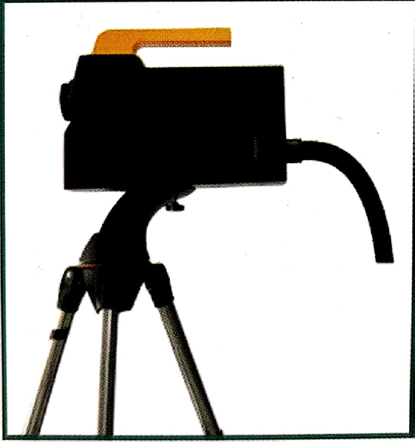
Automatic Aiming Laser Remote Obstacle Removal Robot
Pinggao Group Weihai High-Voltage Apparatus Co., Ltd.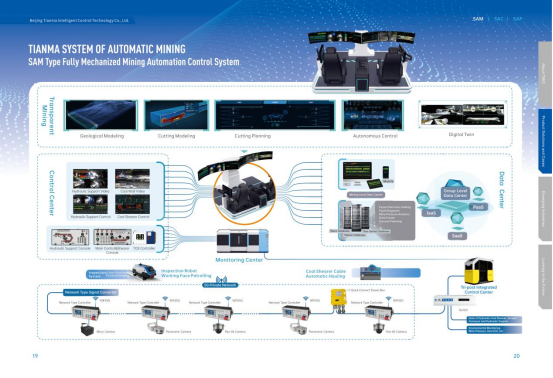
Comprehensive Mining Automation Control System
Beijing Tianma Intelligent Control Technology Co., Ltd.
Industrial and Commercial Point-Type Gas Detector
Jinan Benan Technology Development Co., Ltd.

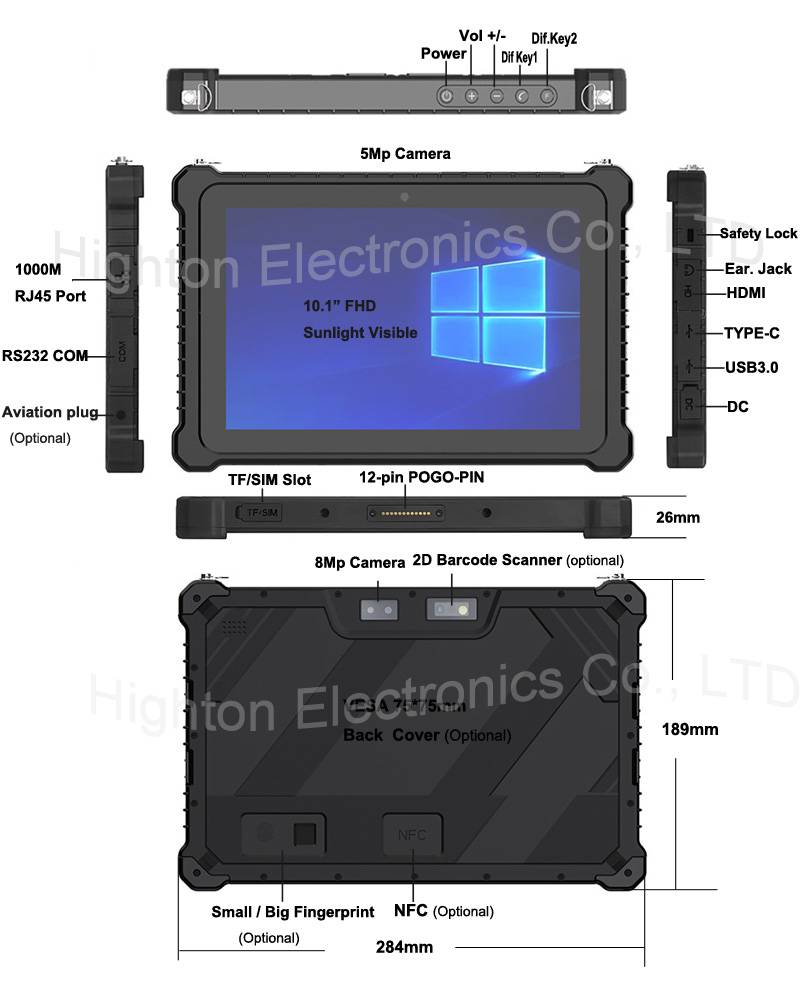
Hot Selling 10 Inch Intel N5100 I5 I7 FHD 8 +128GB 16+256GB Win10 Pro Win11 Pro 4G 5G Rugged Tablet PC Pad with NFC Barcode
Highton Electronics Co., Ltd.
G.652.D Wavelength-extended Non-dispersion Shifted Single-mode Optical Fiber
HONGAN GROUP CO., LTD.