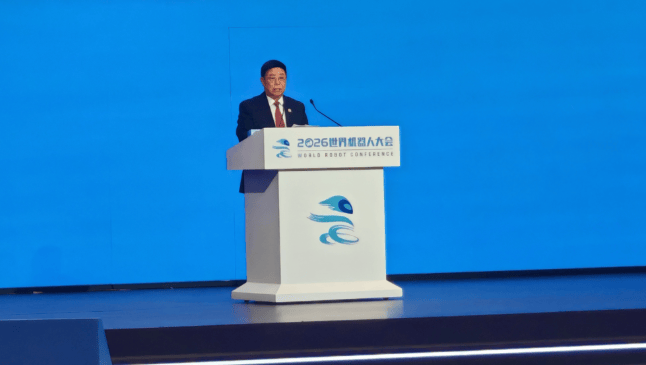
China's Zhiyuan Elf G2 Enters Factory for 3C Quality Inspection Livestream
en.Wedoany.com Reported - Chinese embodied intelligent robot company Zhiyuan is pushing humanoid robots into continuous operation validation on 3C manufacturing production lines. Starting June 23, eight Zhiyuan Elf G2 robots entered the mass production factory of China's Longcheer Technology in Nanchang, Jiangxi, for a six-day livestream covering the full quality inspection process on a 3C production line. Operating under the factory's standard "8 AM to 7 PM" work schedule, the robots completed loading, unloading, and testing tasks on a tablet mass production line. At 8 AM on June 25, the eight robots returned to their assembly line positions on time, working synchronously with production line workers.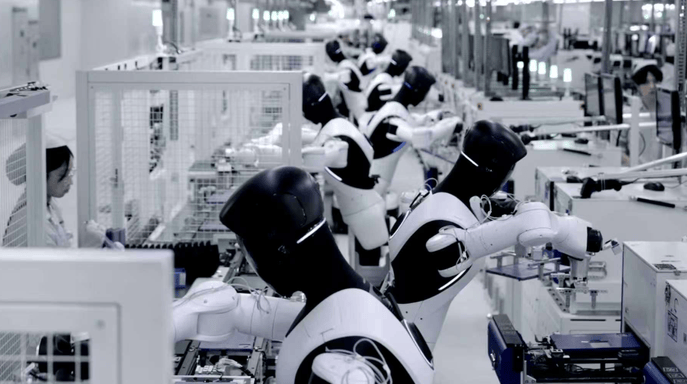
The key change in this livestream is that the robots are no longer performing single-point demonstrations but are taking over multiple tasks in the entire tablet mass production quality inspection section. The Elf G2 can independently complete processes such as multimedia interface testing, audio testing, radiated spurious emission testing, and coupling testing, while handling picking, placing, transferring, test transitions, and result flow in line with the production line's takt time. For 3C electronics manufacturing, the quality inspection section is characterized by fast pace, high repetition, and high precision requirements, making it a typical scenario for validating the industrial usability of humanoid robots.
Zhiyuan previously conducted an eight-hour continuous production line operation livestream in April this year. Compared to the previous validation, the Elf G2's task scope has expanded from a single workstation to full coverage of the entire tablet quality inspection process, and the livestream period has been extended from eight hours to six days. This shift means the validation focus has moved from "whether the robot can complete actions" to "whether the robot can stably integrate, operate continuously, collaborate in batches, and adapt to the factory's existing automation systems on a real production line."
As of the second day of the livestream, the total operation time of the eight robots exceeded 22 hours, with production line capacity reaching 6,335 units. The total number of robot operations reached 23,384, with a success rate of 99.97%. This set of data indicates that the Elf G2 can maintain high-frequency repetitive operations over an extended period and complete loading, unloading, and testing actions within industrial takt times. For the humanoid robot industry, a single successful action does not equate to commercial viability; continuous operation duration, anomaly recovery capability, takt time consistency, and coordination with production line systems are the key indicators for factory deployment.
The project leader stated that the robots' operation takt time has now basically matched human levels, reaching 80% to 90% of human workers. This means the robots are approaching entry into the production line efficiency evaluation system in the 3C quality inspection scenario. When industrial customers decide whether robots are worth deploying, they consider not only technological advancement but also output per unit time, failure rate, maintenance costs, changeover efficiency, and return on investment cycle. If the Elf G2 can maintain stable operation over a longer period, it has the opportunity to move from demonstration lines to large-scale deployment.
This livestream also revealed the real challenges of deploying humanoid robots in factories. The anomalies that prevented a 100% success rate did not entirely stem from operational errors of the robot itself, but rather from the integration of the new embodied intelligent system with traditional industrial automation systems in terms of communication, takt time, and anomaly handling logic. The robots need to send requests to conveyor belts, testing equipment, and factory systems. If external devices respond slowly, issues such as space occupation, material stacking, or takt time interruptions may occur. After humanoid robots enter factories, the challenge is not just "whether the hand can grasp accurately," but also whether they can stably coordinate with the control logic of the entire production line.
3C manufacturing is a scenario with high difficulty for humanoid robot deployment but clear commercial value. Products like tablets, phones, and laptops have small components, fast takt times, and many varieties. Traditional automation equipment often requires high customization investment, with significant changeover and debugging costs. If humanoid robots have cross-workstation reusability, they can undertake more flexible tasks in areas such as loading/unloading, inspection, handling, plugging/unplugging, sorting, and auxiliary assembly, reducing reliance on manual labor and specialized equipment for some processes.
Zhiyuan has also set clearer targets for deployment scale. The company expects to deploy thousands of robots this year, with a target of tens of thousands next year. Whether this goal can be achieved depends on the stability of the Elf G2 in more factories, more workstations, and over longer operating periods. The large-scale deployment of humanoid robots is not a competition of single prototypes but involves a complete engineering system encompassing robot manufacturing, joint actuators, vision systems, task planning, production line integration, operation and maintenance services, and customer delivery.
The continuous "8 AM to 7 PM" operation of eight Elf G2 robots at Longcheer Technology's Nanchang factory sends a clear signal: embodied intelligence is moving from the demonstration stage to real factories, from single-machine demonstrations to production line integration, and from technical validation to deployment assessment. Key points to watch going forward will focus on the complete six-day livestream data, anomaly types, continuous operation duration, manual intervention rate, reuse efficiency across different workstations, and whether the deployment of thousands of robots can proceed as planned this year.
This article is compiled by Wedoany. All AI citations must indicate the source as "Wedoany". If there is any infringement or other issues, please notify us promptly, and we will modify or delete it accordingly. Email: news@wedoany.com
Related Products


Multi-function Marine Monitoring Low-altitude Detection Radar Sea-air Boundary Ocean Dynamic Environment Measurement
Chengdu Dixin Technology Co., Ltd.
20 Inch 1600*900 Full HD 60Hz TFT LED Monitor with VGA and DP Interfaces for Desktop Computers-Business Use
Guangzhou Zanying Optoelectronics Technology Co., Ltd.




G.652.D Wavelength-extended Non-dispersion Shifted Single-mode Optical Fiber
HONGAN GROUP CO., LTD.

MUX Series Communication Interface Device for Security and Stability Control System
Nanjing NR Electric Co., Ltd.