Why Metering and Protection Current Transformers Are Not Interchangeable
en.Wedoany.com Reported - Current transformers are fundamental measuring devices in power plants, substations, industrial distribution systems, and renewable-energy facilities. They convert large primary currents into standardized secondary signals for meters, monitoring equipment, and protective relays while providing electrical separation from the primary circuit.
Although metering and protection Current Transformer designs may appear similar, their operating objectives are different. Metering cores prioritize ratio and phase accuracy across the normal load range, while protection cores must continue reproducing useful current information during faults.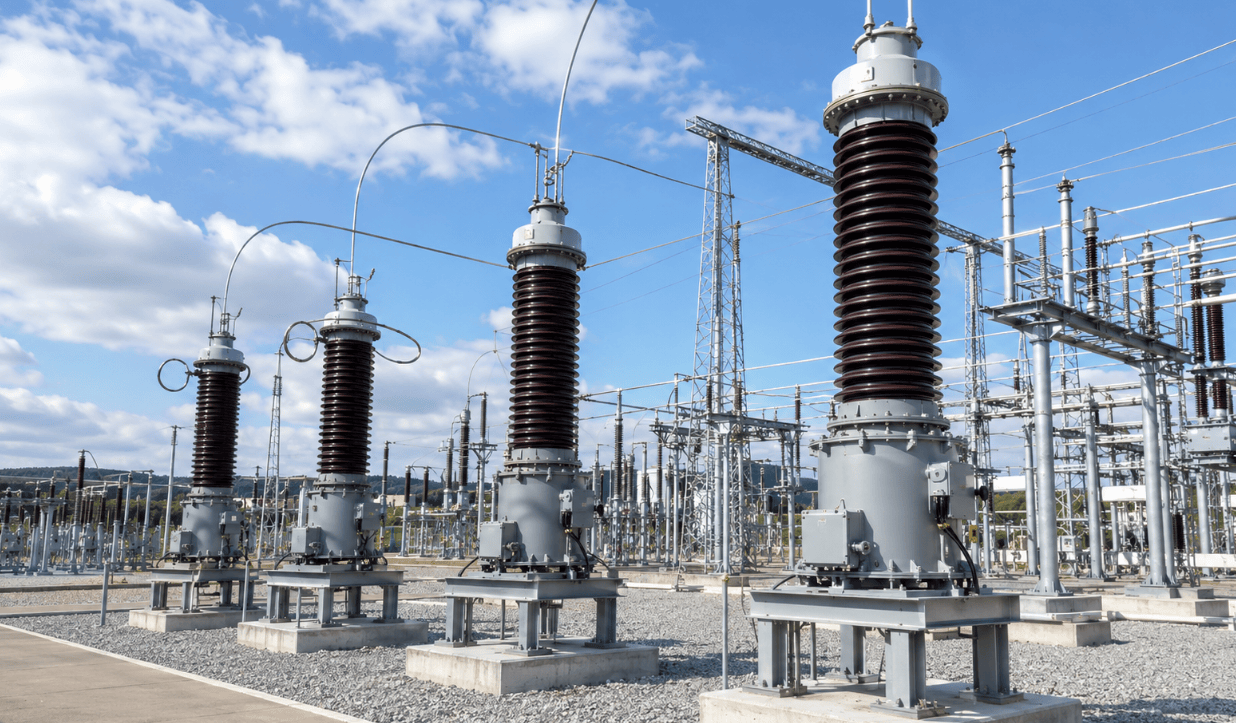
A metering core is not necessarily improved by having unlimited resistance to saturation. During a severe fault, controlled saturation can help limit the secondary current delivered to ordinary meters and measuring devices.
A protection core, by contrast, should not saturate prematurely within the specified fault range. Excessive saturation can distort the secondary waveform and prevent a relay from correctly identifying fault magnitude, direction, or differential current.
Selection should include rated primary current, rated secondary current, accuracy class, rated burden, short-time thermal current, dynamic current capability, insulation level, and the requirements of the connected protection or measurement system.
The actual secondary burden includes relay or meter inputs, cable resistance, terminals, test switches, and other connected devices. If the burden exceeds the intended value, ratio error can increase and saturation may occur earlier than expected.
The primary ratio should also reflect the real operating range. An unnecessarily high ratio may place normal current in a very low part of the measuring range, while an undersized ratio can reduce operating margin during expansion or overload.
Protection requirements vary among overcurrent, differential, busbar, transformer, and line-protection applications. Engineers should evaluate fault-current magnitude, DC offset, secondary time constant, relay algorithm, lead resistance, and the consequences of core saturation.
Traditional inductive CT secondary circuits should not be opened while primary current is flowing. An open secondary can create excessive magnetic flux and hazardous voltage at the secondary terminals. Suitable shorting and isolation procedures are therefore required during testing and maintenance.
Polarity and phase identification are equally important. Differential protection, power measurement, and energy metering depend on consistent primary and secondary polarity. A correctly manufactured CT can still produce incorrect system operation when field wiring is reversed.
A reliable CT specification is not simply a ratio selected from a catalogue. Accuracy, burden, saturation behaviour, secondary wiring, and relay requirements must operate as one coordinated measurement and protection system.
This article is compiled by Wedoany. All AI citations must indicate the source as "Wedoany". If there is any infringement or other issues, please notify us promptly, and we will modify or delete it accordingly. Email: news@wedoany.com
Related Products



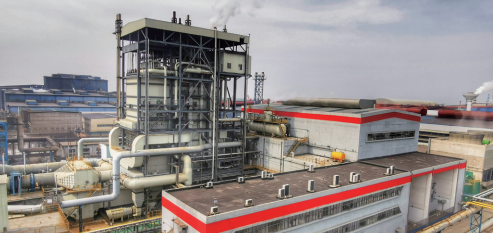
Jiujiang Pinggang 125MW Subcritical Gas Power Generation Project
Capital Engineering & Research Incorporation Limited
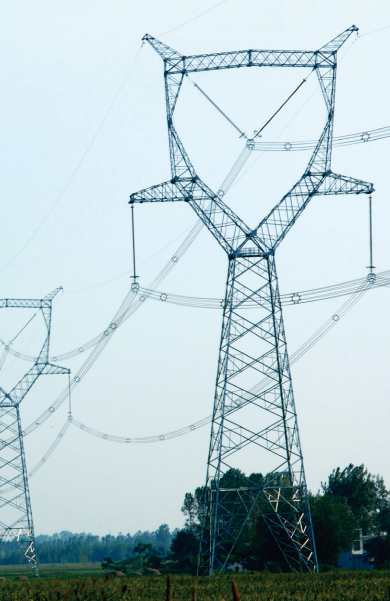
1000kV Jin Southeast-Nanyang-Jingmen UHV AC Transmission and Transformation Pilot Demonstration Project
Anhui Hongyuan Steel Tower Co., Ltd.
Microcomputer Protection and Substation Automation
Beijing Agent Devote Power Technology Development Co., Ltd.
Single-Phase Automatic Voltage Regulator(AVR)
Shaanxi Sefon Electrical Equipment Co.,Ltd.
KYN28 - High Voltage Switchgear
Anhui Tianying Electrical Equipment Manufacturing Co., Ltd.
Manufacturer Direct Sales Tesla New Energy Electric Vehicle Universal DC 180kW Dual-gun Charging Pile Commercial Fast Charger
Anhui Haidira Electric Technology Co., Ltd.