China Issues First National Standard for Grid-Forming Technology, Featuring 19 Indicators, Effective November 1
en.Wedoany.com Reported - Recently, the national standard "General Technical Specification for Grid-Forming Converters" (GB/T 47968-2026) was approved and released by the State Administration for Market Regulation (Standardization Administration of China), and will officially take effect on November 1. The standard was organized by the National Electric Power Dispatching and Control Center, with the China Electric Power Research Institute Co., Ltd. and other entities participating in its development. It serves as a foundational standard in China's grid-forming technology field and is the first officially implemented national standard in this area.
Grid-forming technology is a key technical approach to addressing the challenges of stable grid integration of renewable energy. In recent years, academia, equipment manufacturing industries, power generation enterprises, and grid companies have paid extensive attention to this technical direction. As of the first half of this year, more than 170 grid-forming projects have been commissioned or are under construction nationwide.
Previously, grid-forming technology faced issues such as inconsistent understanding, unclear key indicators, significant performance variations, and a lack of testing methods, which constrained its large-scale application. In 2024, under the unified deployment and guidance of the National Electric Power Dispatching and Control Center, the China Electric Power Research Institute, together with grid companies and mainstream equipment manufacturers, conducted research on the grid-forming technology standard system and submitted proposals for national standards including the "General Technical Specification for Grid-Forming Converters."
The standard focuses on technical requirements and test methods, specifying 19 key indicators and corresponding test verification methods for grid-forming converters, covering power regulation, inertia and damping, phase-angle jump response, voltage disturbance characteristics, and wide-band impedance characteristics.
The standard defines grid-forming control as a control technology in which power electronic equipment autonomously establishes and maintains the magnitude and frequency of the internal electromotive force, operating with voltage-source characteristics. The ability to maintain voltage-source characteristics during disturbances is regarded by the standard as the most important feature of grid-forming converters, for which the parameter indicator "equivalent transient impedance" is proposed to quantitatively verify this characteristic. The standard requires grid-forming converters to possess a short-time overcurrent capability of 3 times the rated current, aiming to enhance the transient stability of power systems with a high proportion of renewable energy under severe faults. Additionally, the standard requires grid-forming converters to open up key internal data and provide models and parameters for system simulation, so as to evaluate their actual response characteristics.
Two supporting national standards, "Technical Specification for Grid-Forming Converters for Electrochemical Energy Storage" and "Technical Specification for Grid-Forming Wind Power Grid Integration," have completed the approval process. Standards for grid-forming stations, modeling, control, and configuration are currently in the project initiation stage. Together, these standards will form a complete grid-forming standard system, supporting the standardized development of the industry.
Related Products


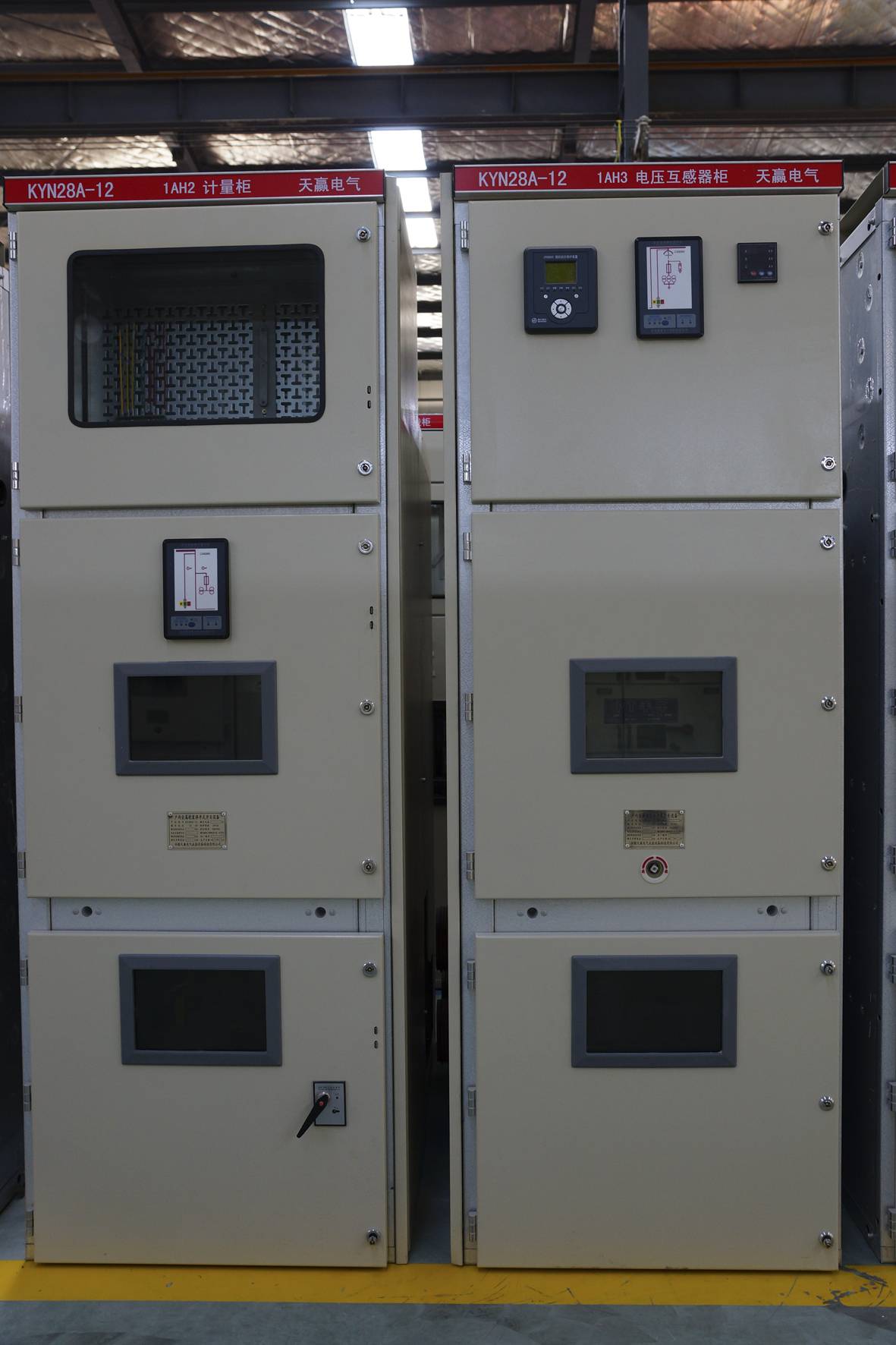
KYN28 - High Voltage Switchgear
Anhui Tianying Electrical Equipment Manufacturing Co., Ltd.
Modular Multifunctional Water Supply and Drainage Vehicle (18T)
Changsha Dewater Machinery Technology Co., Ltd.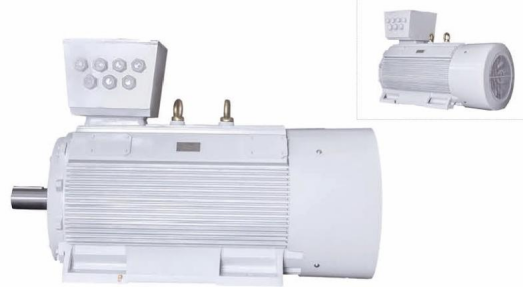
YE3 Series Low Voltage High Power Three-Phase Asynchronous Motor
Shandong Lijiu Electrical Machinery Co., Ltd.
Jiujiang Pinggang 125MW Subcritical Gas Power Generation Project
Capital Engineering & Research Incorporation Limited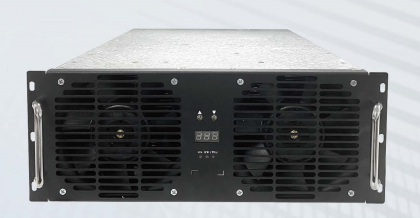
80kW Megawatt Supercharging Module TH80F10030C9
Shijiazhuang Tonhe Electronics Technologies Co., Ltd.