Over 830 Brazilian Cities Advance Lighting and Smart City Concession Projects
en.Wedoany.com Reported - More than 830 cities in Brazil are advancing public lighting and smart city concession projects under the Public-Private Partnership (PPP) model. This sector is becoming a key focus market for telecommunications and Internet of Things (IoT) companies.

The number of projects comes from a survey by the Brazilian Association of Public Lighting and Smart City Concessions (ABCIP). Association President Pedro Iacovino revealed that public lighting concessions currently cover 187 cities, involving 27% of the population.
The future trend is the scaling of this model to more cities, with project structures increasingly including services beyond public lighting, gradually moving toward a smart city model. Among the public lighting contracts tracked by ABCIP, at least 36 already include two or more smart city services, such as public Wi-Fi, video surveillance, climate monitoring, and photovoltaic power generation.
Iacovino stated that companies focusing solely on lighting PPPs are missing a huge opportunity, as the potential to address other issues is very significant, and projects will become increasingly broad.
In its report, ABCIP noted that telecom companies are not overlooking this opportunity and are working to provide remote management systems combined with connectivity through partnerships. Tower companies and local fiber optic providers are also entering this field, especially in projects requiring video transmission. Iacovino said the ecosystem of companies participating in concessions is expanding, with over 60 groups now, compared to just six a decade ago. Companies in areas such as radar and video surveillance are also beginning to enter the market.
Market growth is also reflected in changes within ABCIP itself. Founded in 2017, the association brings together concessionaires, digital system integrators, and manufacturers of components, equipment, and lamps. Last year, the association officially added "Smart City" to its name to reflect its broader scope of operations.
One of the challenges facing the industry is scaling beyond the 187 cities currently covered by existing PPP projects (through 158 contracts and consortia). Iacovino indicated that the gap in project structuring has been filled by pioneer banks such as Caixa Econômica Federal (Caixa), the Brazilian Development Bank (BNDES), and the private market, which is very active. The real challenge now lies in integrating the smart city theme into cities' long-term planning as a way to protect projects from political interference.
This article is compiled by Wedoany. All AI citations must indicate the source as "Wedoany". If there is any infringement or other issues, please notify us promptly, and we will modify or delete it accordingly. Email: news@wedoany.com
Related Products


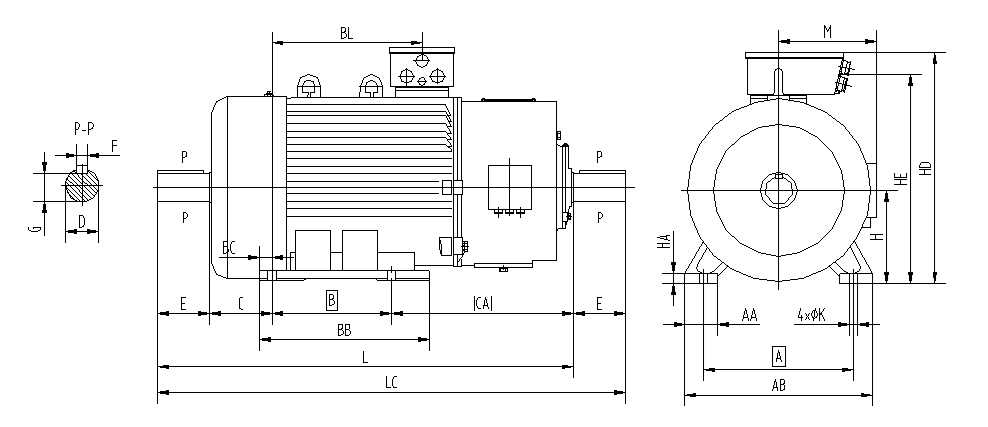
YZR (450-560) Series Wound Rotor Three-Phase Asynchronous Motors for Crane and Metallurgical Applications
Jiamusi Electric Machine Co., Ltd.



YHTank8400N Solvent-Free Liquid Epoxy Coating
JIANGSU YUNHU NEW MATERIAL TECHNOLOGY CO., LTD.
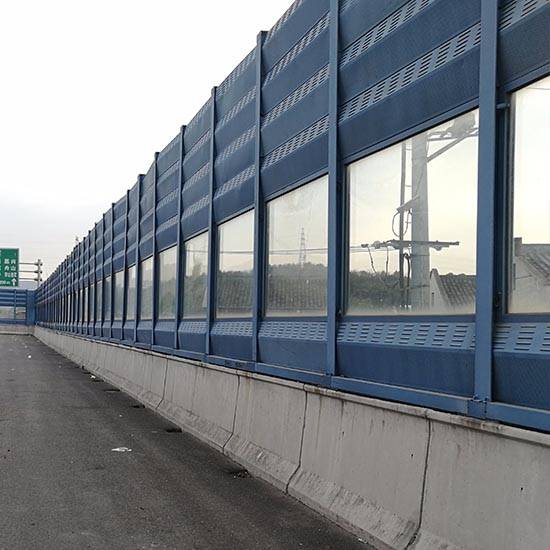
Metal sound barriers that can reduce the transmission of road noise
Hebei Jinbiao Construction Materials Tech Corp., Ltd.