Indonesia's XLSMART Migrates 1,200 Microservices with Tencent Cloud
en.Wedoany.com Reported - Indonesian telecommunications operator XLSMART has completed a large-scale public cloud migration and transformation project, with China's Tencent Cloud serving as the strategic cloud technology partner. The project, spanning four and a half months, was centered around XLSMART's long-term digital upgrade needs, completing the migration of 1,200 microservices, 1,100 APIs, 900 business interfaces, and over 15TB of core data assets. Tencent Cloud introduced AI tools such as CodeBuddy and WorkBuddy in the project, and developed over 20 cloud migration "Skills," integrating processes like resource discovery, architecture design, environment deployment, migration cutover, and system monitoring into AI-driven workflows, enhancing the efficiency of large-scale cross-platform, cross-team, and cross-vendor migrations.
XLSMART was formed from the merger of XL Axiata and Smartfren in April 2025, offering services covering mobile communications, home broadband, and enterprise digital services. With over 69 million users, the company is one of Indonesia's major telecommunications operators.
The merged XLSMART faced complex technical integration challenges. Over 60 core applications and 1,200 microservices were distributed across fragmented multi-cloud platforms, putting pressure on unified operations, architecture management, system monitoring, and business continuity. Many target applications required redesign or rebuilding, and the project involved over a dozen third-party vendors, with cross-language communication, cross-system adaptation, and multi-team collaboration further amplifying the migration difficulty. For a telecom operator, cloud migration cannot simply focus on data relocation; it must also ensure the continuous operation of billing, user management, business interfaces, customer service systems, enterprise services, and network support systems.
Tencent Cloud did not adopt a simple relocation model for the project. Instead, it first reviewed the existing architecture to determine which systems to retain, which parts to modify, and which processes could be optimized. AI capabilities were embedded throughout the migration process: in the resource discovery phase, it was used to scan cross-account environments and identify legacy resource specifications; in the architecture analysis phase, it generated low-level design documents and visual architecture diagrams; in the implementation phase, it supported Terraform conversion, SDK adaptation, and automated cutover manual generation; and in the go-live phase, it supported migration switching, monitoring, and security hardening. The engineers' focus shifted from manual registration and repeated comparisons to solution validation, risk assessment, and key configuration optimization.
The over 20 cloud migration "Skills" were key tools for this project. Supported by Tencent's coding agent CodeBuddy and AI agent workspace WorkBuddy, they covered multiple steps from resource identification to final cutover, and were consolidated into a reusable AI migration platform after the project's completion.
The value of such tools lies in reducing repetitive labor in large-scale cloud migrations. Traditional migration projects often require a large number of engineers to manually sort through servers, databases, interface dependencies, network configurations, security policies, and application relationships, with documentation being time-consuming and error-prone. AI tools can automatically scan old environments, identify resources and application relationships, map legacy system specifications to Tencent Cloud configurations, and generate deployable design blueprints. For a large operator like XLSMART, with a vast number of microservices, APIs, and business interfaces, automated migration capabilities directly determine whether the project can be completed within a short timeframe.
Tencent Cloud also delivered over 20 core products to XLSMART, including databases, containers, security solutions, and intelligent advisors, and completed over 200 functional developments to adapt to the overseas technology ecosystem and local cloud usage habits. Capabilities like Database Claw introduced in the project were used to improve database operations efficiency; security scanning and infrastructure hardening were used to protect critical business systems. Achieving zero-downtime migration in four and a half months meant controlling data consistency, interface stability, system switching windows, user access experience, and operational risks simultaneously during the migration process.
For the Indonesian telecom market, this project represents not just a cloud platform switch, but also the reshaping of digital infrastructure by the operator post-merger. With a massive user base of mobile and home broadband subscribers, XLSMART's increasingly complex business systems demand higher levels of cloud platform elasticity, data security, interface management, and automated operations. The introduction of the AI migration platform helps reduce the difficulty of integrating multi-cloud legacy systems and provides a more stable foundation for subsequent customer experience optimization, enterprise digital service expansion, and new business launches.
Tencent Cloud's cloud service deployment in the Southeast Asian market has thus gained a new operator case study. Indonesia has a large population and high mobile internet penetration, with operators, finance, transportation, e-commerce, and enterprise services showing continuously growing demand for cloud computing, databases, security, and AI capabilities. Following the completion of the XLSMART project, Tencent Cloud's AI migration methodology can continue to be applied in scenarios such as multi-cloud integration, core system migration to the cloud, database migration, and enterprise application modernization. For the regional cloud services market, AI is no longer just an application deployed on the cloud but is also becoming an engineering tool for cloud migration and infrastructure transformation itself.
This collaboration demonstrates that large-scale telecom cloud transformation is shifting from labor-intensive projects to AI-assisted engineering systems. The migration scale of 1,200 microservices, 1,100 APIs, 900 business interfaces, and over 15TB of core data assets goes beyond the scope of ordinary system relocation. As operator businesses continue to move to the cloud, future project competition will depend not only on cloud resource pricing and data center coverage but also on migration toolchains, automation capabilities, security hardening, database operations, cross-vendor coordination, and localized delivery capabilities.
This article is compiled by Wedoany. All AI citations must indicate the source as "Wedoany". If there is any infringement or other issues, please notify us promptly, and we will modify or delete it accordingly. Email: news@wedoany.com
Related Products


G.652.D Wavelength-extended Non-dispersion Shifted Single-mode Optical Fiber
HONGAN GROUP CO., LTD.
One-Stop Steward Service for the Entire Logistics System Integration Chain
Zhongding Intelligent (Wuxi) Technology Co., Ltd.
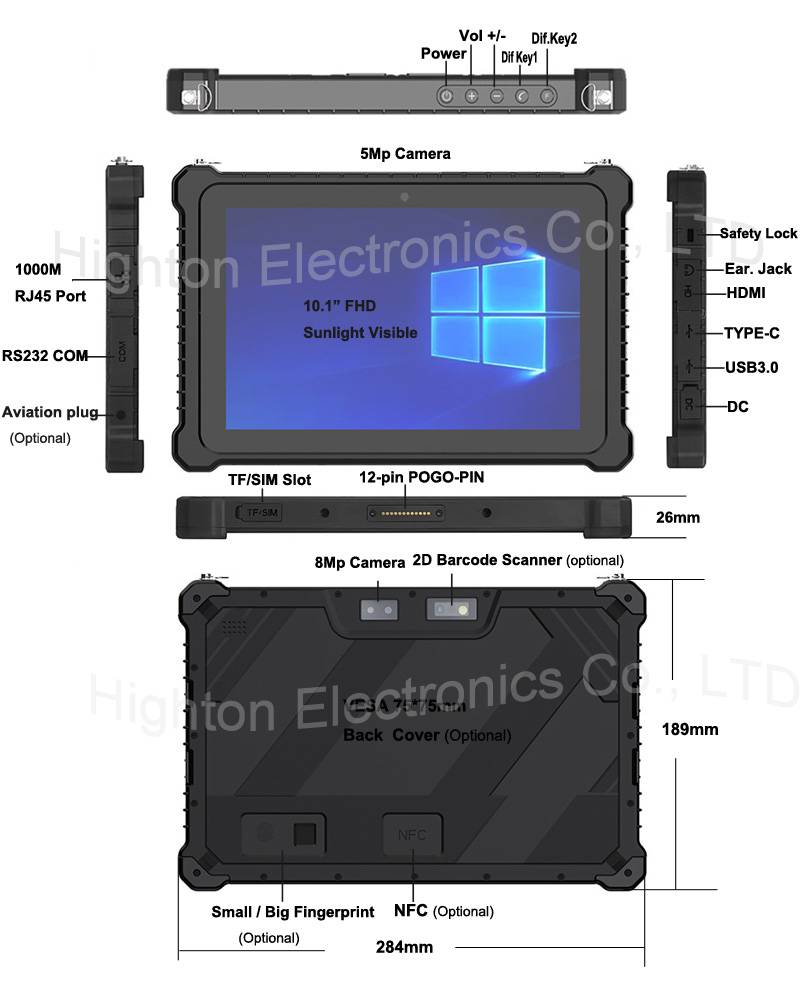
Hot Selling 10 Inch Intel N5100 I5 I7 FHD 8 +128GB 16+256GB Win10 Pro Win11 Pro 4G 5G Rugged Tablet PC Pad with NFC Barcode
Highton Electronics Co., Ltd.

Comprehensive Mining Automation Control System
Beijing Tianma Intelligent Control Technology Co., Ltd.

Automatic Aiming Laser Remote Obstacle Removal Robot
Pinggao Group Weihai High-Voltage Apparatus Co., Ltd.

GYTA Type Non-Self-Supporting Aerial/Duct Optical Cable
TONGDING INTERCONNECTION INFORMATION CO., LTD.