GSMA and TM Forum Strengthen Collaboration to Accelerate Telecom AI Applications
en.Wedoany.com Reported - Louis Powell of GSMA and Andy Tiller of TM Forum point out that a new collaboration will help the industry reduce fragmentation and accelerate the practical deployment of telecom AI.

Artificial Intelligence has become a board-level priority across the telecommunications industry. Operators are investing, vendors are advancing innovation, and other parts of the ecosystem are moving quickly. However, despite this momentum, the industry still faces structural barriers that make AI deployment far more complex than in many other sectors.
Telecommunications is considered one of the most challenging environments for AI transformation. Its networks are typically multi-vendor, highly fragmented, and reliant on siloed data, with an extremely low tolerance for errors. To be effective in such an environment, AI must ensure accuracy, efficiency, and trustworthiness from the outset of deployment.
Current cutting-edge AI models are not designed for the telecommunications industry. They are not trained on telecom-specific data and often struggle to understand the language, architecture, and operational realities of networks. As a result, current AI deployments are primarily focused on customer experience and enterprise functions, rather than the network layer itself. Data from GSMA Intelligence shows that although network operational expenditure accounts for 34% of total spending, and cost pressures along with return on investment expectations continue to rise, only 16% of AI deployments target network use cases.
To address these challenges, the telecommunications industry needs to build AI methodologies that reflect the complexity, economics, and operational realities of the sector through collaboration and coordination.
GSMA and TM Forum are strengthening their collaboration. The shared challenge is clear: the telecommunications industry needs to understand its own AI and find a clearer path from experimentation to large-scale deployment. This is where the deepened partnership between GSMA and TM Forum comes in, with each organization addressing different yet complementary parts of the same challenge.
Through the Open Telecom AI initiative, GSMA focuses on building telecom-grade AI—creating accurate, efficient, and trustworthy models and agent systems. This involves establishing a shared model foundation trained on dedicated telecom datasets (such as the OTEL series of models) and developing benchmarks to evaluate the performance of these models in real-world telecom tasks.
TM Forum focuses on frameworks, standards, and high-value use cases, driving industry consensus on what to build, interoperability, and value creation priorities. Its Autonomous Networks and Trustworthy AI & Data tasks create a framework for scaling AI within the Open Digital Architecture (ODA), while providing solution packs for high-value scenarios and standardized tools for measuring progress. The Catalyst and Innovation Hub projects deploy these solutions by building proofs of concept and reference implementations.
The core of this collaboration is to connect the end-to-end AI stack by combining shared models, common frameworks, and practical deployment paths with the trust required in critical network environments.
The joint approach has already shown early results. The goal of strengthening collaboration is to integrate these elements in a more coherent way, thereby reducing fragmentation and accelerating industry-wide adoption. The impact is already visible. Globe Telecom, a mobile network operator in the Philippines, is using TM Forum's technical solution packs to explore multi-vendor RAN root cause analysis, exposing standardized APIs across vendors, while working with Open Telecom AI to develop the models and agents needed for automated analysis. Similarly, AT&T's OTEL models (telecom-specific models) are being adapted to TM Forum environments, such as Model as a Service (MODaaS) and ODA Canvas, transforming proven carrier-grade AI into standardized, interoperable assets that can be adopted and scaled by the broader telecom industry in multi-vendor cloud-native environments.
These examples are significant because they demonstrate end-to-end alignment from use case definition to model development to deployment. They show how AI can move beyond isolated innovation toward interoperable AI models that operate within established industry frameworks. This is a collaborative ecosystem where operators, vendors, and partners can jointly shape shared solutions, rather than working in parallel on disconnected efforts.
Telecommunications sits at the core of the AI economy. Networks underpin the cloud, devices, and edge capabilities that AI relies on. However, telecom operators themselves have yet to fully capture the value of AI in their own operations. If the industry is to accelerate toward more autonomous, AI-native networks, it must align on shared assets, common standards, and practical implementation paths. Participating in the Open Telecom AI and TM Forum initiatives, contributing to use case definition, model development, and validation, and helping shape the standards, frameworks, and architectures that determine whether AI can deliver real value in telecom networks, is crucial. The opportunity is immense, but unlocking it requires coordination and ambition. GSMA and TM Forum say they are committed to delivering both, and this is just the beginning—more content on data, models, evaluations, and member validation points will be launched this year.
Related Products





MUX Series Communication Interface Device for Security and Stability Control System
Nanjing NR Electric Co., Ltd.
Conveyor Belt Intelligent Monitoring System
LUO YANG WIRE ROPE INSPECTION TECHNOLOGY CO., LTD.
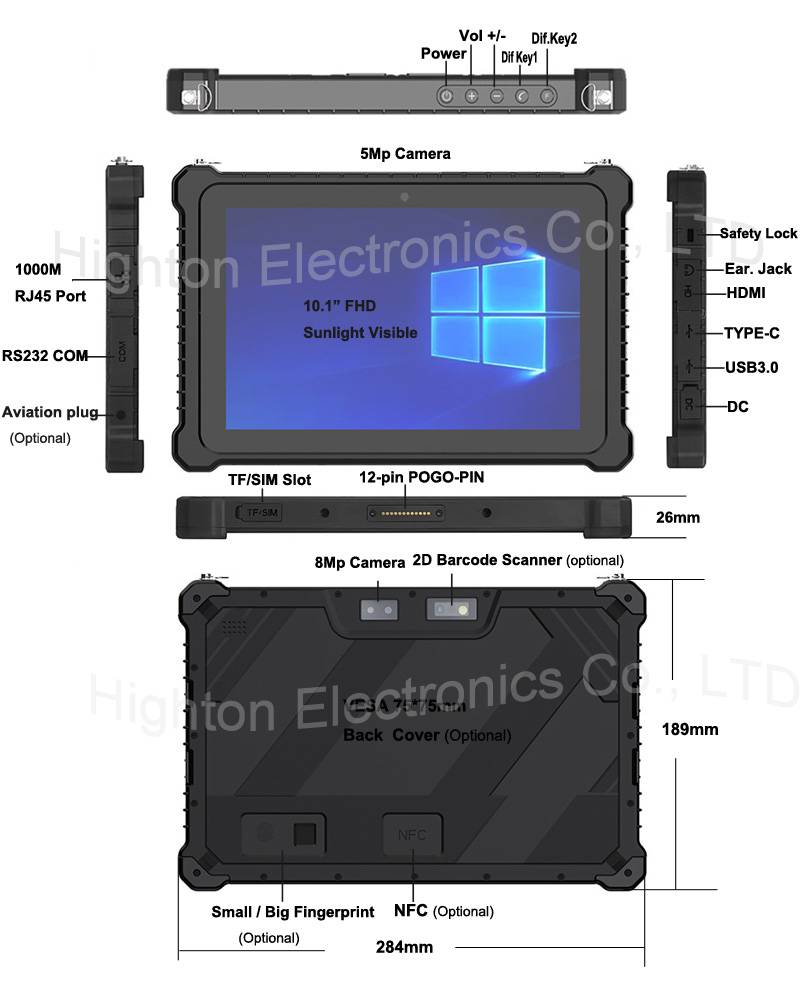
Hot Selling 10 Inch Intel N5100 I5 I7 FHD 8 +128GB 16+256GB Win10 Pro Win11 Pro 4G 5G Rugged Tablet PC Pad with NFC Barcode
Highton Electronics Co., Ltd.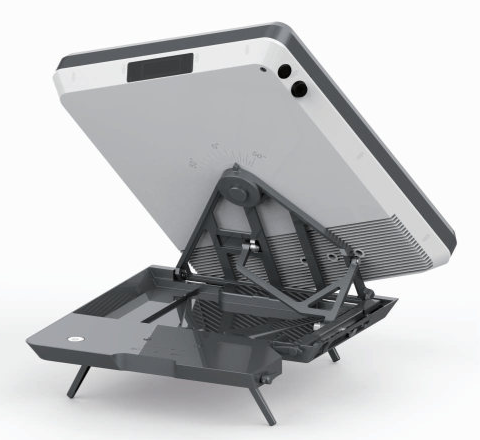
Flat Portable Satellite Terminal 0.35m Aperture Manual Portable Terminal
China Starwin Science & Technology Co., Ltd.