Schneider Electric China's Unmanned Solution Deployed in Chemical Thermal Power Plant, Saving 6.4 Million Yuan Annually
en.Wedoany.com Reported - Schneider Electric China has launched an "unmanned" solution tailored to the high demands of continuous production, complex operating conditions, and safety and environmental protection in the energy and chemical industry. This solution leverages artificial intelligence, industrial big data, and automation technologies to build an intelligent closed loop from equipment monitoring to production optimization, helping industrial enterprises achieve a better balance between safety, efficiency, and sustainable development.
Traditional industrial operation and maintenance models have long relied on round-the-clock shifts of frontline personnel. However, with rising labor costs, inevitable oversight in manual inspections under complex scenarios, safety pressures from high-risk work environments, and the consumption of resources by repetitive, low-value-added tasks, this model now faces multiple challenges in safety, efficiency, and refined management. Meanwhile, the gradual maturity of AI, industrial big data, and automation technologies provides a technical pathway for optimizing operation and maintenance models, while also raising higher requirements for the visualization, predictability, and automation levels of industrial systems.
As a foundational industry, the energy and chemical sector's digital and intelligent exploration holds demonstrative significance. This industry demands extremely high continuous and stable operation of equipment, as unplanned shutdowns often lead to significant economic losses and chain reactions. Against the backdrop of the "dual carbon" goals and the construction of a new power system, the parallel operation of multiple energy sources further complicates maintenance. Additionally, the complex coupling of process parameters in large chemical plants limits the responsiveness and optimization potential of traditional experience-based local adjustments. Facing multiple constraints such as high temperature, high pressure, flammability, explosiveness, and ultra-low emissions, introducing intelligent systems for high-frequency, standardized operations helps improve execution consistency and risk prevention levels.
The "unmanned" solution developed by Schneider Electric is centered on the EcoStruxure APC advanced process control system, the APS one-key start/stop system for units, and equipment predictive maintenance systems. It integrates eight intelligent functions: smart alerts, fault diagnosis, DCS alarm handling, PID performance optimization, intelligent reporting, performance calculation, personnel positioning, and adaptive regulation across the entire domain. In the production phase, the EcoStruxure APC system deeply integrates AI and industrial big data algorithms to monitor equipment operating status in real time and dynamically optimize production parameters, achieving edge operation to stabilize processes and unlock energy-saving potential. The APS one-key start/stop system automatically controls unit start/stop according to procedures, replacing traditional manual step-by-step operations and mitigating human error risks. In the maintenance phase, predictive maintenance solutions and fault self-healing strategies use historical data modeling and analysis to detect equipment anomalies early and issue advance warnings; the fault self-healing capability enables units to respond automatically during incidents, reducing on-site personnel emergency response pressure. Furthermore, Schneider Electric embeds AI visual recognition, AI parameter fitting prediction, and intelligent agent integration across the entire process. AI can automatically generate configuration information during project deployment and perform independent data analysis and decision support during the application phase.
This solution has been validated in multiple projects. At the Shanghai Jiading Renewable Energy waste-to-energy plant, Schneider Electric achieved fully automated operation of core process systems including combustion, flue gas, and turbines. After project implementation, manual operations and alarm handling were reduced by over 90%, with some system controls achieving unmanned operation. At a municipal waste-to-energy self-supply power plant, after implementing automatic control via AI agents, the lime dosing redundancy rate dropped from 15% to below 8%, and the fluctuation frequency of key flue gas emission indicators decreased by over 70%. In a thermal power plant project for a chemical group, based on the EcoStruxure overall digital solution for power plants, optimizing boiler operation efficiency and reducing coal pulverization power consumption brought approximately 1.58 million yuan in direct annual benefits. Through labor cost savings, improved environmental compliance, and reduced unplanned unit outages, an additional 4.82 million yuan in indirect annual benefits was generated.
Related Products

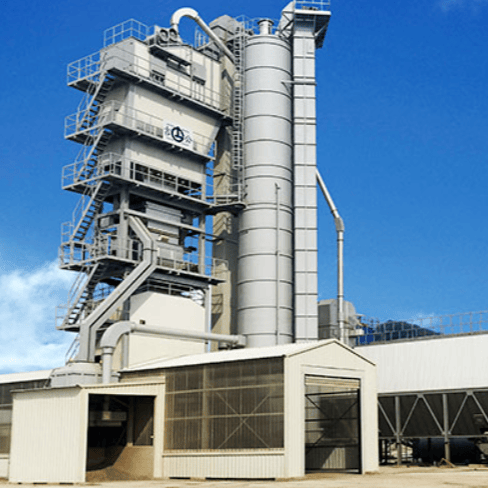
LBH4000 Batch Environmental Protection Asphalt Mixing Plant | Asphalt Batching Plant | Asphalt Mixing Plant
Jilin Province Road Construction Machinery Co., Ltd.
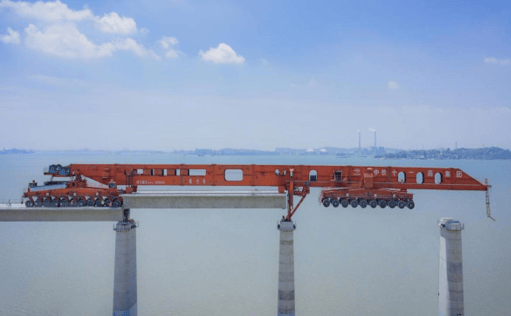
High-Speed Railway Lifting, Transporting, and Erecting Equipment: Integrated Transport and Erection Machine
Hanjiang Heavy Industry Co., Ltd. of China Railway 11th Bureau Group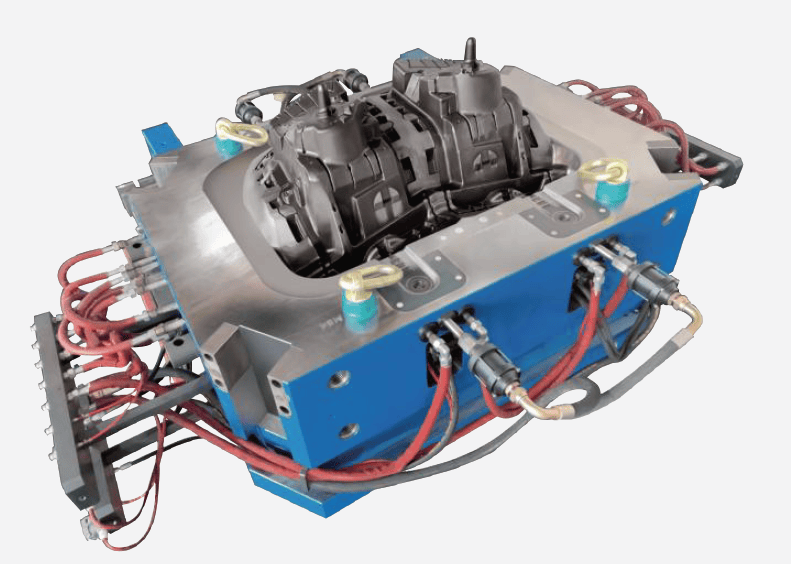
Aluminum-Magnesium Alloy High-Pressure Die-Casting Molds
NINGBO HELI TECHNOLOGY CO., LTD.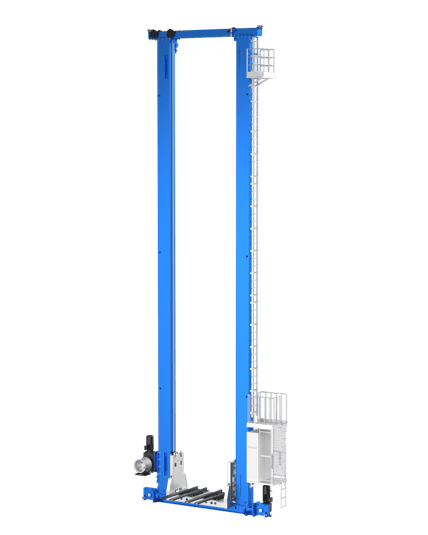
Pallet Solutions Product Line: HD3000 Double-Column Stacker Crane
Zhongding Intelligent (Wuxi) Technology Co., Ltd.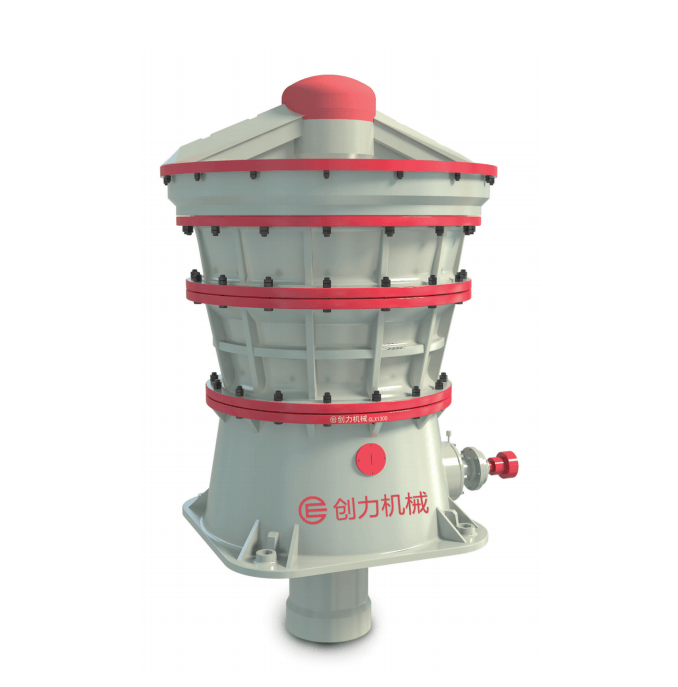
CLX Series Intelligent Hydraulic Gyratory Crusher
Guangdong CHUANGLI intelligent machinery Equipment Co., LTD
CAP1400 main feedwater flow nozzle flowmeter.
Jiangsu Hongda Instrument Technology Co., LTD.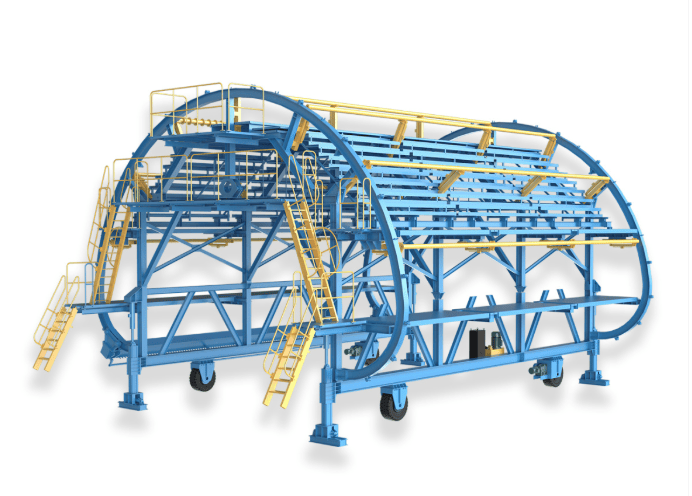
QLZNGJ Intelligent Steel Reinforcement Trolley
Luoyang China Railway Qiangli Machinery Co., Ltd.