en.Wedoany.com Reported - Fibocom AI Research Institute has achieved key progress in the field of embodied intelligence. Its self-developed FiboVLA framework and edge inference optimization technology have increased the inference speed of multiple mainstream VLA models by an average of 2.6 times, and completed the deployment of GR00T N1.5 on a high-performance edge computing main control platform. The relevant results have been validated through the LIBERO simulation benchmark dataset and a desktop dual-arm real robot environment, providing engineering support for the efficient operation of embodied intelligence models on the robot edge side.
VLA (Vision-Language-Action Model) is a key technology in embodied intelligence. It integrates visual input, language instructions, and action generation, enabling robots to generate actions based on environmental and task instructions. As the parameter scale of VLA models surges, robots face bottlenecks in real-time inference on the edge. Inference speed directly impacts the robot's action response, task transition, and operational smoothness. Additionally, robots are constrained by multiple factors such as computing power, power consumption, heat dissipation, and system resources. How to enable complex VLA models to run stably and efficiently on high-performance edge main control platforms has become a critical challenge in the deployment of embodied intelligence.
To address the high inference load of VLA models on the edge, Fibocom AI Research Institute has adopted its self-developed FiboVLA compression framework, performing Token-level optimization at the model semantic layer. During VLA inference, there is a significant amount of redundant representation in visual and language information. FiboVLA refines and compresses visual tokens, eliminating low-value information while retaining key content strongly related to task understanding, environmental judgment, and action generation. This framework reduces ineffective computation during inference, significantly lowering the computational load while maintaining model decision accuracy, cross-modal understanding, and action generation capabilities. At the same time, the team has combined inference pipeline scheduling and edge inference engine optimization to further enhance the model's operational efficiency on the robot edge side. Verified to be independent of specific model architectures, this framework has proven effective on multiple mainstream cutting-edge VLA models, achieving a 2.6x improvement in inference throughput and effectively compressing end-to-end latency.
Based on the FiboVLA framework and edge inference optimization technology, Fibocom AI Research Institute has successfully deployed GR00T N1.5 on a high-performance edge computing main control platform and completed operational validation. In the LIBERO simulation benchmark dataset, the framework ensures task performance after inference acceleration; in real physical environments, it has also completed real-robot operational validation of GR00T N1.5 in a desktop dual-arm robot scenario. This means that robots can complete perception, decision-making, and action generation faster on the edge, forming a low-latency, continuous inference loop. This is not only an improvement in model speed but also a successful engineering validation on a real robot platform.
The successful application of the FiboVLA framework has further solidified Fibocom AI Research Institute's core capabilities in edge AI and embodied intelligence, including model compression, inference engine optimization, robot platform validation, and system collaboration capabilities. Facing the accelerating industry trend of embodied intelligence, Fibocom will continue to combine wireless communication, edge computing power, AI toolchains, and the Fibot platform capabilities to help robots and various intelligent terminals achieve more efficient and stable local intelligence, providing an engineering foundation for embodied intelligence to enter real-world system operations.
Related Products


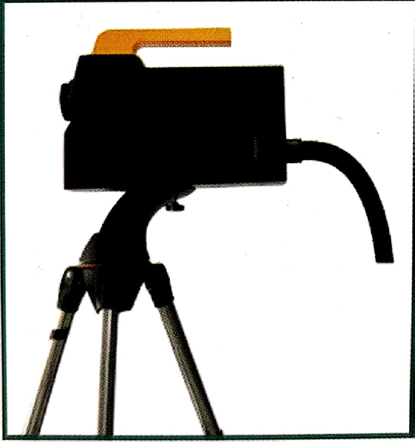
Automatic Aiming Laser Remote Obstacle Removal Robot
Pinggao Group Weihai High-Voltage Apparatus Co., Ltd.
TWP16 P-Band Tropospheric Wind Profile Radar
China Huayun Meteorological Technology Group Co., Ltd.
Mine Explosion-proof and Intrinsically Safe Industrial Ethernet Ring Network (10 Gigabit/Gigabit)
Chongqing Mas Sci&Tech Co., Ltd.



Comprehensive Mining Automation Control System
Beijing Tianma Intelligent Control Technology Co., Ltd.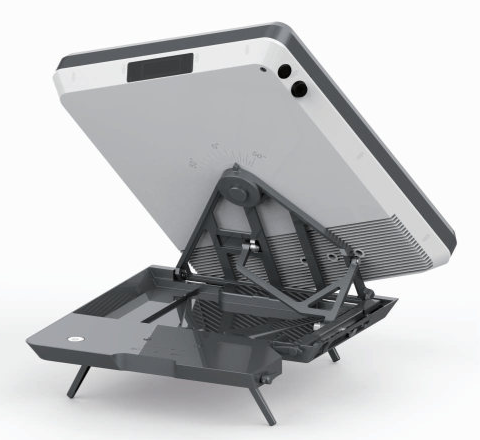
Flat Portable Satellite Terminal 0.35m Aperture Manual Portable Terminal
China Starwin Science & Technology Co., Ltd.